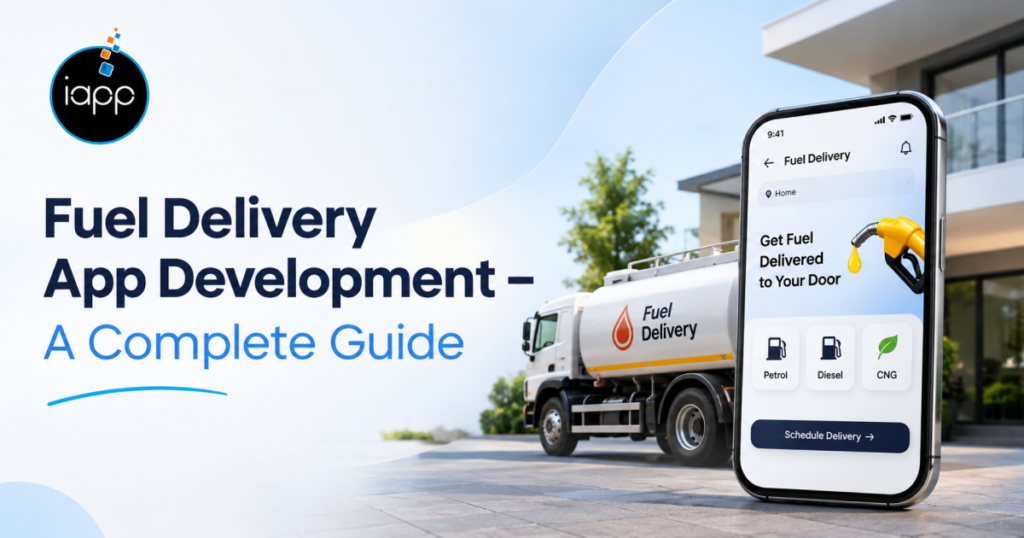
Fuel stops can interrupt busy schedules and fleet operations. Mobile fueling services solve this problem through doorstep delivery. Customers can order fuel without visiting traditional gas stations. Businesses can also manage multiple vehicles through one platform.
Fuel delivery app development involves building software for ordering, dispatching, tracking, and delivering fuel. It connects customers, drivers, suppliers, and administrators. A well-planned platform can support residential and commercial customers.
The opportunity is worth examining in the United States. According to the U.S. Energy Information Administration, America consumed approximately 20.6 million barrels of petroleum daily in 2025. This includes gasoline, diesel, and other petroleum products.
Fuel delivery app development means creating a digital platform for mobile fuel services. Customers use the application to request fuel deliveries. Drivers receive orders and complete deliveries at assigned locations. Administrators manage orders, payments, inventory, and operations.
A typical platform includes four connected components:
Unlike traditional fuel stations, mobile services deliver directly to customers. This model supports homes, offices, construction sites, and vehicle fleets. Businesses can choose features based on their operations.
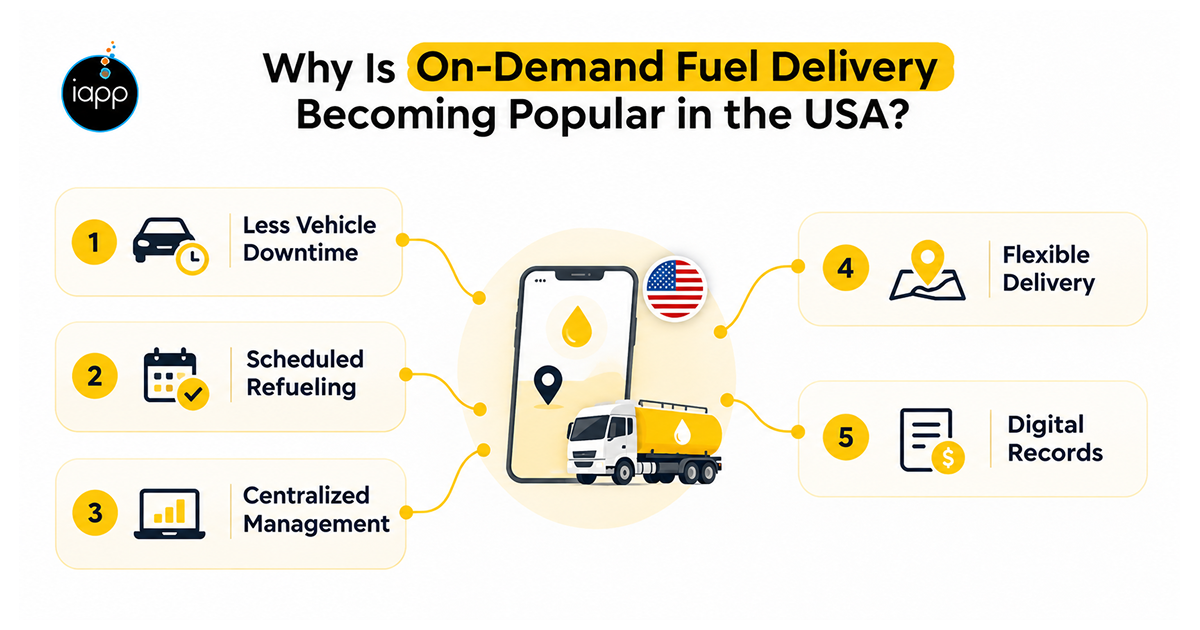
Convenience is a major reason behind mobile fueling demand. Customers can request fuel from their preferred locations. Fleet managers can also reduce unnecessary refueling stops.
The on-demand fuel delivery app model offers several operational benefits:
Commercial fleets can benefit from scheduled refueling services. Construction companies can fuel equipment directly at job sites. Residential customers can also request convenient vehicle refueling. However, success depends on local demand and delivery economics. Businesses must assess service areas before launching.
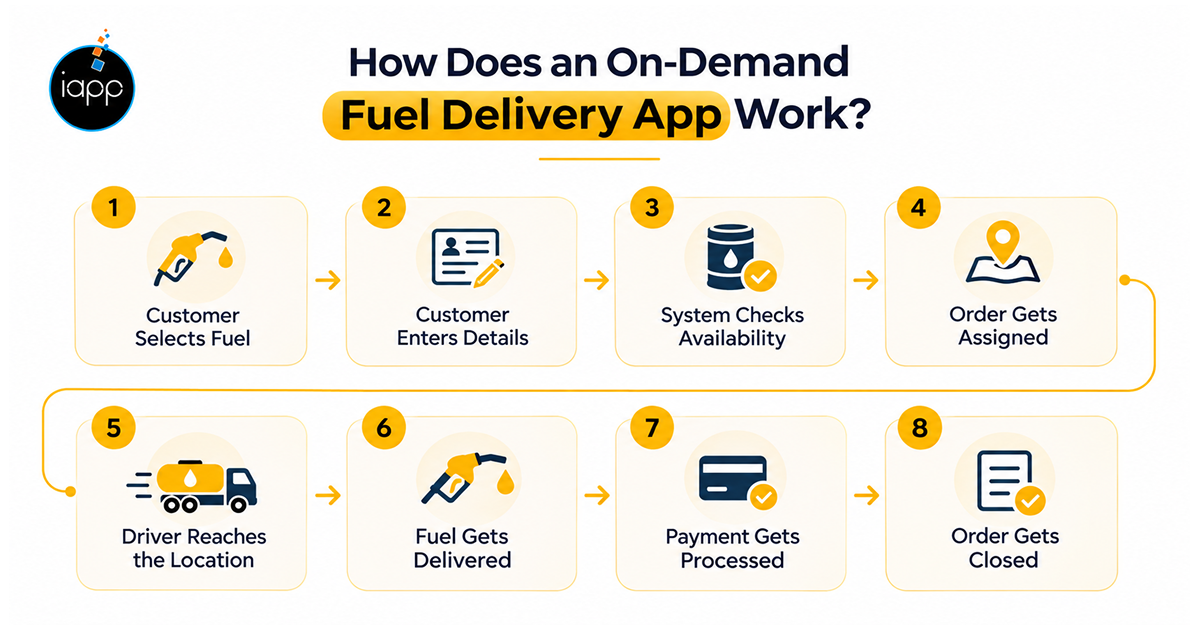
A fuel delivery platform follows a simple ordering process. Its backend coordinates customers, drivers, suppliers, and payments.
Here is how a typical order works:
For example, EzFill offers mobile fueling services. Customers can request fuel through its digital service. Businesses can also use its commercial fueling options.
Your platform may follow a similar workflow. However, its features should reflect your business model.
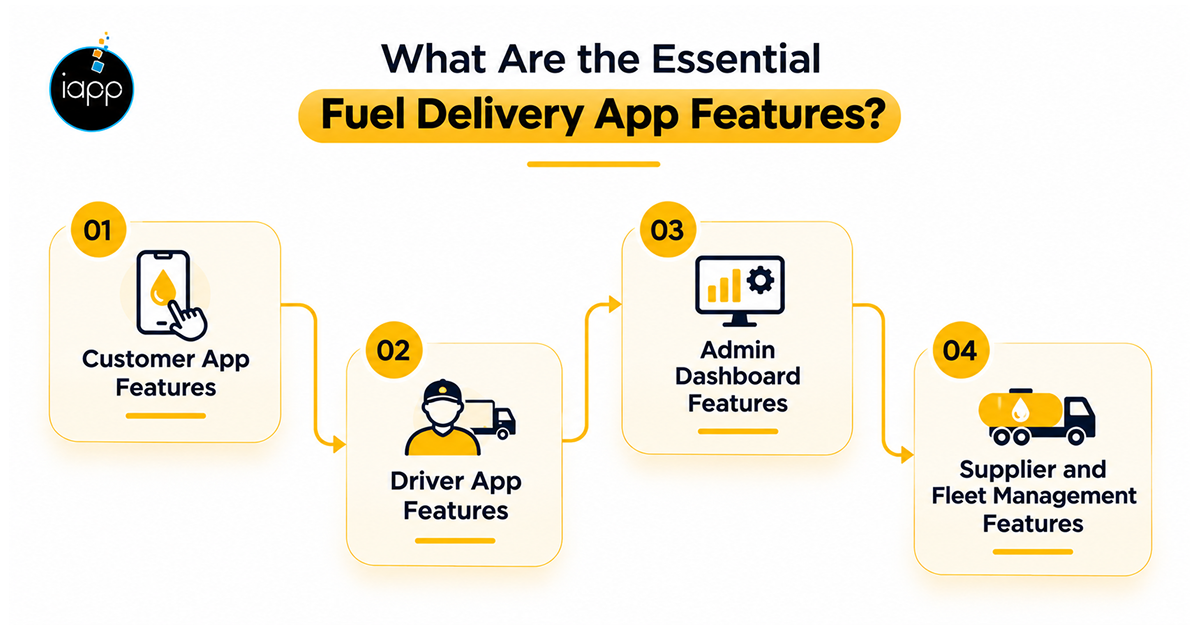
The right fuel delivery app features depend on your target customers. A residential service needs different workflows than fleet fueling. Most platforms require customer, driver, and admin interfaces.
The customer application should make ordering straightforward.
Important features include:
Drivers need tools for accurate and safe deliveries.
Useful features include:
Administrators need complete operational visibility.
The dashboard should support:
A supplier panel helps coordinate fuel availability. Fleet tools support businesses with multiple vehicles.
Useful capabilities include inventory updates, bulk orders, recurring schedules, and account billing. These features help manage larger commercial operations.
| App component | Main purpose | Important features |
|---|---|---|
| Customer app | Place fuel orders | Scheduling, payments, tracking |
| Driver app | Complete deliveries | Navigation, status, delivery proof |
| Admin dashboard | Manage operations | Dispatch, pricing, reports |
| Supplier panel | Manage fuel supply | Inventory, orders, availability |
| Fleet panel | Manage business vehicles | Bulk orders, recurring fueling |
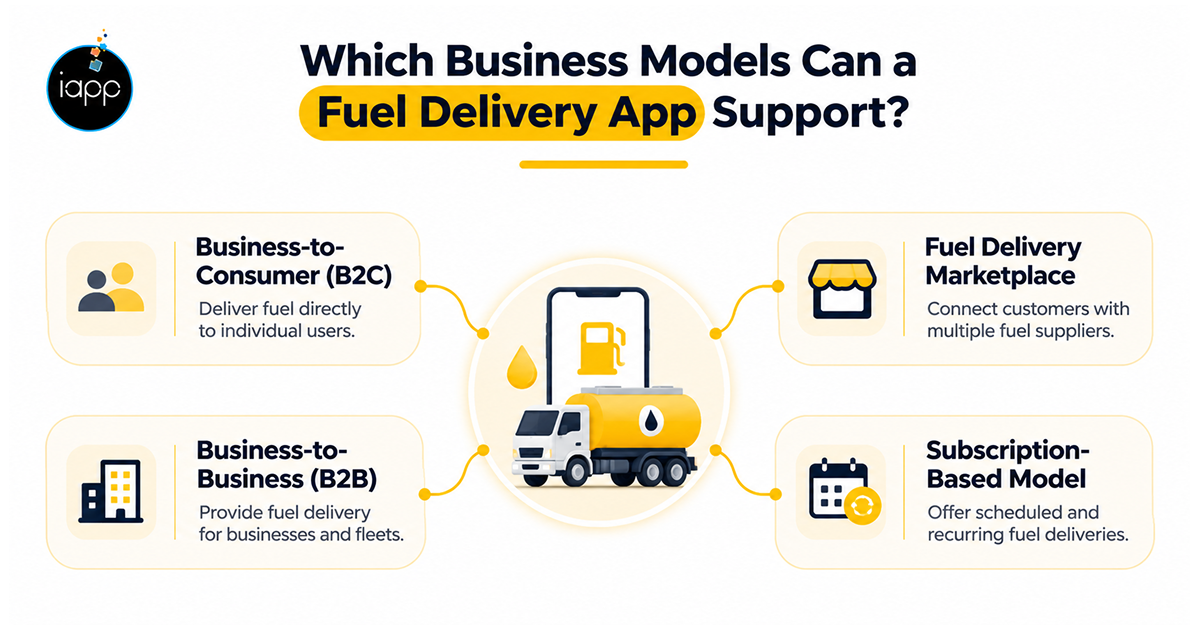
Your fuel delivery business model determines revenue and operations. Choose a model after researching your target market.
This model serves individual vehicle owners. Customers order fuel for personal vehicles. Revenue can come from delivery fees and service margins.
This model serves fleets and commercial businesses. Customers may include logistics firms and construction companies. Recurring contracts can create more predictable demand.
A marketplace connects customers with multiple fuel suppliers. The platform earns commissions or transaction fees. Supplier onboarding and quality control become important.
Customers pay recurring fees for selected benefits. These may include scheduled refueling and priority delivery. Businesses can also offer monthly fleet plans.
B2B models may offer repeat orders and larger volumes. B2C models need strong local customer acquisition. Compare both before selecting your revenue strategy.
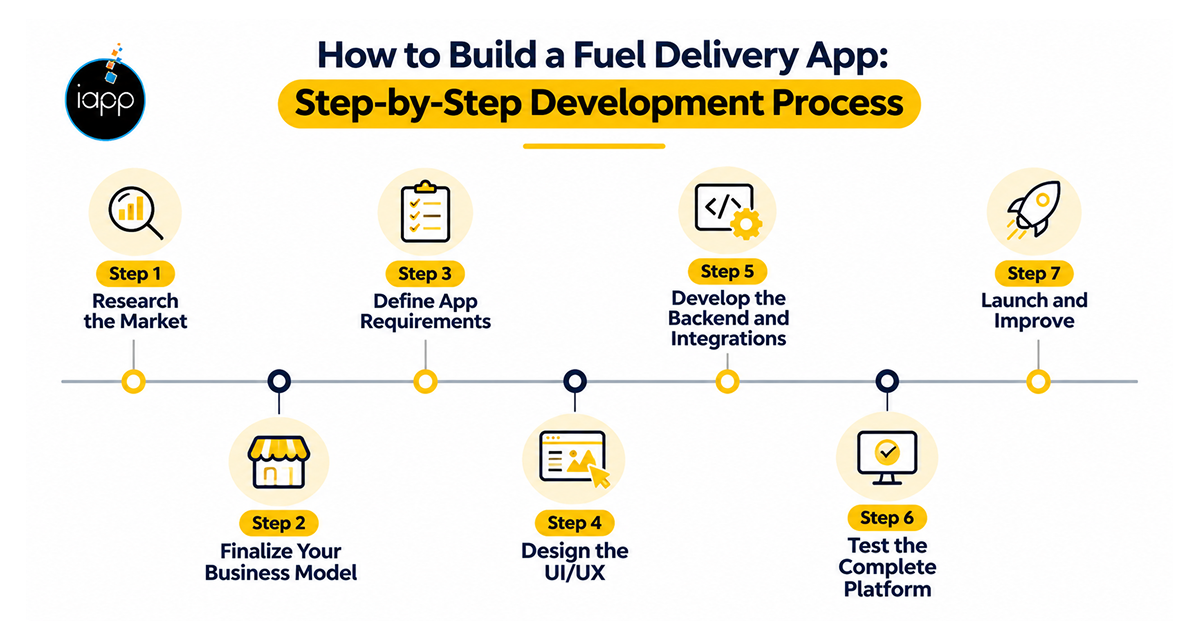
Understanding how to build a fuel delivery app starts with business planning. Development should follow validated requirements and operational needs.
Identify your customers, competitors, and service locations. Study local fuel demand and delivery costs. Review existing mobile fueling services and their offerings.
Choose between B2C, B2B, marketplace, or subscriptions. Define delivery charges, fuel margins, and payment terms. Decide whether you will own trucks or partner with suppliers.
Prepare separate requirements for each user type. Prioritize ordering, dispatch, tracking, and payment workflows. Keep advanced features for later development stages.
Create wireframes for customer and driver applications. Design the admin dashboard around daily operations. Test navigation before starting full development.
Build APIs, databases, and user management systems. Integrate GPS, payment gateways, and notification services. Add dispatch rules and inventory synchronization.
Test ordering, payments, location accuracy, and notifications. Check driver workflows under different network conditions. Review security, performance, and administrative permissions.
Start with a limited service area. Monitor delivery times, repeat orders, and operating costs. Use customer feedback to prioritize improvements.
A practical approach is launching one city first. Validate order density and delivery economics before expansion. This reduces early investment and operational uncertainty.
A structured fuel delivery app development process also helps control scope. It gives teams clear milestones and measurable outcomes.
The technology stack affects performance and future scalability. Your development team should select tools around requirements.
| Technology layer | Possible technologies | Purpose |
|---|---|---|
| Android development | Kotlin | Native Android application |
| iOS development | Swift | Native iOS application |
| Cross-platform apps | Flutter, React Native | Shared mobile development |
| Backend | Node.js, Python, Java | APIs and business logic |
| Database | PostgreSQL, MongoDB | Orders, users, and inventory |
| Cloud hosting | AWS, Google Cloud | Hosting and infrastructure |
| Maps and location | Google Maps APIs | Tracking and navigation |
| Notifications | Firebase, SMS APIs | Order updates and alerts |
| Payments | Stripe, Braintree | Digital payment processing |
The right stack depends on expected users and integrations. It should also support security and reliable operations.
Effective fuel delivery software development requires more than mobile screens. It must connect physical deliveries with digital records. Inventory, dispatch, payments, and reporting need consistent data.
The fuel delivery app development cost depends on project complexity. Features, integrations, platforms, and security affect the budget. Development team location also influences total expenses.
The following figures are indicative planning estimates. Actual quotes depend on requirements and technical scope.
| Development type | Estimated cost | Approximate timeline |
|---|---|---|
| White-label solution | $18,000–$35,000 | 4–6 weeks |
| Basic MVP | $25,000–$45,000 | 10–14 weeks |
| Full-featured platform | $60,000–$120,000 | 16–24 weeks |
| Enterprise platform | $150,000+ | 24+ weeks |
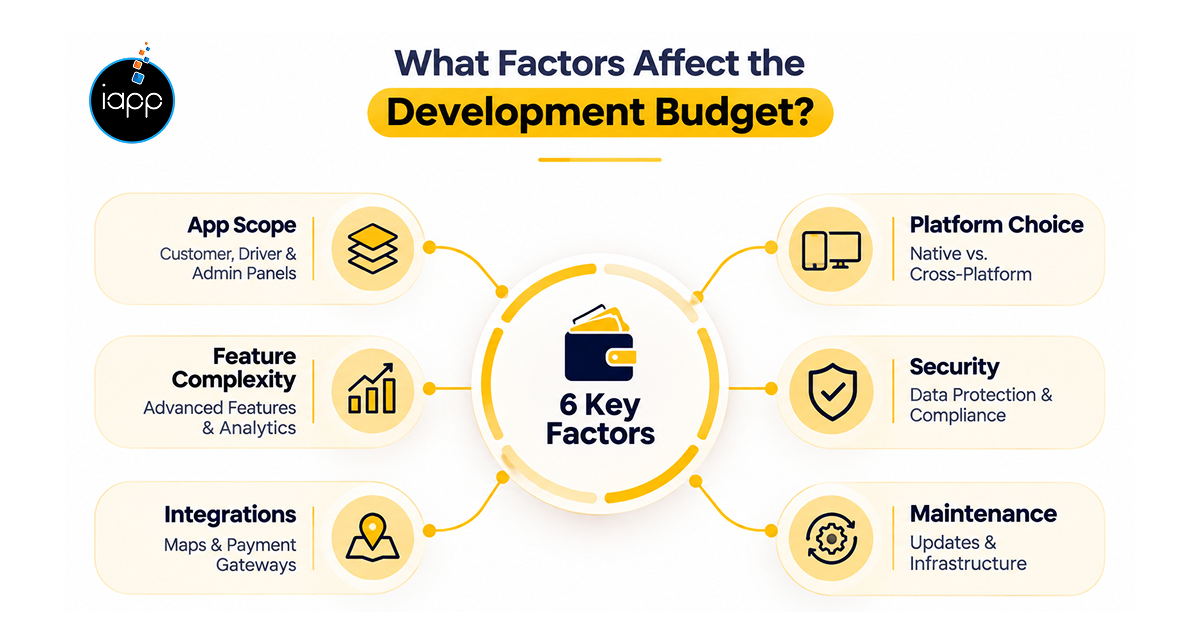
Other expenses include cloud hosting, SMS charges, insurance, and operations. Fuel trucks, storage, and permits require separate budgeting.
Businesses should request a detailed project estimate. Compare development scope, deliverables, and post-launch support.
Fuel delivery involves physical handling and transportation of fuel. Businesses must review applicable federal, state, and local rules.
Requirements may cover:
The applicable rules depend on fuel type and operations. Transportation requirements can vary with quantities and vehicle configurations. PHMSA explains hazardous materials transportation requirements and their applicability.
Do not assume one license covers every state. Consult qualified compliance professionals before launching. Your software should support required records and operational checks.
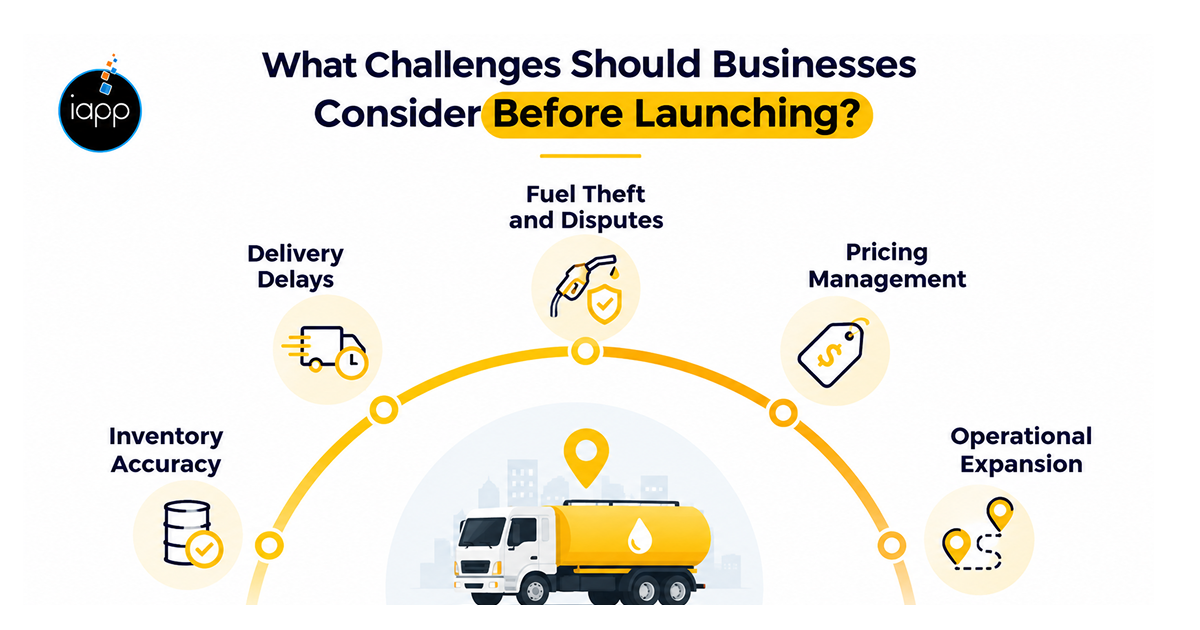
Fuel delivery businesses face operational and technical challenges. Planning for these issues can prevent costly disruptions.
Incorrect stock information can cause failed orders. Connect supplier inventory with the ordering system. Add alerts for low stock and unavailable fuel.
Traffic and poor routing affect delivery schedules. Use GPS tracking and route optimization tools. Provide customers with realistic delivery estimates.
Incorrect quantities can create customer complaints. Record dispensing quantities and delivery confirmations. Use calibrated equipment and auditable transaction records.
Fuel prices can change across suppliers and locations. Create flexible pricing rules and update mechanisms. Show applicable charges before customers confirm orders.
New cities introduce different suppliers and regulations. Build configurable service zones and pricing controls. Avoid hardcoding rules for one operating location.
Software must connect digital workflows with physical operations. Driver verification, inventory, and dispensing records matter. These controls support accountability across each delivery.
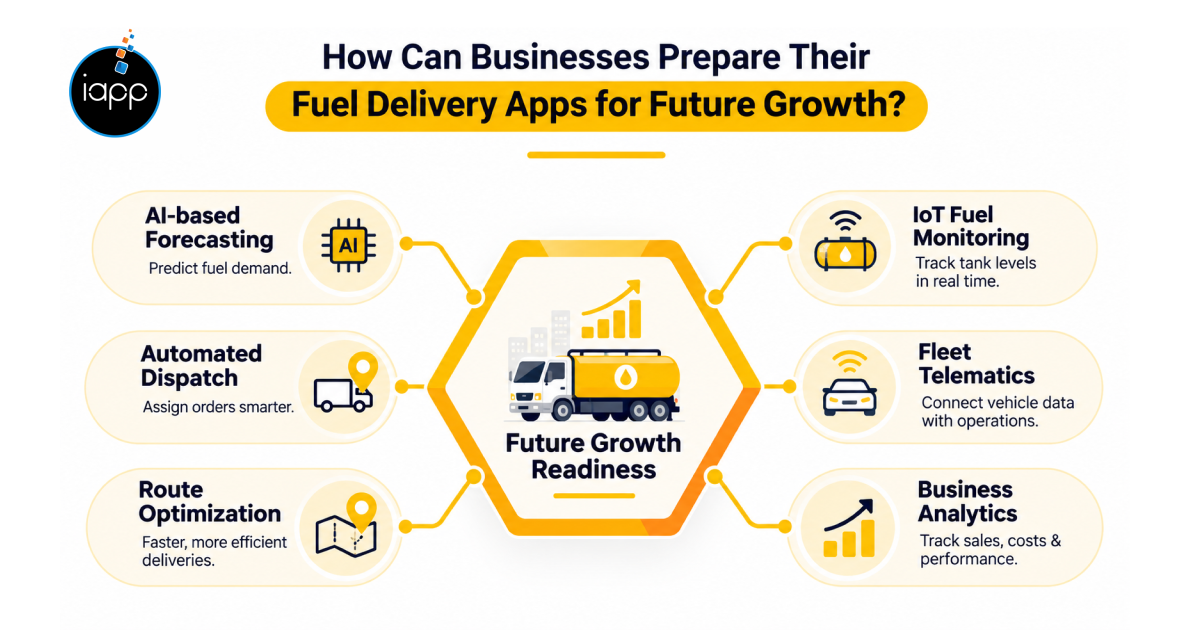
A scalable platform should support changing business needs. Consider these capabilities during technical planning.
The EIA reports that Americans used approximately 136.72 billion gallons of gasoline in 2025. This highlights the scale of the US gasoline market. However, local demand and service economics matter more for individual operators. Build a flexible architecture from the beginning. Add advanced automation when operational data supports it.
At iApp Technologies, we build digital solutions around business requirements. Our team supports planning, development, integration, and testing. We focus on practical workflows and scalable architecture.
We develop customer, driver, and admin applications. Our team can support B2B and B2C workflows. We also plan marketplace and subscription-based platforms.
We connect applications with relevant third-party services. Integrations may include GPS, payments, CRM, and ERP. Inventory and fleet systems can also connect.
Our team works across design and development stages. We test workflows, integrations, and application performance. We can also support deployment and ongoing maintenance.
Launching an app also requires customer acquisition. We support SEO, content marketing, and ASO. Paid campaigns and analytics can support growth planning.
Businesses evaluating fuel delivery app development services should compare technical capabilities. Look for a team that understands operational workflows. Ask about integrations, testing, maintenance, and future scalability.
If you are comparing a fuel delivery app development company, assess its relevant experience. Review its development process and communication approach. Discuss your requirements before finalizing the engagement.
For businesses researching fuel delivery app development USA, local market requirements matter. Your solution should account for service areas and compliance. It should also support the payment and fleet systems you use.
If you need a fuel delivery app development company USA, evaluate technical delivery and ongoing support. A capable partner should understand your business model. It should translate operational needs into reliable software.
Similarly, fuel delivery mobile app development requires coordinated customer and driver workflows. Both applications must exchange accurate order information. The admin system should maintain operational visibility.
Businesses exploring gas delivery app development should define fuel categories early. Gasoline and diesel workflows may require different operational controls. Your platform must reflect the actual delivery model.
A provider building on-demand fuel delivery solutions should understand dispatch and logistics. The software must support real-time order coordination. It should also maintain reliable transaction records. Our team can discuss your project scope and priorities. We can help plan a practical development roadmap.
A well-planned fuel delivery platform can simplify refueling operations. Success depends on technology, compliance, and delivery economics. Start with clear requirements and a focused market.
At iApp Technologies, we help businesses plan and build digital platforms. Our team can support development, integrations, testing, and marketing.
It can be profitable with repeat customers and efficient routes. Profitability depends on fuel margins, delivery costs, and local demand.
Requirements vary by state, fuel type, and delivery method. Check business, fire, environmental, and transportation regulations.
Yes. You can partner with licensed fuel suppliers or fleet operators. Your app can coordinate orders and delivery assignments.
Use driver verification, delivery confirmation, and dispensing records. Add secure payments and transaction monitoring.
Options include Stripe, Braintree, and other supported providers. Select gateways based on availability, fees, and business needs.
Yes. APIs can connect fleet, GPS, inventory, and accounting systems. Integration depends on the software provider’s capabilities.
A typical MVP may take 10–14 weeks. The timeline depends on features and integrations.
Maintenance depends on infrastructure, updates, and support requirements. Budget separately for hosting, monitoring, and ongoing improvements.
 Jagwinder Singh
Wait! Before you go…
Talk to our experts and turn your ideas into powerful digital solutions.


 Trusted by 1000+ businesses

Fill out the form and our team will get back to you shortly.