A delivery company may struggle with delayed shipments. A taxi operator may lose bookings through manual coordination. A custom transportation app can address these problems. Transportation app development connects vehicles, drivers, customers, and operations.
It helps businesses manage bookings, deliveries, payments, and tracking. This guide covers app types, features, costs, and technologies. It also explains development considerations for US businesses.
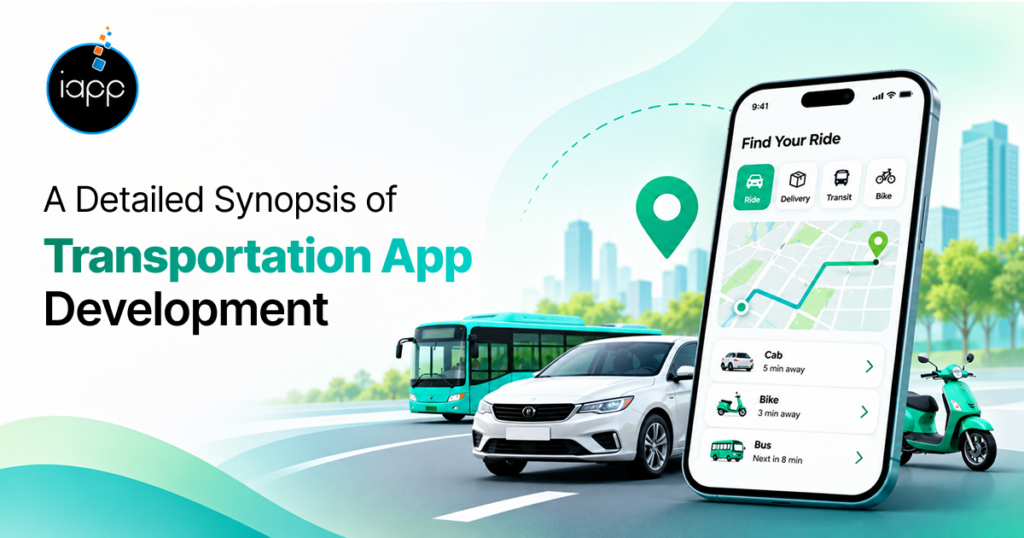
Transportation app development involves building digital platforms for transportation businesses. These applications connect customers, drivers, vehicles, and administrators. They support bookings, payments, dispatching, tracking, and deliveries.
A typical transportation application includes three connected interfaces:
For example, a regional transport company may manage deliveries. Its application assigns drivers and tracks shipments. Customers receive updates without calling dispatch teams.
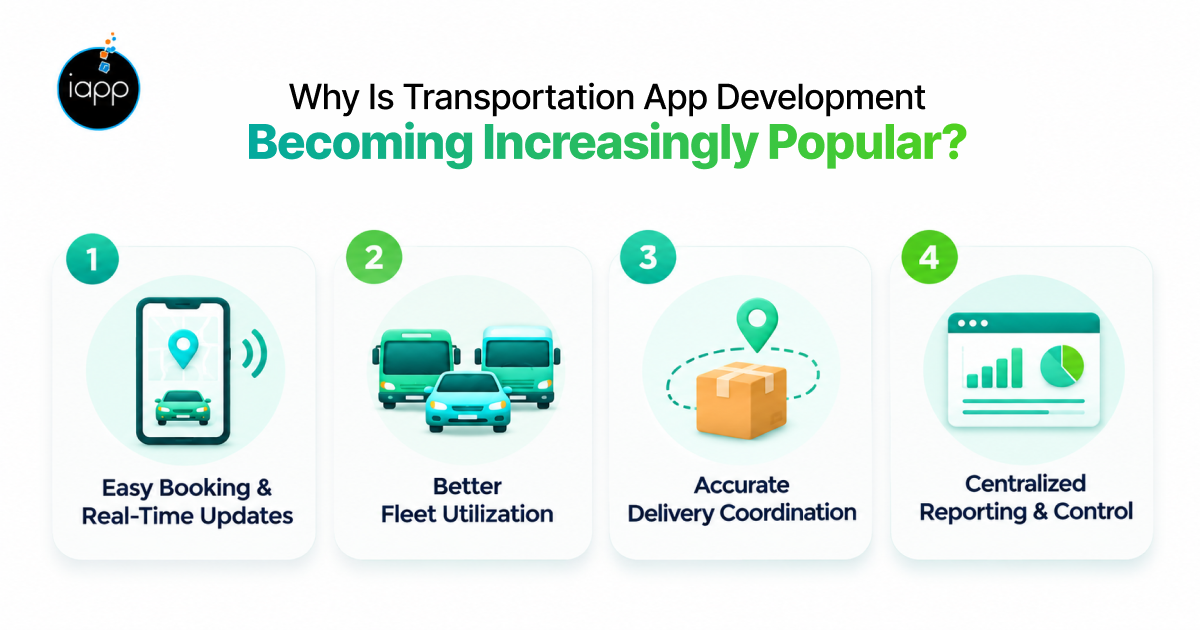
Businesses are adopting digital systems for transportation operations. These systems reduce manual work and improve operational visibility.
The Federal Transit Administration reported 8.1 billion passenger trips. This figure covered US public transportation during 2025. It represented a 6.4% increase over 2024.
Several factors support this growing adoption:
The Federal Highway Administration also reported technology investment plans. Its 2025 Mobility Trends Brief provides relevant industry context. These developments support smarter transportation infrastructure.
Different transportation models require different applications. Businesses should select solutions around their operational requirements.
| App type | Main purpose | Typical users |
|---|---|---|
| Taxi booking | Manage passenger rides | Taxi operators |
| Ride-sharing | Match passengers and drivers | Mobility startups |
| Logistics | Coordinate shipments | Freight companies |
| Fleet management | Monitor vehicles | Fleet operators |
| Public transit | Share routes and schedules | Transit providers |
Common application categories include:
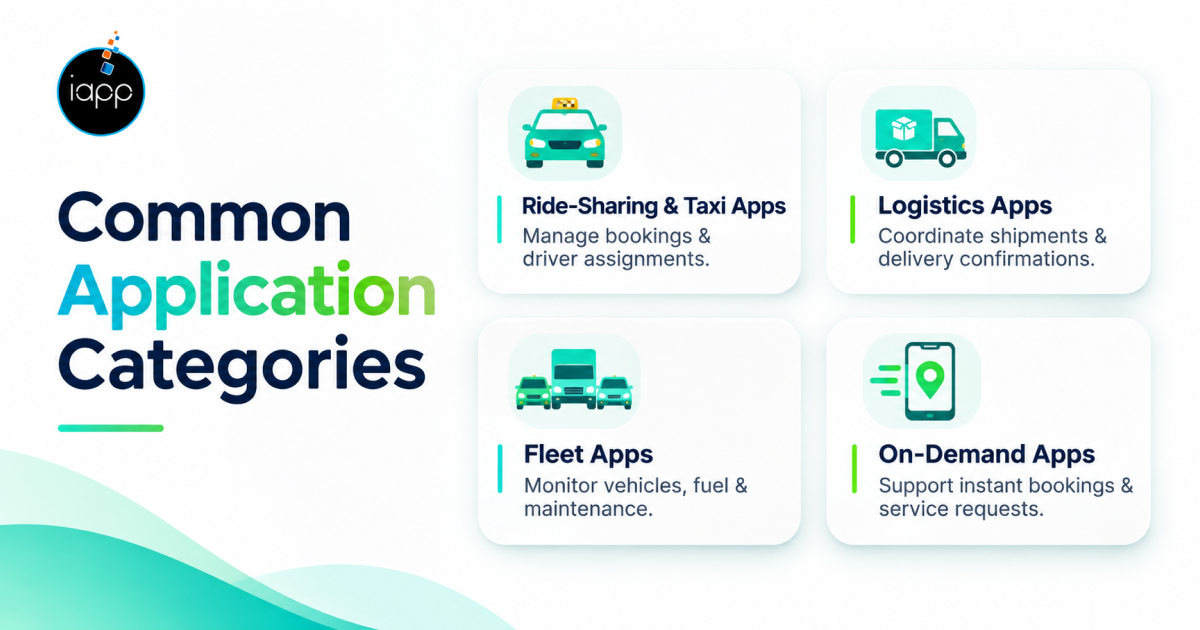
For instance, a regional freight operator needs shipment management. A taxi startup needs passenger booking and driver matching.
Businesses planning ride sharing app development need suitable matching systems. Meanwhile, taxi booking app development requires reliable dispatching. Both models need different booking and pricing rules.
Similarly, logistics app development focuses on shipment coordination. Fleet management app development focuses on vehicle operations. An on-demand transportation app supports immediate service requests.
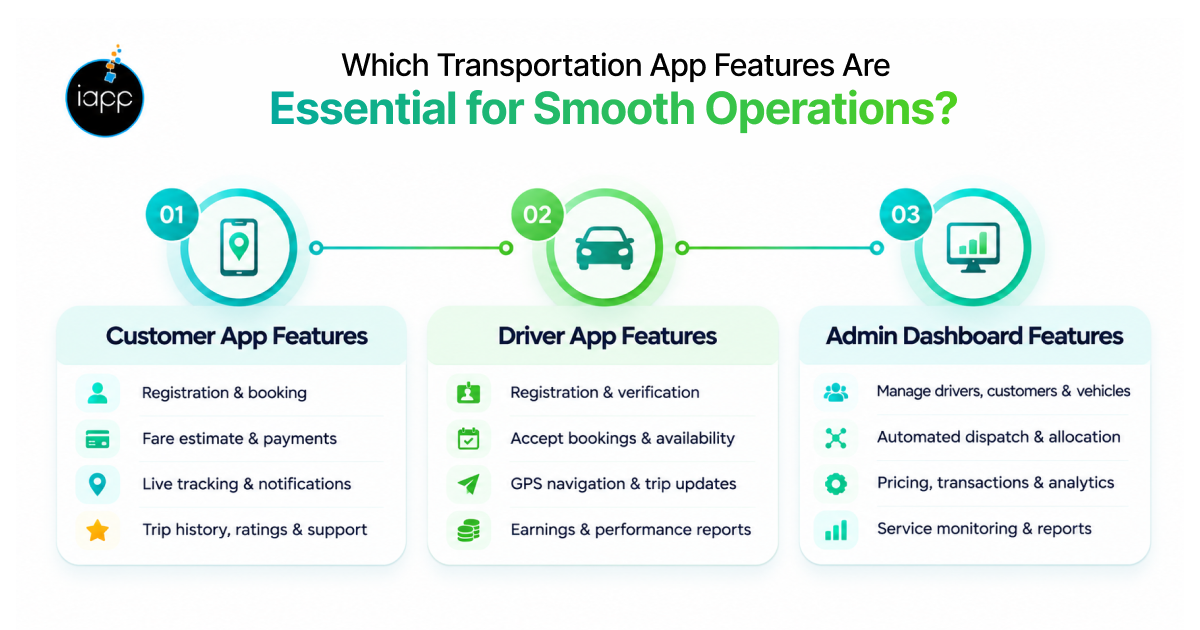
Effective transportation app features depend on user responsibilities. Each interface should support specific operational requirements.
Customer application features
Driver application features
Admin dashboard features
Advanced capabilities can support more efficient operations. These include geofencing, route optimization, and predictive maintenance.
| Development level | Typical functionality | Estimated timeline |
|---|---|---|
| Basic MVP | Booking, profiles, notifications | 8 to 12 weeks |
| Mid-level | GPS, payments, dispatching | 12 to 20 weeks |
| Advanced | AI routing, analytics, integrations | 20 to 32 weeks |
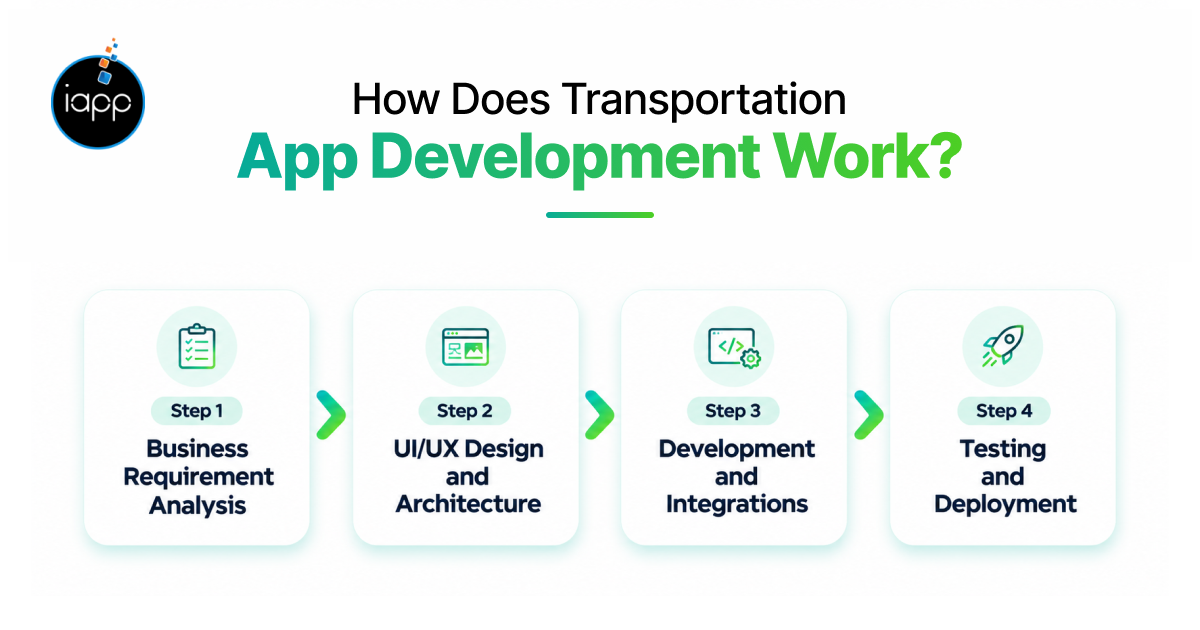
A structured development process helps control project risks. It also aligns technical decisions with business requirements.
Step 1: Business requirement analysis
Identify your services, users, and operating locations. Define booking rules, pricing, and delivery workflows. Prepare a feature list and MVP scope.
Step 2: UI/UX design and architecture
Create wireframes for customer and driver applications. Design dashboards for dispatchers and administrators. Plan databases, APIs, permissions, and system architecture.
Step 3: Development and integrations
Build mobile applications and backend services. Integrate mapping, payment, notification, and tracking systems. Develop APIs connecting different application modules.
Step 4: Testing and deployment
Test bookings, payments, tracking, and notifications. Check security, performance, and device compatibility. Deploy applications after successful testing and approval.
Expert insight: Plan operational workflows before individual features
A transportation app needs more than booking functionality. Consider what happens after a driver accepts bookings. What happens when that driver cancels unexpectedly?
Can dispatchers assign another available vehicle immediately? These situations should influence application architecture early.
For example, dispatch systems need availability tracking. They also need reassignment rules and status synchronization. Without these workflows, applications can face operational problems.
Technology choices determine application performance and scalability. The right stack depends on project requirements and integrations.
| Technology | Common options | Application |
|---|---|---|
| Mobile development | Flutter, React Native, Kotlin, Swift | Mobile apps |
| Backend development | Node.js, Laravel, Python | APIs and business logic |
| Database | PostgreSQL, MySQL, MongoDB | Operational records |
| Mapping | Google Maps, Mapbox | Routes and tracking |
| Cloud | AWS, Microsoft Azure | Hosting and infrastructure |
| Payments | Stripe, Braintree | Digital transactions |
Businesses considering transportation mobile app development should select suitable frameworks. Flutter supports shared development across mobile platforms. Native Kotlin and Swift offer platform-specific development options.
Other technologies support advanced transportation operations:
Businesses planning GPS tracking app development need reliable location services. GPS update intervals also affect battery consumption and accuracy.
The transportation app development cost depends on scope and complexity. Integrations and development platforms also influence budgets.
For initial US project planning, consider these estimates:
| Development level | Estimated budget | Estimated timeline |
|---|---|---|
| Basic MVP | $25,000 to $45,000 | 8 to 12 weeks |
| Mid-level app | $45,000 to $90,000 | 12 to 20 weeks |
| Advanced platform | $90,000 to $180,000+ | 20 to 32 weeks |
These figures are indicative planning estimates. Actual quotations depend on requirements and development location.
Major cost factors include:
Businesses should also budget for operational expenses. These include cloud hosting and mapping API usage. Technical support and upgrades require additional investment.
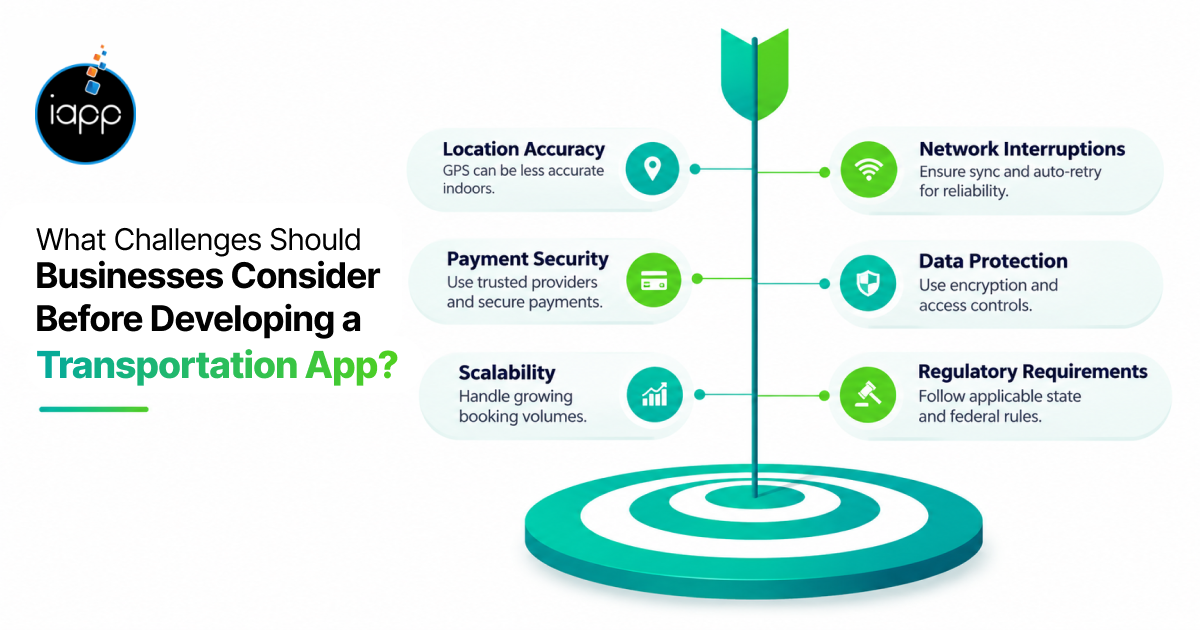
Transportation applications handle sensitive and changing information. Businesses must address technical challenges during development.
Consider these common challenges:
US businesses must pay attention to compliance. Requirements vary across transportation services and operating locations. Review relevant privacy, accessibility, and payment obligations.
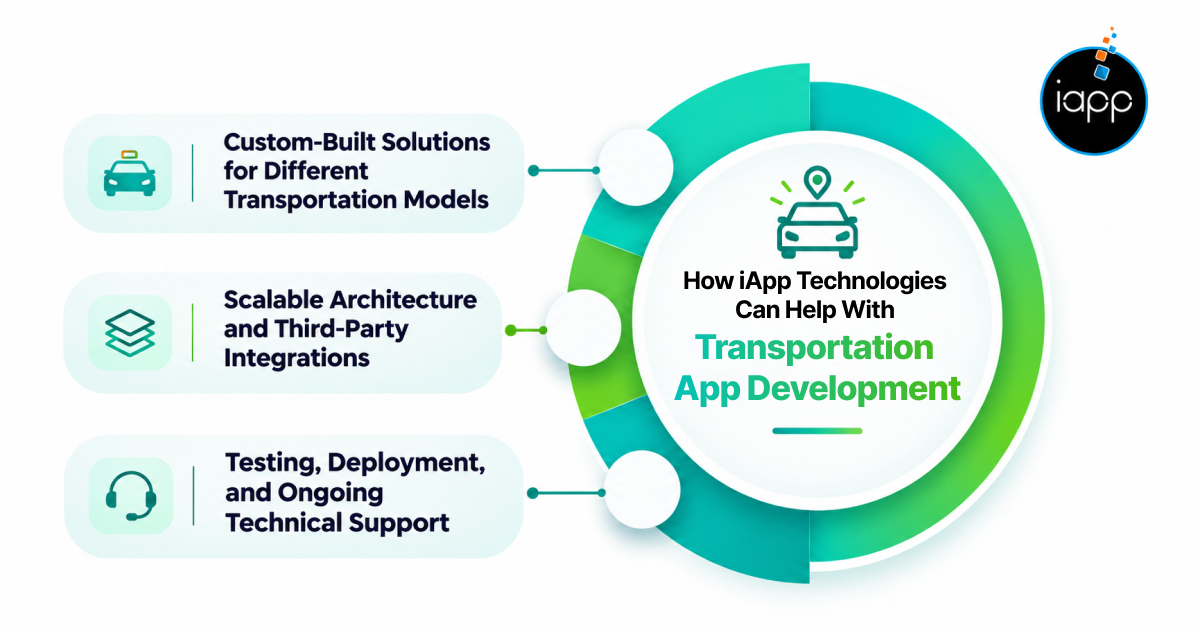
At iApp Technologies, we build custom digital products. Our approach begins with your operational and commercial requirements. We then plan suitable architecture and integrations.
We develop applications for different transportation businesses. These include taxi operators, logistics companies, and fleet providers.
Our solutions can include customer and driver applications. They can also include dispatch dashboards and management portals. Each module follows your business requirements.
Our transport management app development approach supports operational workflows. We also consider reporting, scheduling, and dispatch requirements.
We plan systems around current business requirements. Our developers integrate mapping, payments, and external APIs.
We also consider cloud infrastructure and database performance. This supports growing bookings, vehicles, and transactions.
Our transportation software development services cover custom platforms. Businesses can also integrate existing operational systems.
Our development process includes functional and performance testing. We validate booking workflows and payment processing. We also check location updates and application security.
We support deployment and post-launch maintenance. Businesses can request improvements as requirements change.
We bring over 12 years of development experience. Our team has delivered more than 2,000 applications. We have over 120 developers across technical disciplines.
If you need a transportation app development company, we can help. We discuss your requirements before recommending solutions.
Businesses seeking transportation app development in USA need suitable technical partners. A transportation app development company in USA should understand local requirements. It should also support integrations and long-term maintenance.
Transportation app development helps businesses manage transportation operations. The right application improves coordination and service delivery. Careful planning also supports long-term technical scalability.
At iApp Technologies, we develop custom mobile applications. We also build backend systems and integrated software platforms. Our team can help plan your transportation product.
A basic MVP may take 8 to 12 weeks. Complex platforms can require 20 to 32 weeks.
Yes. Flutter and React Native support cross-platform development. Native Kotlin and Swift are other available options.
Yes. APIs connect existing fleet systems and applications. Integration enables data sharing and operational synchronization.
Revenue models include booking commissions and subscriptions. Delivery fees and corporate contracts offer additional options.
Use encryption, secure authentication, and role-based access controls. Trusted payment gateways also protect financial transactions.
Yes. AI can support route planning and demand forecasting. It can also assist predictive maintenance and dispatching.
A transportation app often serves specific user workflows. A transport management system handles broader operational processes. These include dispatching, shipments, scheduling, and reporting.
Evaluate technical expertise, integrations, and project delivery. Also review scalability, communication, maintenance, and relevant portfolios.
 Jagwinder Singh
Wait! Before you go…
Talk to our experts and turn your ideas into powerful digital solutions.


 Trusted by 1000+ businesses

Fill out the form and our team will get back to you shortly.