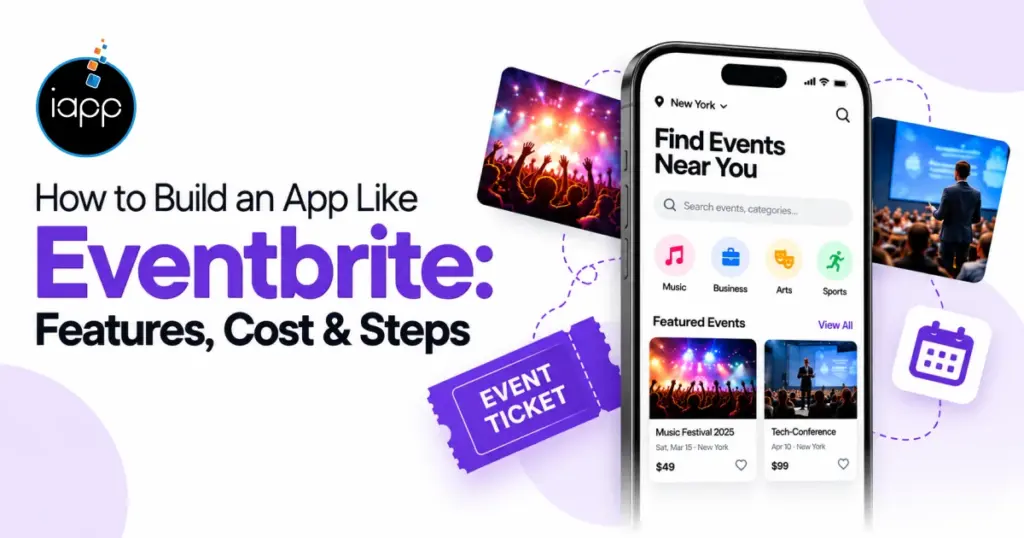
Event organizers want more than a page to sell tickets. They need one platform to manage registrations, payments, attendees, check-ins, and event promotion. That is why an app like Eventbrite needs more than a basic booking system. It must connect attendees and organizers while keeping ticket sales and event operations simple.
Building an app like Eventbrite starts with choosing the right business model and MVP features. This guide explains the key features, development steps, technology stack, timeline, and cost for a U.S. launch.
An Eventbrite-style platform connects event organizers with people looking for events.
Eventbrite combines event listings, registration, ticketing, payments, marketing, and organizer tools.
A custom platform usually has three connected products:
For example, a conference organizer could create 500 tickets. Attendees could buy standard, VIP, or early-bird tickets through the same platform.
People still love to attend in-person events. But they demand easier registration and ticket management. PCMA reported that 49% of surveyed planners saw higher attendance at their latest in-person event. That creates room for focused event platforms in the U.S. live Eventbrite.
A startup could target conferences, networking events, sports, festivals, or local experiences. The other option is to develop a niche platform that can better solve specific needs. Remember, the goal is to build an app like Evenetbrite, not to exactly copy it. You can include better interfaces, features, and AI support.
The core event management app features should cover discovery, ticket sales, organizer operations, and administration.
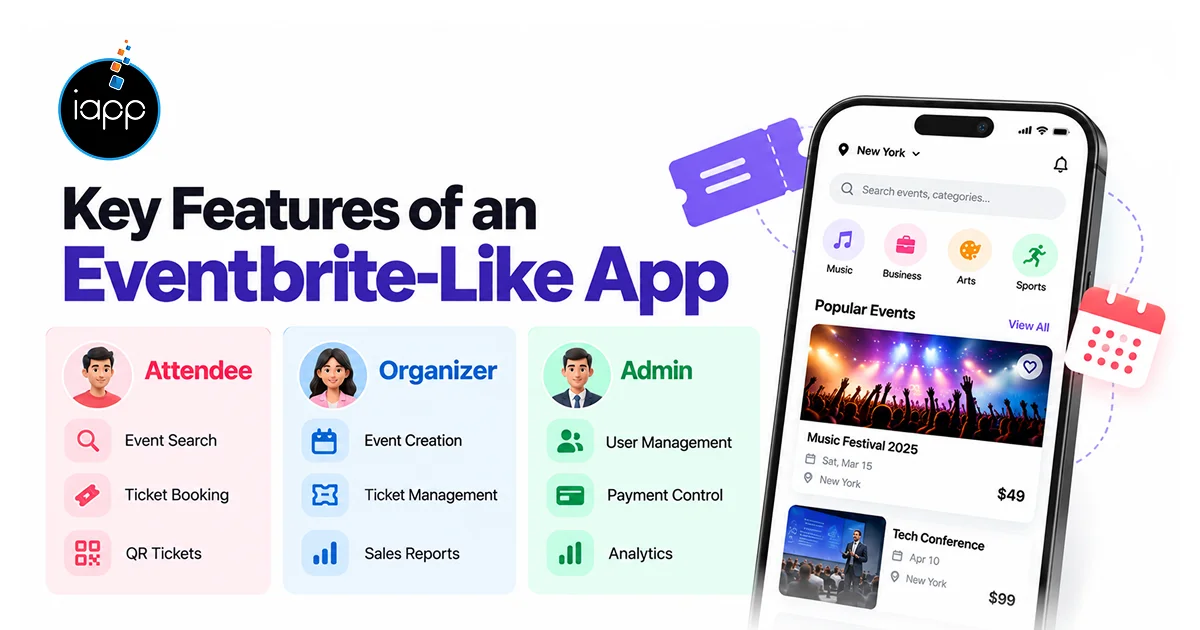
These features form the foundation of event ticketing platform development. However, advancement can be done later. A reliable event development app management team allows you to integrate reserved seating, memberships, waitlists, and recommendation tools.
The cost to build an app like Eventbrite can range from $40,000 to $250,000+.
However, the final price depends on features, platforms, integrations, security, and expected traffic.
| Development Level | Estimated Cost | Timeline |
|---|---|---|
| MVP | $40K–$70K | 3–5 months |
| Mid-level platform | $70K–$130K | 5–8 months |
| Advanced platform | $130K–$250K+ | 8–12+ months |
For a U.S. startup, beginning with an MVP is an ideal option. It typically can focus on event listings, ticketing, payments, QR codes, and organizer tools. This keeps the first release smaller and easier to validate. Complex payment rules, multiple user roles, integrations, testing, and scalability can make Eventbrite-like app development cost high.
A structured development process reduces unnecessary steps and keeps the first release focused. Here is how event booking app development USA takes place:
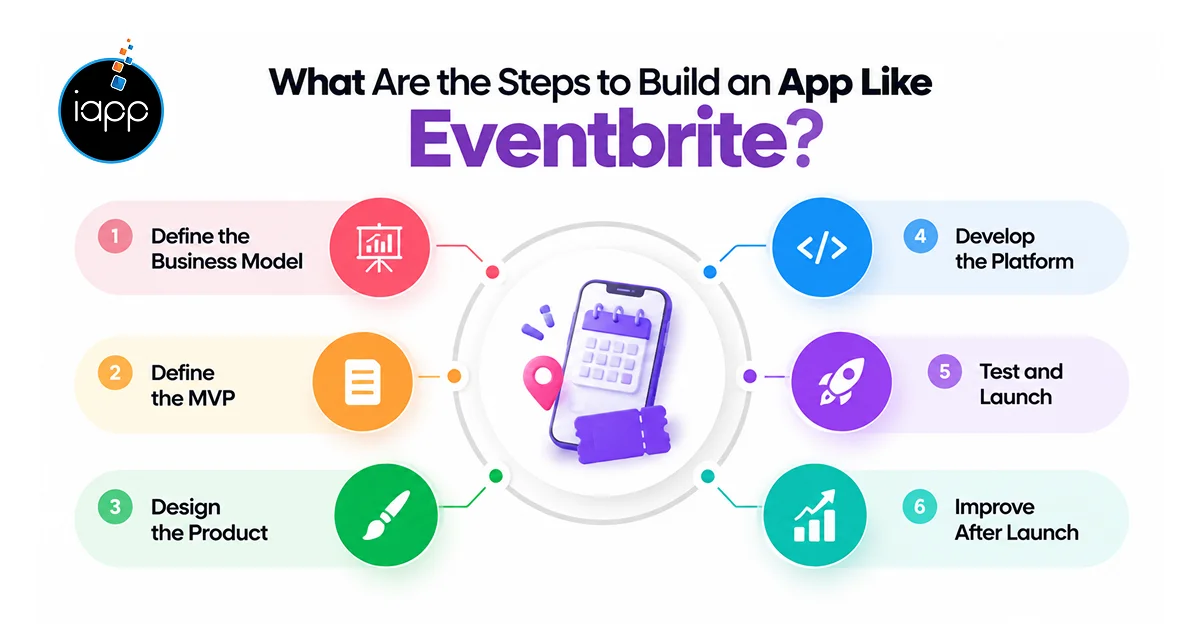
Choose your event category, audience, and revenue model first. Possible models include ticket commissions, organizer subscriptions, featured listings, and advertising.
Select only features needed for the first launch. Include attendee accounts, event listings, ticketing, payments, QR tickets, and organizer management.
Map the attendee and organizer journeys before development begins. Then create simple screens for search, event details, checkout, ticket access, and event management.
Build the mobile app, web dashboard, backend, database, APIs, and payment integrations. A cross-platform framework can reduce the first release cost.
Test payments, refunds, ticket limits, QR scanning, notifications, and account security. Load testing also matters before large events bring sudden traffic spikes.
Use real usage data to decide which features deserve the next development budget. This approach is more practical than building every feature before launch.
Expert insight:
When building an app like Eventbrite, founders should validate transactions first.
A platform needs organizers, attendees, and successful ticket purchases initially. If the app works successfully, advanced features can be added later.
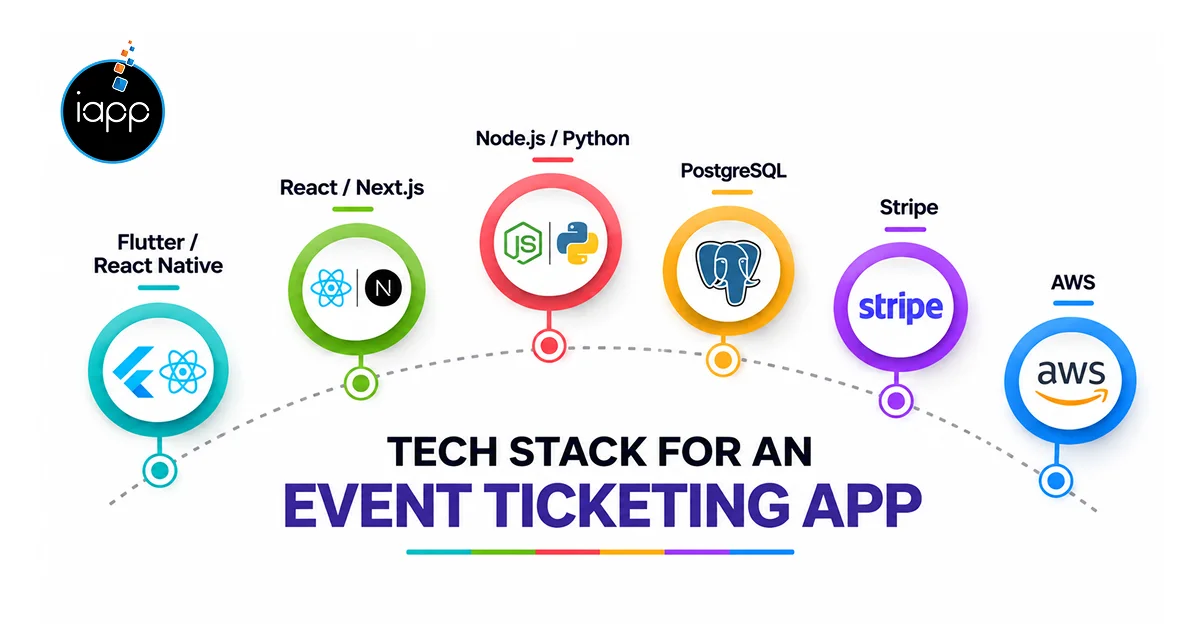
A practical stack can support an MVP without creating unnecessary development overhead.
Mobile checkout should be a core part of event ticketing app development. More than 61% of online event ticket transactions were completed on mobile devices globally in 2025. This makes responsive checkout, digital wallets, saved payment methods, and simple ticket selection important product requirements.
Your revenue model should map with your product decisions from the very beginning. It should not be considered a secondary thing.
Here are common monetizing options for event booking app development USA.
At iApp Technologies, we can build an event platform around your specific business model. Our focus is not simply copying existing screens. We structure the product around your users, revenue model, and launch requirements.
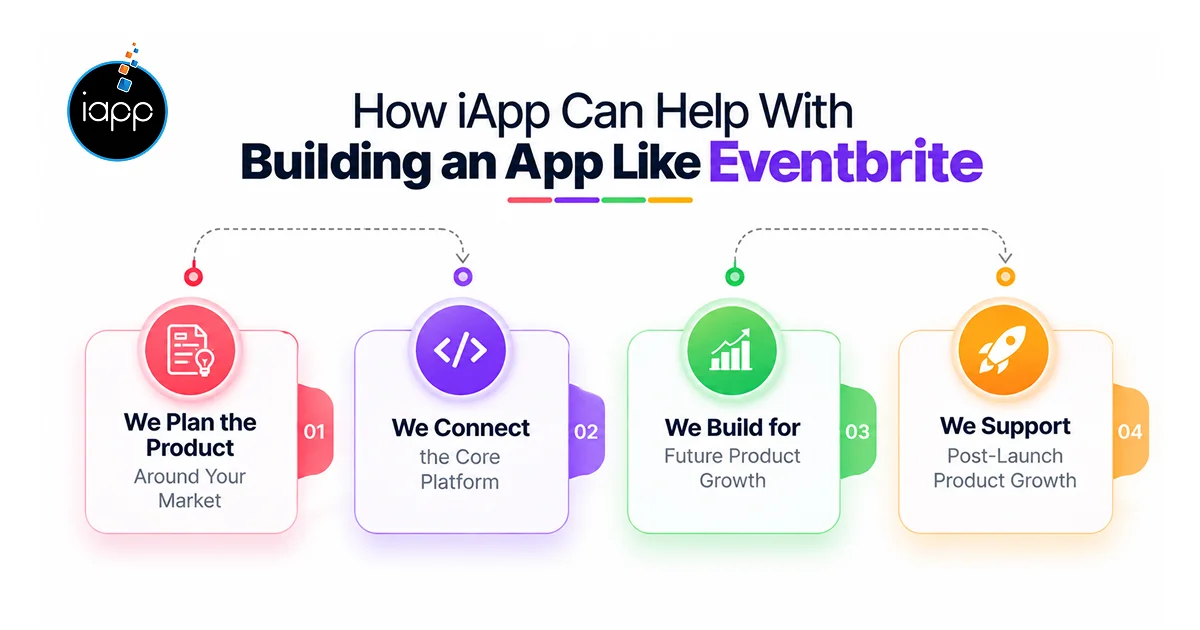
We first map your target audience, event category, ticket structure, and business model.
Then we define the MVP features needed for your first U.S. launch.
Our team can develop the attendee app, organizer dashboard, and admin panel together. We can also connect payments, notifications, maps, QR tickets, analytics, and external APIs.
We structure the backend and APIs for future feature additions. That can make later integrations and product changes much easier as your platform scales.
Our support can continue after development. We provide maintenance and feature updates to you. Our digital marketing team also supports app store optimization and digital marketing for user acquisition.
Developing an app like Eventbrite requires more than event listings and ticket checkout.
The product must connect attendees, organizers, payments, tickets, check-ins, and administration.
At iApp Technologies, we can help you plan and develop a custom event platform for the U.S. market. If you already have an idea, start by defining your target events, revenue model, and MVP scope.
A focused MVP can take 3–5 months. On the other hand, advanced platforms may require 8–12+ months.
Yes. You can target conferences, sports, networking, festivals, workshops, or another specific event category.
Yes. A marketplace can give each organizer separate event, ticket, attendee, sales, and payout management.
They can generate revenue through ticket fees, organizer subscriptions, featured listings, ads, and premium tools.
Stripe is a practical option for U.S. platforms, with APIs for payments and refunds. It also supports subscriptions and connected payouts.
Use server-side inventory locking, transaction controls, ticket limits, and real-time availability checks.
Not always. Flutter or React Native can support both platforms from one codebase for many MVPs.
Ongoing costs include cloud hosting, monitoring, security, third-party APIs, maintenance, and future feature development.
 Jagwinder Singh
Wait! Before you go…
Talk to our experts and turn your ideas into powerful digital solutions.


 Trusted by 1000+ businesses

Fill out the form and our team will get back to you shortly.