
Starting an online real estate business is not solely about putting property listings online. You need a platform that links buyers, sellers, brokers and property data seamlessly. The demand for digital real estate tools is clear. NAR reports that 45% of REALTORS® saw very positive client responses to technology. This is because of the convenience it offers.
This guide explains the real estate app development model, key features, development process, cost, and launch strategy.
A real estate business app should facilitate property search, listing, communication, and lead management. The specifics may vary depending on whether you are serving buyers, agents, brokers, landlords, or multiple groups.
A marketplace may need separate interfaces for buyers, sellers, agents, and admins. A brokerage may need stronger lead management and listing tools. For example, Zillow’s agent app includes lead inboxes, contacts, tasks, property details, and follow-up tools.
NAR also reports that social media generates the highest share of quality leads for REALTORS®.
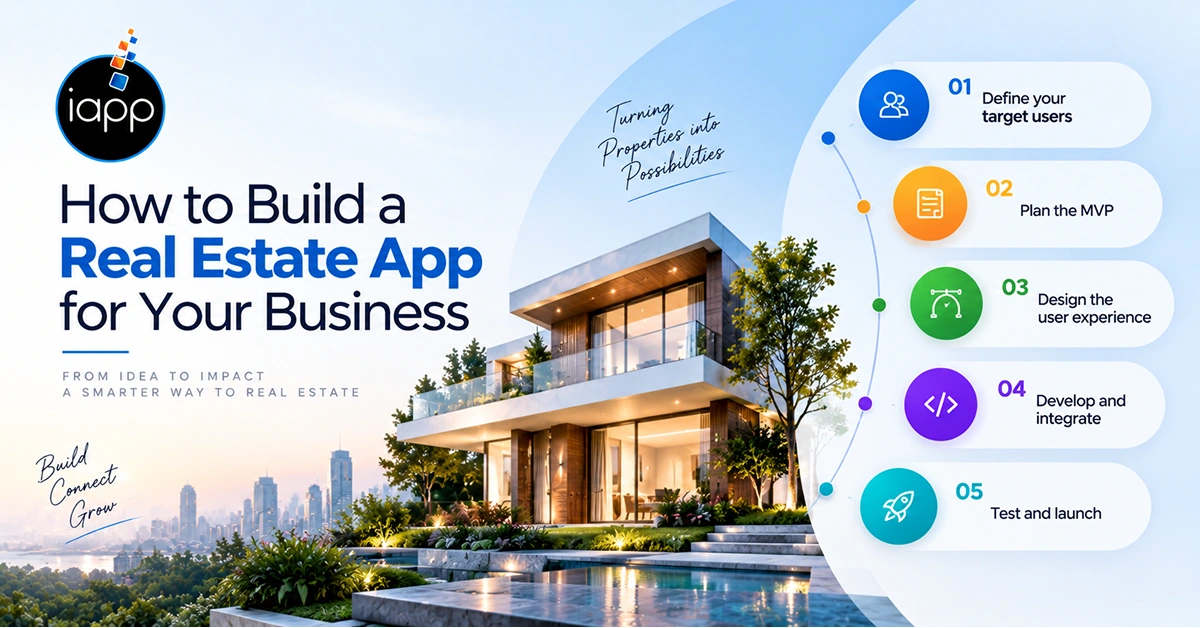
To build a real estate app, pick the business model before choosing features. This aids in keeping development focused and avoids excessive expenses for the initial release.
Your platform could support property sales, rentals, brokerage services, or a multi-sided marketplace.
Identify who will use the platform and what they need. For example, buyers require search tools, while agents need listing as well as lead management.
Start with the core features needed for launch. A smaller MVP can help you test demand before adding advanced functionality. iApp Technologies also develops real estate MVPs with property listing and booking capabilities.
Create simple screens for search, listings, property details, inquiries, and profiles. The design should reduce steps between finding a property and contacting the right person.
Development covers the mobile app, backend, database, APIs, and admin panel. Depending on your model, integrations may include maps, CRM systems, payments, MLS data, and notifications.
Test searches, listings, accounts, payments, notifications, and admin workflows before launch.
Then release the app and use real user feedback for later improvements.
The real estate app development cost depends on features, platforms, integrations, and project complexity. A simple MVP is less expensive than a multi-sided marketplace with advanced features.
A practical planning range can look like this:
| App type | Typical scope | Estimated cost |
|---|---|---|
| Basic MVP | Listings, search, profiles, inquiries | $15,000–$30,000 |
| Mid-level app | Maps, chat, notifications, CRM | $30,000–$60,000 |
| Advanced platform | Marketplace, integrations, analytics | $60,000–$100,000+ |
These figures are planning ranges, not fixed quotes. Your final budget should follow the approved features and technical requirements.
Real estate app development in the USA also involves MLS, compliance, and data integration requirements. Those integrations can change both development effort and ongoing operating costs.
Your business model determines the right development approach. For example, a listing portal needs different workflows than a property management platform.
Real Estate Marketplace App Development connects multiple groups through one platform. Buyers can search properties, while agents and sellers manage listings and leads.
Property listing app development is all about publishing, searching, filtering, and maintaining properties. Works well for agencies, brokers, and property portals.
This model focuses more on leads, contacts, appointments, listings, and client communication. It can also connect with existing CRM systems.
Custom real estate app development works when standard marketplace features are not enough. You can build workflows around your business model, data sources, users, and revenue strategy.
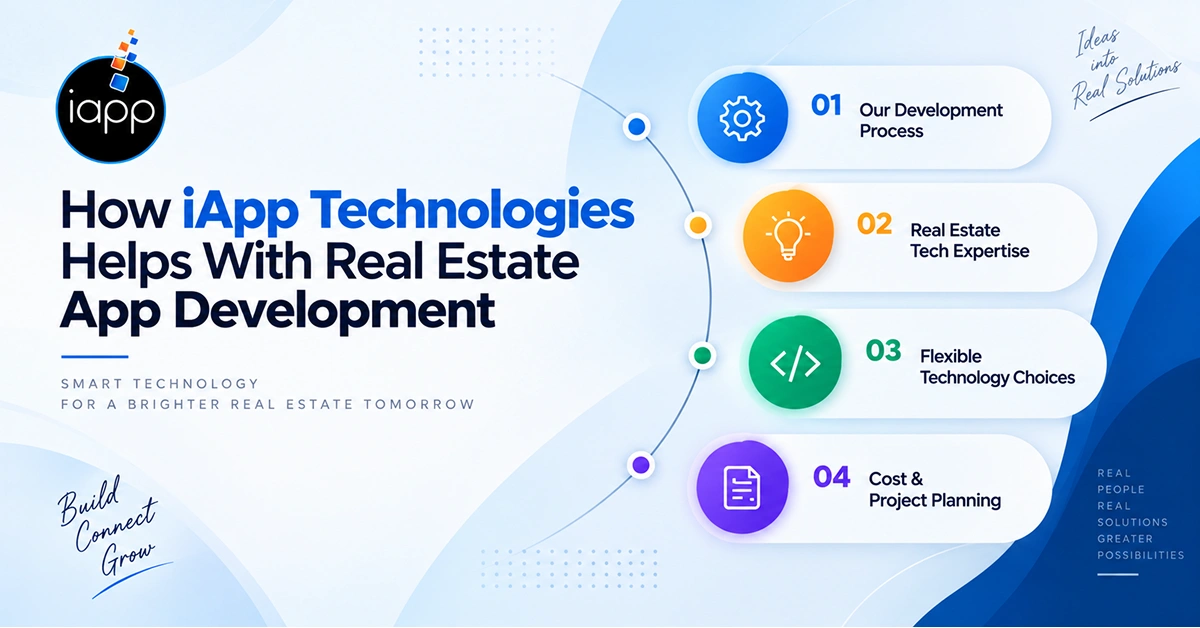
iApp Technologies builds custom mobile applications for real estate businesses. Our mobile development services include property listings, real-time updates, and virtual tours.
Our team can tackle planning, UI/UX design, development, testing, deployment, and support. The development approach can be tailored to your business model and required platforms.
iApp Technologies works across real estate and several other industries. Our development team supports iOS, Android, and cross-platform app development. We are equipped with 120+ developers and have delivered 2,000+ apps.
The technology stack includes Swift, Kotlin, Flutter, React Native, Laravel, Node.js, and other tools. The right combination depends on your platform, integrations, performance requirements, and budget.
There is no single price for every real estate app. iApp Technologies can scope your features first and provide a project-specific estimate. For businesses planning real estate mobile app development, this approach helps align the product with actual requirements.
To start an online property platform, having a business model, useful features, and reliable data are important. Real estate app development can help turn that model into a scalable digital product for buyers, sellers, agents, or brokers.
iApp Technologies LLP is the leading real estate app development company. From planning and UI/UX to programming, integrations, testing, and launch, we can help you come up with a practical digital product. If you require a property listing platform, marketplace, agent app, or bespoke real estate solution, contact us now. Our team can develop around your business objectives and users.
A real estate app can cost around $15,000 for a basic MVP. Advanced platforms with integrations and marketplace features can exceed $100,000.
A basic app may take several weeks, while complex platforms can take several months. The timeline depends on features, platforms, integrations, testing, and scope.
Common real estate app features include property search, listings, maps, profiles, inquiries, chat, notifications, and admin tools.
Define your target users and marketplace model first. Then build listings, search, maps, user accounts, lead tools, integrations, and an admin system.
It can support revenue through subscriptions, listing fees, commissions, advertising, lead generation, or premium services. The best model depends on your target users and market.
Real estate marketplace app development creates a platform where buyers, sellers, agents, or brokers can interact. It usually includes listings, searches, profiles, inquiries, and management tools.
Yes, you can build an app for the US market with location-specific workflows as well as integrations. MLS access, data licensing, privacy, and other requirements should be planned in advance.
Custom development lets you build features around your business model. It also gives you more control over workflows, integrations, branding, and future expansion.
Wait! Before you go…
Talk to our experts and turn your ideas into powerful digital solutions.


 Trusted by 1000+ businesses

Fill out the form and our team will get back to you shortly.

