
Imagine a hospital identifying an infectious disease case. However, locating exposed people takes several hours. An AI-powered contact tracing app development can help identify potential exposure patterns faster. It combines proximity detection, machine learning, and secure data processing.
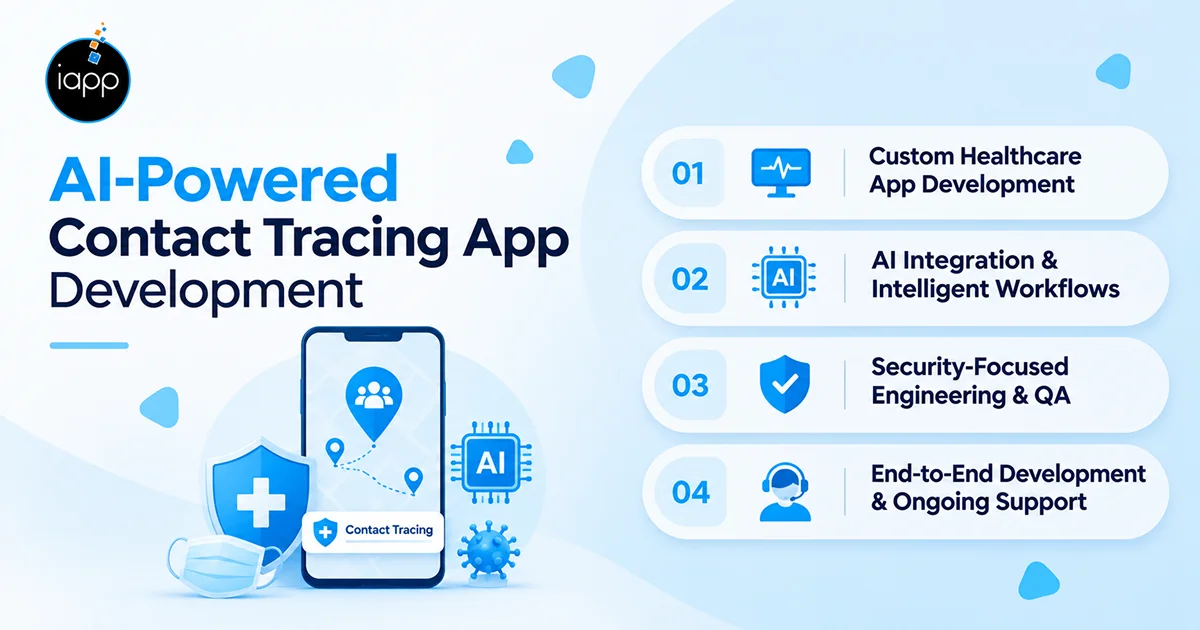
AI-powered contact tracing apps help identify potential infection exposure. They use proximity data and intelligent risk assessment. Healthcare teams can then coordinate timely public health responses.
Unlike manual tracing, digital systems can process interactions automatically. They can also notify users about possible exposure. However, AI supports decisions rather than confirming diagnoses.
A 2025 study examined 184 contact tracing apps. These applications covered 158 countries and regions. Researchers found that 45.7% had already been discontinued. This highlights the importance of sustainable app planning.
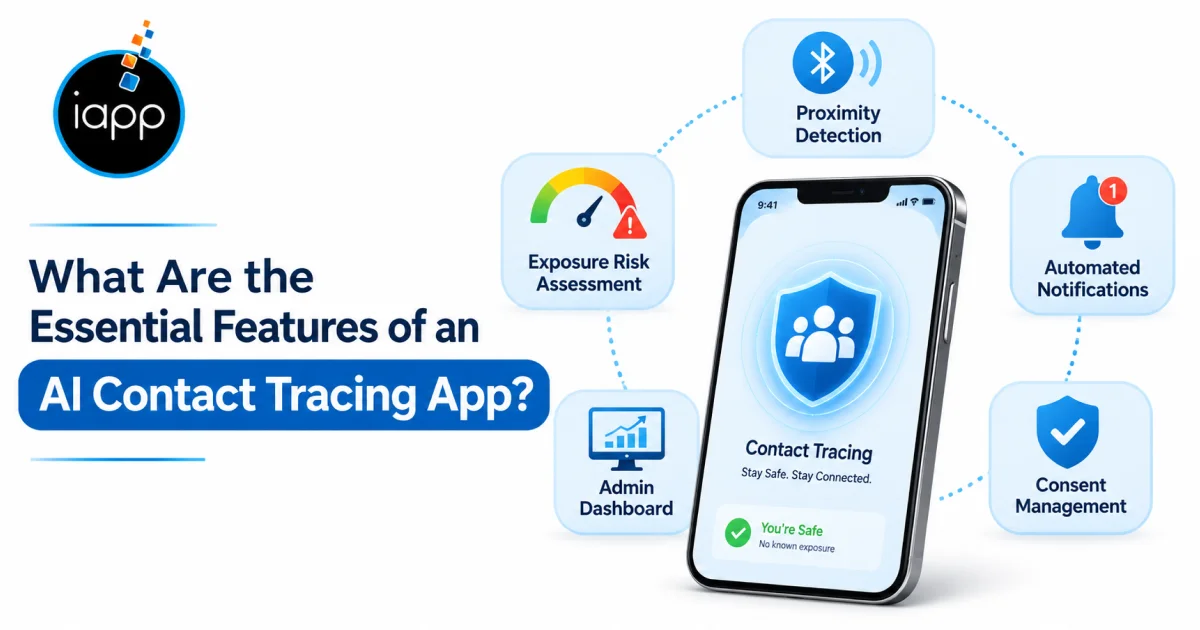
Effective contact tracing apps need reliable detection and reporting. Their features should support users and healthcare administrators.
Key contact tracing app features include:
For example, hospitals can monitor reported exposure events. Administrators can coordinate follow-ups across multiple facilities.
A practical development consideration: Exposure scores should never replace clinical assessments. Risk models need validated data and documented thresholds. False alerts can reduce public trust. Therefore, human oversight remains necessary.
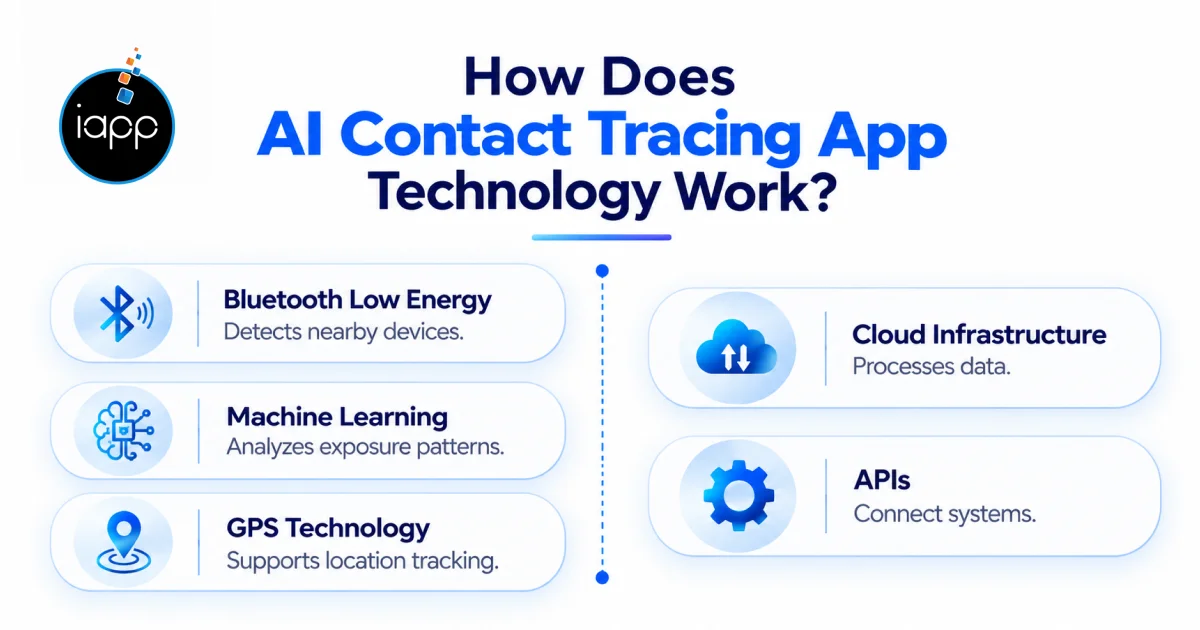
An AI contact tracing app combines several technologies. Each component handles a different technical responsibility.
The main components include:
Developers can use Python for machine learning models. TensorFlow or PyTorch can support model development. Swift and Kotlin support native mobile applications. Node.js or Java can handle backend services.
For privacy, decentralized architecture can store contact logs locally. Anonymous identifiers can reduce direct identity exposure. Encryption protects information during storage and transmission.
A 2025 international study provides useful technical context. BLE appeared in approximately 70.6% of surveyed apps. This included apps combining BLE with other technologies.
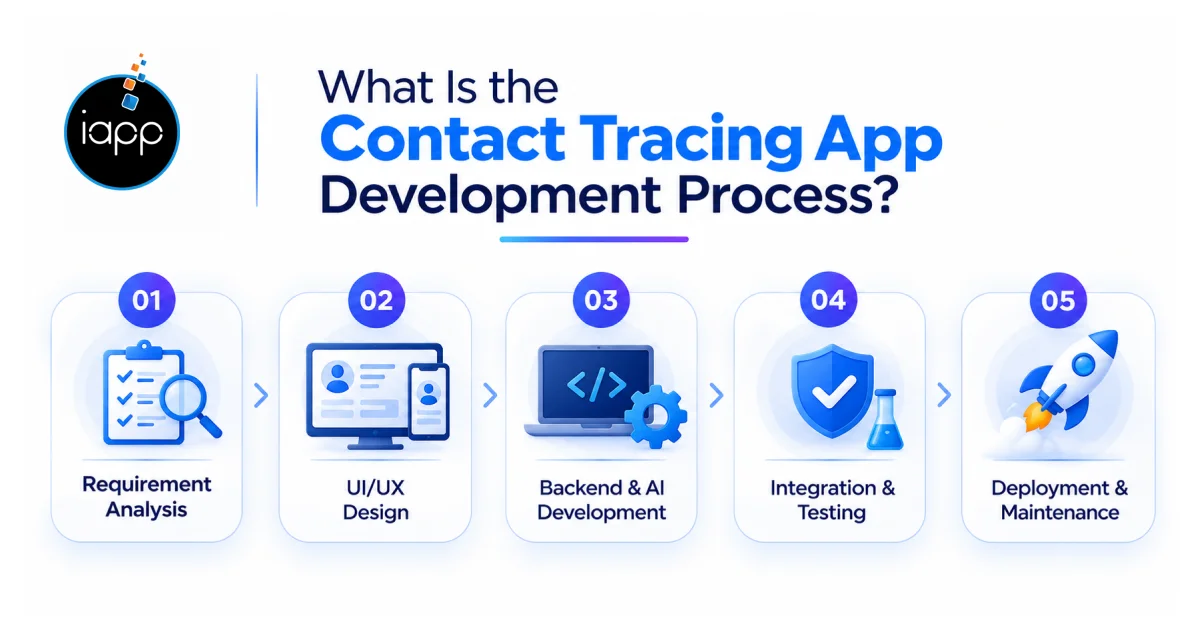
A structured contact tracing app development process reduces technical risks. It also helps teams manage costs and timelines.
Here are five practical development stages:
A typical MVP may require three to four months. Advanced platforms may need four to six months. Actual timelines depend on integrations and validation requirements.
For example, a hospital network may need multiple administrator roles. Its system may also require EHR integration. These requirements affect development scope and testing.
AI-powered contact tracing app development costs depend on complexity. Platform requirements and security also affect budgets.
The following figures are planning estimates for US projects.
| Development level | Estimated cost | Timeline |
|---|---|---|
| Basic MVP | $50,000–$90,000 | 3–4 months |
| Advanced platform | $100,000–$150,000 | 4–6 months |
| Enterprise solution | $150,000–$250,000+ | 6–8+ months |
Several factors influence the final development budget:
Businesses planning healthcare app development USA projects should budget separately. Post-launch maintenance requires ongoing financial planning. Cloud usage and security reviews create recurring costs.
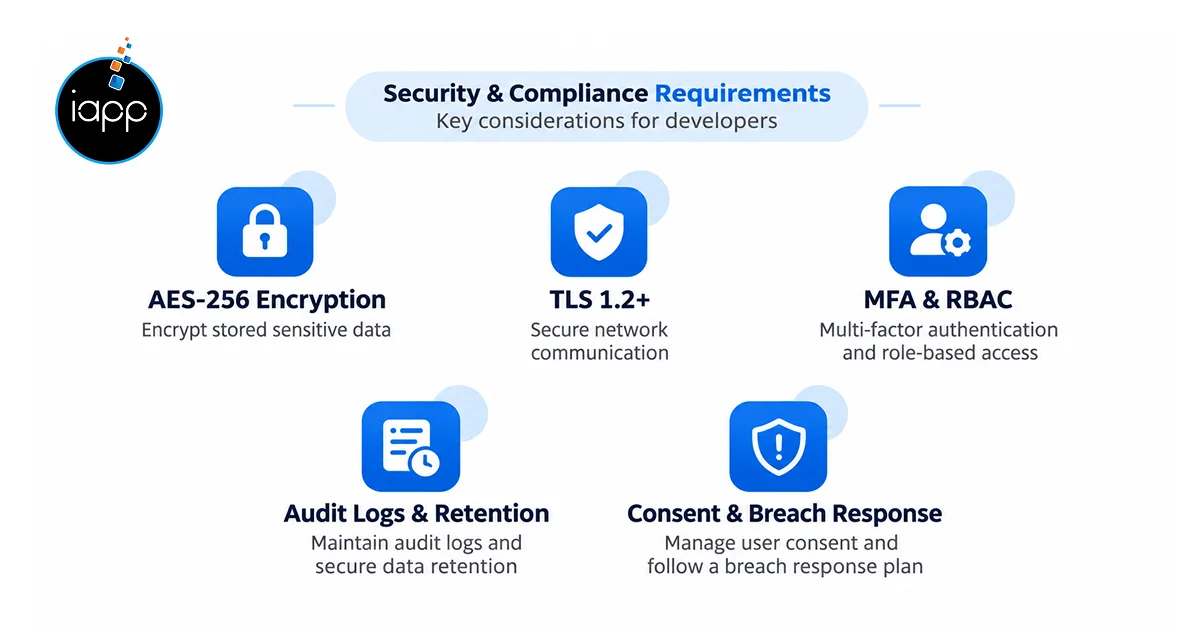
A HIPAA-compliant contact tracing app needs suitable safeguards. However, HIPAA does not apply to every health app.
Its applicability depends on the organization and data handling. Covered entities and business associates have specific obligations.
Important security measures include:
The HHS explains HIPAA requirements for mobile health applications. Developers should assess their specific legal obligations.
Expert perspective: Privacy decisions should begin during product planning. Collecting more data does not guarantee better tracing. Excessive permissions can discourage app adoption. Local processing may reduce unnecessary information transfers. Risk scores also require regular validation. Teams should test false positives and missed exposures. These checks help maintain public trust.
At iApp Technologies, we build custom digital products. Our teams support mobile, web, and AI development requirements.
We build applications around specific healthcare workflows. Our services include:
We integrate suitable AI capabilities into business applications. Our development approach can include:
We consider security throughout the development lifecycle. Our teams address authentication, encryption, and access controls. Testing covers functionality, performance, and integration requirements.
We support projects from planning through deployment. Our teams also provide maintenance and technical updates. This helps businesses manage changing requirements over time. iApp can help with contact tracing software development USA
AI-powered contact tracing app development requires careful planning. Technology, privacy, and usability must work together. A clear development strategy supports long-term product reliability.
At iApp Technologies, we develop custom mobile applications. Our services cover AI, backend systems, and integrations. We help businesses plan scalable digital solutions.
Yes. AI models analyze epidemiological data and transmission patterns. Their predictions support planning, not confirmed outcomes.
Accuracy varies with distance, obstacles, and device hardware. Bluetooth signals cannot confirm actual infection exposure.
Developers commonly use Swift, Kotlin, Python, Java, and JavaScript. Technology selection depends on platform and backend requirements.
Yes. Apps can store proximity records locally. They can synchronize authorized data after connectivity returns.
Apps can use anonymous identifiers and encryption. Limited permissions also reduce unnecessary personal data collection.
Yes. Secure APIs can connect apps with EHR platforms. Access requires suitable authorization and interoperability planning.
Common challenges include data quality, model bias, and privacy. Battery usage and user adoption also require attention.
Organizations need security updates and infrastructure monitoring. Regular testing also helps maintain system reliability.
 Jagwinder Singh
Wait! Before you go…
Talk to our experts and turn your ideas into powerful digital solutions.


 Trusted by 1000+ businesses

Fill out the form and our team will get back to you shortly.


