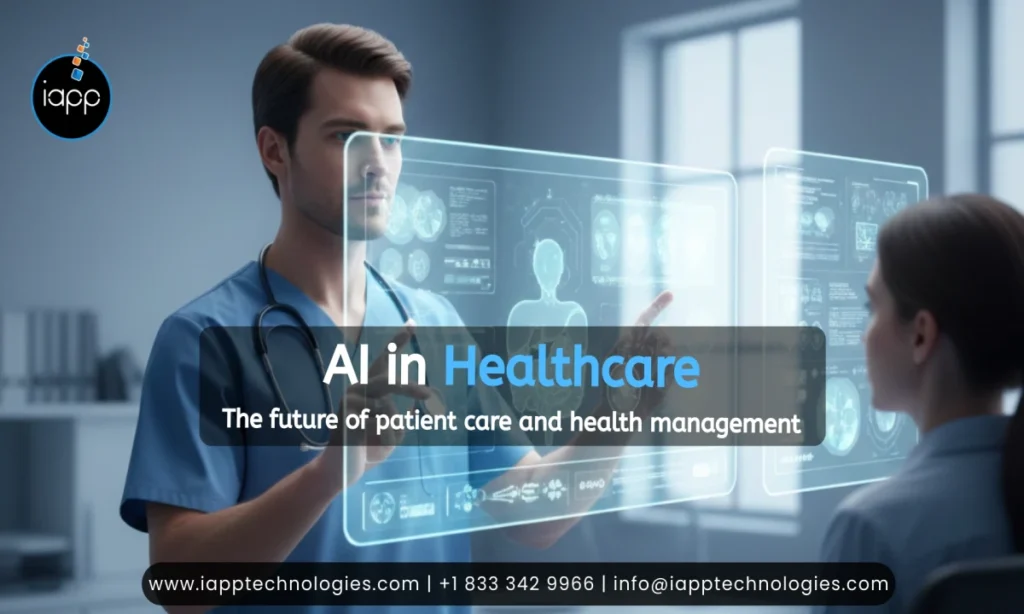
The healthcare industry is currently experiencing one of the biggest transformations in modern history, and iApp Technologies is helping organizations make sense of how AI can realistically improve patient care. While adoption hasn’t been perfectly smooth everywhere, there’s no denying that AI is changing how patients are diagnosed, treated and monitored both inside hospitals and right at home. What started as a buzzword is now actively shaping how healthcare professionals work and how patients experience care.
Artificial intelligence isn’t just a technical upgrade; it is slowly shifting the mindset of medical teams. Tasks that once took hours data analysis patient monitoring risk prediction can now be handled automatically in seconds. Predictive algorithms offer early warnings, virtual assistants help with initial symptom checks, and automated tools reduce the paperwork doctors often complain about. Patients in return get faster responses, personalized recommendations and more accurate health evaluations. Even though AI tools aren’t perfect and sometimes require adjustments they are undeniably improving the pace and quality of healthcare worldwide.
AI powered diagnostics is one of the most validated areas in modern healthcare. Medical staff frequently deal with long shifts overwhelming caseloads, and tight schedules. This naturally increases the chances of human error. AI systems help reduce those risks by scanning imaging reports, lab tests and patient histories more accurately and consistently.
A well-known example is Google Health’s breast cancer detection AI. Studies found it could detect potential cancer signs with slightly higher accuracy than radiologists in certain cases. Instead of replacing the radiologist the AI highlights suspicious areas they might have missed after looking at dozens of scans in a row. This improves early-stage detection which can literally save lives.
Another strong real-life example is PathAI, designed to support pathologists. By analyzing tissue samples it helps reduce misdiagnoses and brings better consistency across cases. Many doctors say it feels like having a second pair of eyes that never gets tired or distracted.
AI powered assistants are also transforming triage. These assistants collect symptoms, basic medical history and sometimes even vital signs from wearable devices. While they’re not meant to replace medical professionals they guide patients toward the right level of care. This helps reduce unnecessary ER visits and ensures emergency teams can focus on critical patients.
Healthcare is steadily moving away from the “one size fits all” approach. Although the shift is slow AI is making personalized medicine more practical. By analyzing genetics lifestyle choices environmental exposure, past treatments and even social habits AI can recommend personalized treatment plans with much higher accuracy.
A popular example is IBM Watson for Oncology. The system reads millions of medical research papers and matches them with a patient’s condition to suggest evidence based treatment options. Doctors still make the final decision but Watson helps them consider treatments that might otherwise be overlooked.
Chronic illness management has also improved through AI. For example AI driven diabetes management platforms can monitor glucose fluctuations and predict possible complications several hours ahead. Many patients say these insights help them manage their diet and lifestyle better and reduce unexpected hospital visits.
Robot assisted surgeries are another breakthrough. These AI supported robotic systems help surgeons perform highly precise operations especially in orthopedics cardiology and minimally invasive surgery. Hospitals have reported fewer complications and shorter recovery times though some patients still feel safer with traditional manual procedures.
Behind the scenes hospitals face daily operational challenges in scheduling billing documentation inventory shortages and managing staff availability. Partnering with a reliable healthcare app development company can help implement AI tools that streamline these tasks and minimize costly mistakes.
For example:
1. Predictive analytics help forecast patient admission spikes.
2. AI billing systems reduce errors caused by manual data entry.
3. Automated inventory management prevents overstocking or running out of essential medicines.
4. AI assisted scheduling ensures doctors nurses and operating rooms are efficiently utilized.
A good real world case comes from the Mount Sinai Health System in New York, where AI tools improved operating room scheduling accuracy and predicted ICU occupancy more effectively. This resulted in reduced waiting times and slightly lower operational costs.
Remote patient monitoring is also growing rapidly. Wearables equipped with AI tracking heart rate, oxygen levels, blood pressure and sleep patterns give doctors real time insights. If something unusual is detected notifications are sent instantly. This is extremely helpful for elderly patients and individuals with chronic illnesses. Early alerts significantly reduce medical emergencies and unnecessary hospital visits.
The AI healthcare market is expanding at a rapid pace. The global healthcare industry valued around $1.5 trillion in 2025 is expected to reach $2.3 trillion by 2030 and AI is one of the key accelerators behind this growth. More healthcare organizations are opening up to using AI for both clinical and operational advancements
Some emerging and ongoing trends include:
1. Generative AI solutions for drug development and research
2. Agentic AI models for advanced clinical decision support
3. AI-based telemedicine platforms for remote consultations
4. Smart wearable devices offering real time analytics
5. Predictive models to forecast disease outbreaks
6. Affordable robotic assisted surgeries
AI is also helping governments and public health departments identify high risk populations. Predictive analytics allow early planning, prevention strategies and resource allocation. As AI evolves healthcare will continue to become more predictive, preventive personalized and participatory often referred to as the 4P model.
Despite its benefits, AI in healthcare isn’t without challenges:
1. Data privacy concerns as more records become digital
2. Algorithm biases affecting minority populations
3. Staff members needing training to use AI efficiently
4. Regulatory compliance that varies from place to place
5. Patients feeling hesitant about trusting AI recommendations
Addressing these challenges requires transparency, strong data security, unbiased datasets and proper staff training. iApp Technologies prioritizes ethical AI ensuring solutions follow global best practices and build trust among healthcare professionals and patients.
iApp Technologies offers tailored AI healthcare solutions designed for real clinical environments. Our AI development services help:
1. Improve diagnostic accuracy
2. Build personalized treatment workflows
3. Enhance operations through automated analytics
4. Utilize generative and agentic AI models for advanced research
Through these solutions, healthcare providers can improve patient outcomes, maintain smoother workflows and stay competitive in a rapidly evolving industry.
Get up to 20% OFF on AI services and launch your healthcare app with premium features.
Offer valid till 31st Dec 2025. Upgrade your mobility business before the clock runs out!
Healthcare organizations planning to adopt AI can follow these practical steps:
Healthcare organizations planning to adopt AI can follow these practical steps and with guidance from experienced mobile app experts they can ensure a smooth implementation and maximize the benefits of AI-powered solutions.
Assess the current system and identify gaps
Choose the right AI tools based on actual needs
Train medical and administrative staff
Start with a pilot project
Track outcomes and improve continuously
This approach ensures a smooth transition without overwhelming staff or budgets.
The future of healthcare is smarter more responsive and truly patient centric. AI helps improve diagnostic accuracy enhances treatment choices, reduces errors and streamlines hospital operations. For healthcare organizations looking to leverage AI effectively partnering with iApp Technologies ensures access to ethical customized and practical AI systems designed to improve patient care and operational excellence. Contact iApp Technologies today.
How does AI improve patient care?
By enhancing diagnostic accuracy predicting risk early enabling personalized treatments and supporting continuous monitoring.
What role do AI development services play in healthcare?
They integrate AI into clinical workflows diagnostics and administrative systems to increase efficiency and consistency.
Are AI healthcare platforms safe for patient data?
Yes when built with encryption secure storage and full regulatory compliance (e.g., HIPAA).
Can smaller clinics adopt AI?
Absolutely. Modern AI tools are scalable and affordable for smaller facilities.
Why choose iApp Technologies for AI solutions?
Because we build ethical, customized and easy to deploy AI systems that help providers improve patient care with confidence.
 Jagwinder Singh
Wait! Before you go…
Talk to our experts and turn your ideas into powerful digital solutions.


 Trusted by 1000+ businesses

Fill out the form and our team will get back to you shortly.