The financial wellness app development is a mix of money management, financial education, secure data, and personalized guidance. These applications enable users to get a grip on their finances and control their spending. They also aid in goal planning and making better financial judgments. This help is needed significantly. The reason: 43% of U.S. citizens claimed money adversely influenced their mental health in 2025, according to Bankrate.
That leaves room for product teams to provide more than just a basic budgeting tool. A good financial wellness solution will link financial data to actionable advice. It should assist users to take action that makes them financially healthier.
This guide contains information on main features, technology, security, processes of development, prices, and partner selection.
A financial wellness app is a tool that helps you manage your money and enhance your financial health overall. It combines budgeting, savings, goals, financial education, notifications, and personalized insights.
The Consumer Financial Protection Bureau has defined financial well-being in four sections. They are daily financial control / financial resilience / progress toward objectives / freedom of choice.
A typical platform works through four stages:
For instance, a user may have many pending bills due before payday. The program can recognize the pattern and indicate how it impacts available cash.
That’s what makes a financial wellness application distinct from a typical expense tracker. The aim is to help people make smarter financial choices.
The right features depend on the target users. However, most products need tools that connect financial information with clear actions. Here are the major features that financial app development services USA should provide:
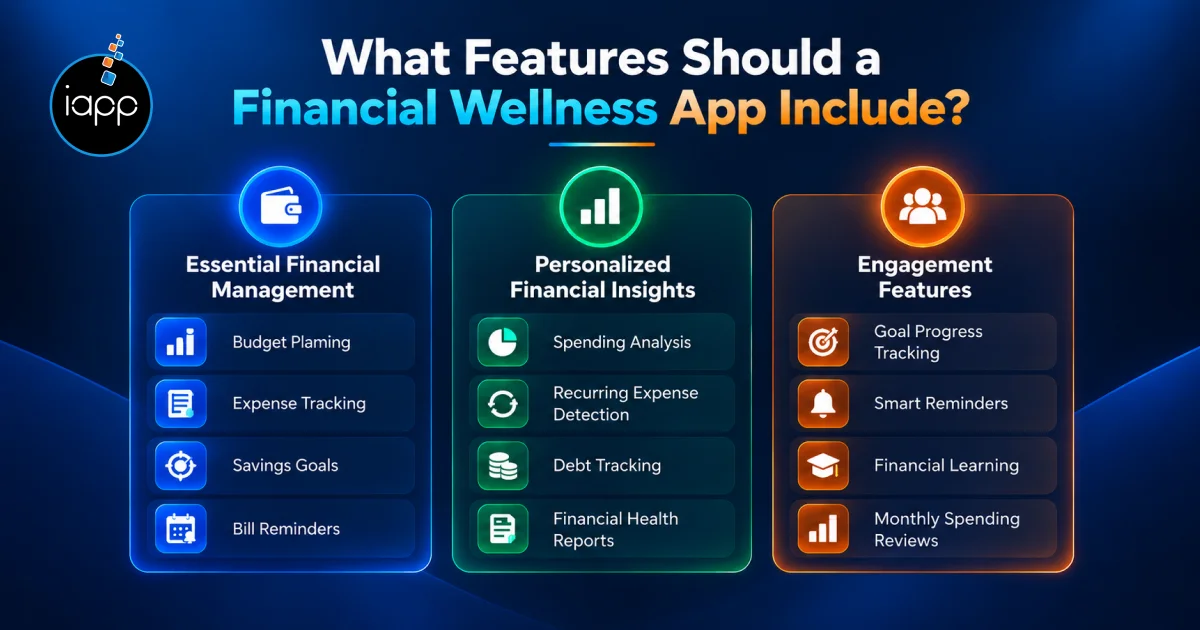
A first release can include:
The platform can also provide:
Useful engagement tools include:
For personal finance app development, the first release should focus on the most important user actions.
| Product stage | Typical scope | Planning budget |
|---|---|---|
| MVP | Budgeting, goals, dashboard | $40K–$70K |
| Growth | Bank APIs, analytics, alerts | 470K– $130K |
| Advanced | AI, multiple APIs, enterprise tools | $130K– $250K+ |
These are estimated ranges, not fixed quotes. The actual budget depends on many factors. For instance, features, integrations, security, platforms, and compliance.
For money management app development, a simple MVP can decrease initial cost. Moreover, new features can be added after reviewing actual user behavior.
AI can help users receive more relevant financial insights. It can analyze approved financial data and identify patterns that may require attention.
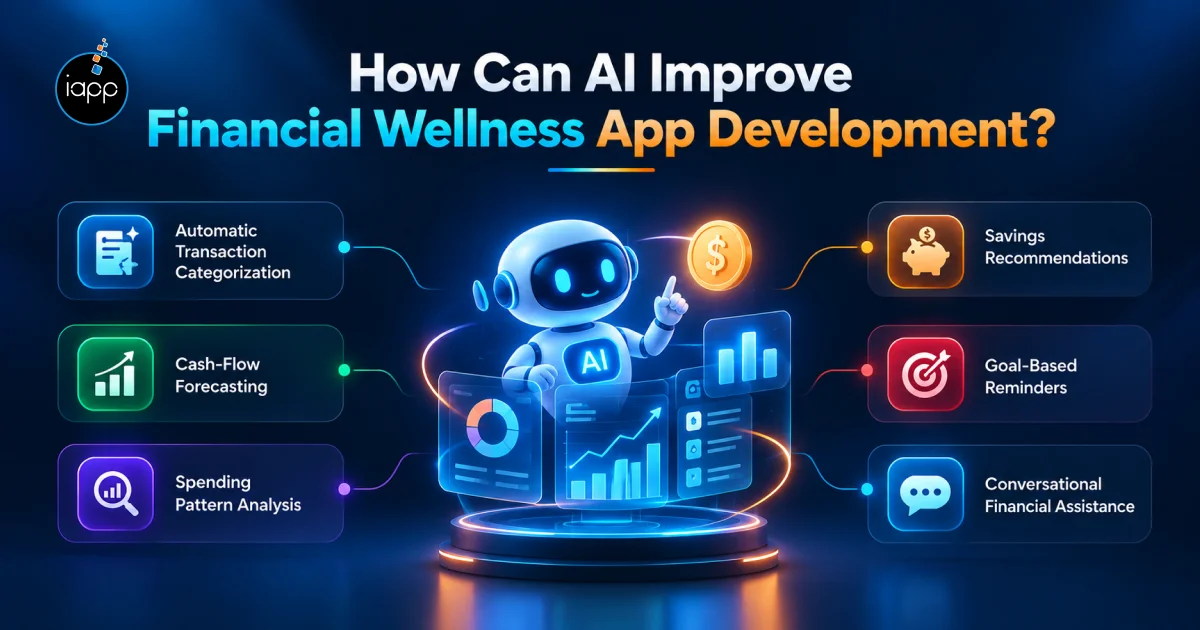
Useful applications include:
For example, the system may detect higher discretionary spending. It can then show how this affects a user’s monthly savings target. This can make financial planning app development more useful. However, recommendations should rely on accurate data and clear rules. The interface should also explain imperative recommendations in layman’s terms. So, that user can understand the reason behind an alert or suggestion.
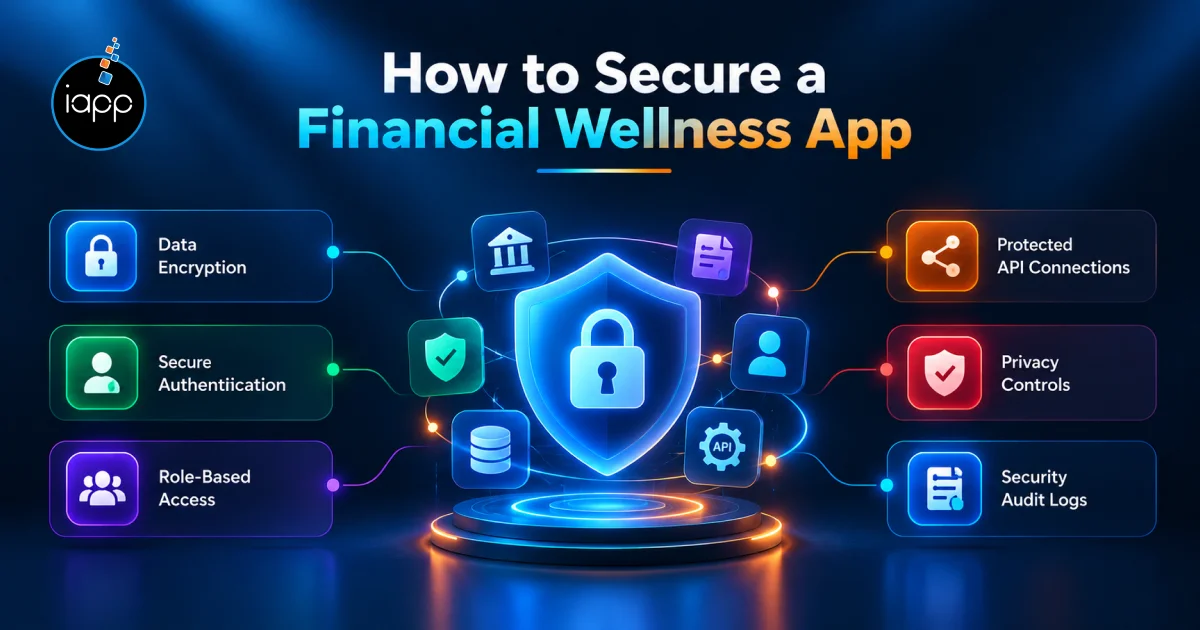
Security should be planned before development begins. Financial wellness application development can involve sensitive financial data. So every data flow needs clear access controls.
A U.S. platform may require controls for:
Enterprise customers may also request SOC 2 controls during procurement. However, requirements vary by product. A budgeting platform has different obligations from a product that processes payments.
Our expert view: Start with a data-flow map before choosing the final architecture.
Document:
This approach can prevent expensive architecture changes later.
A scalable financial wellness platform development project needs a secure frontend, backend, database, APIs, and monitoring.
A practical technology stack may include:
The platform can connect with services for:
The technology choice should match with the product requirements. This keeps finance app development easier to maintain when users and integrations increase.
A structured financial wellness app development process helps control product, technical, and budget risks.
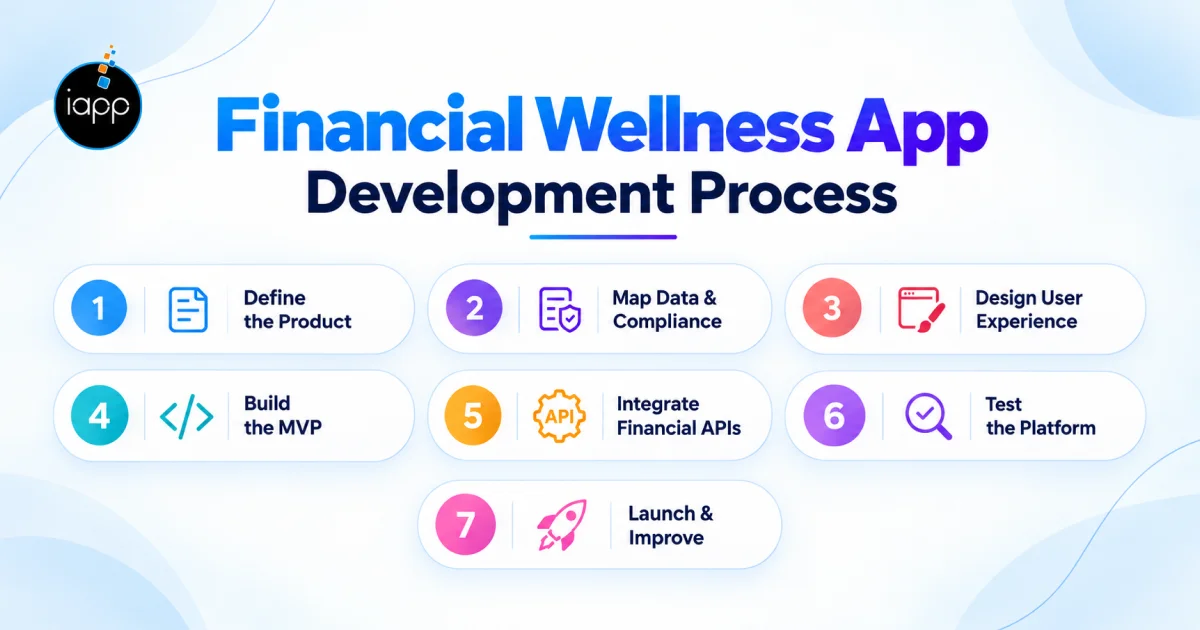
Set the target users, business model, core problem, and success metrics.
Identify financial data, permissions, APIs, storage needs, and applicable requirements.
Create flows for onboarding, account connections, budgets, goals, alerts, and insights.
Develop the smallest useful product needed to test the core concept.
Connect banking, financial data, payroll, identity, or payment APIs.
Test calculations, API failures, permissions, authentication, performance, and devices.
Track activation, retention, feature usage, and completed financial actions.
For financial app development, API failure handling needs special attention. If an account connection stops working, users should receive a clear recovery option.
The cost of financial wellness app development depends on functionality, integrations, security, platforms, and development time.
Use these figures for early planning:
| Development level | Timeline | Indicative budget |
|---|---|---|
| Basic MVP | 3–5 months | $40K–$70K |
| Mid-level platform | 5–8 months | $70K–$130K |
| Advanced platform | 8–12+ months | $130K–$250K+ |
A basic budgeting product needs less development than an enterprise platform. Costs can rise when the product requires multiple financial APIs. AI features, payroll connections, complex permissions, and advanced security also add development work.
If you are evaluating a personal finance application development partner, ask for a feature-level estimate. A single project price gives little insight into the actual scope.
At iApp Technologies, we approach financial wellness app development around your users, business goals, data needs, and growth plans.
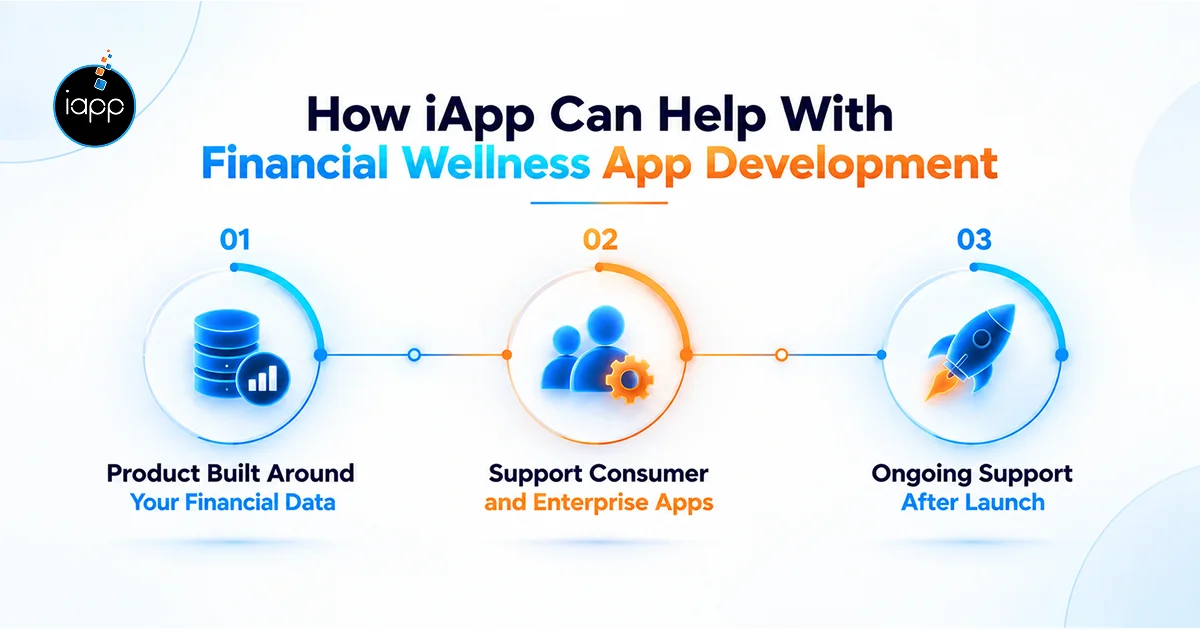
Our team can help define:
This gives the development team a clear scope before coding begins.
Our financial wellness app development services cover backend development, APIs, dashboards, integrations, and secure data transmission. We can also prepare the architecture for banking, payroll, and payment.
Our approach supports consumer apps, employee financial wellness platforms, fintech products, and enterprise solutions. For larger products, we can include admin panels, role-based access, analytics, and cloud infrastructure.
Our work can continue after the MVP launch. We integrate new features, API updates, performance improvements, security updates, and scaling. In case you need fintech app development support, our team can help plan your product.
Successful financial wellness app development requires useful features, secure data, and simple user flows. It must also show measurable financial outcomes. It is advised to go with focus MVP first. This way you can test products before larger investments in integrations and advanced features.
At iApp Technologies, we provide financial wellness app development in USA and worldwide. Our solutions are built with proper product planning. We offer UI/UX, backend development, APIs, AI capabilities, security, and ongoing support. In case you are planning a new platform, begin by defining your users and their financial problems.
A budgeting app’s primary purpose is to assist users in monitoring their spending, setting up budgets, and cutting down on expenditure. Financial wellness software includes budgeting but also savings, goals, financial resiliency, and education.
These are meant for consumers, employees, fintech users, financial institutions, and organizations delivering financial education.
Yes. Financial data APIs may link authorized account data, transactions, balances, and other financial data.
Yes. Rules and AI models may provide individualized insights. These are based on approved user data and specified financial parameters.
Yes. They can back up income information, employee perks, deductions, and programs for employers.
The most common models are: subscription, employer license, B2B contracts, premium features, and financial collaborations.
The development time for a simple MVP is typically 3-5 months. On the other hand, sophisticated platforms may take 8-12 months.
Common APIs include financial data, banking, identification, payments, payroll, credit information, alerts, and analytics.
Review the personal financial app development company’s fintech knowledge, API abilities, security standards, and development processes. Also, inquire about communication, scalability, and post-launch support.
Yes. React Native and Flutter can support both platforms. But native development is an ideal choice when you have platform-specific needs.
 Jagwinder Singh
Wait! Before you go…
Talk to our experts and turn your ideas into powerful digital solutions.


 Trusted by 1000+ businesses

Fill out the form and our team will get back to you shortly.