AI apps are moving beyond simple questions and answers. Businesses now want software that can understand goals, use tools, and complete tasks. AI agents can also connect with databases, APIs, CRMs, and other business systems.
McKinsey reported that 23% of organizations were scaling agentic AI in 2025, while another 39% were experimenting with it. With more AI agent app development companies entering the market, choosing the right partner can be difficult. Businesses need teams that understand AI, app development, integrations, security, and automation.
This guide covers 10 companies businesses can consider for different AI agent development requirements.
An AI agent app development company builds software that can reason through tasks. The system can then use tools, data, APIs, and business rules. Unlike a basic chatbot, an agent can take actions after receiving a goal.
AI agents can break larger goals into smaller tasks. They can then use available tools and systems to complete those tasks. The amount of autonomy depends on how the application is designed.
Businesses can build agents for many practical functions. Common applications include customer support, lead qualification, sales research, appointment scheduling, order management, document processing, employee support, data analysis, IT services, and internal knowledge search.
Businesses are investing in agents because many processes still depend on manual work. Employees often move between emails, spreadsheets, CRMs, documents, and internal systems. An agent can connect several steps within one process.
IBM surveyed 2,900 executives globally for its 2025 AI Projects to Profits study. Seventy percent said agentic AI was important to their organization’s future. Furthermore, 83% expected agents to improve process efficiency and output by 2026.
The potential value goes beyond automation. Agents can support faster decisions, customer service, research, and internal operations. IBM also found that 69% of surveyed executives cited improved decision-making as a benefit.
Still, experimentation does not mean production readiness. Businesses should assess accuracy, security, integration, monitoring, and human oversight. These areas often determine whether an AI agent becomes useful after launch.
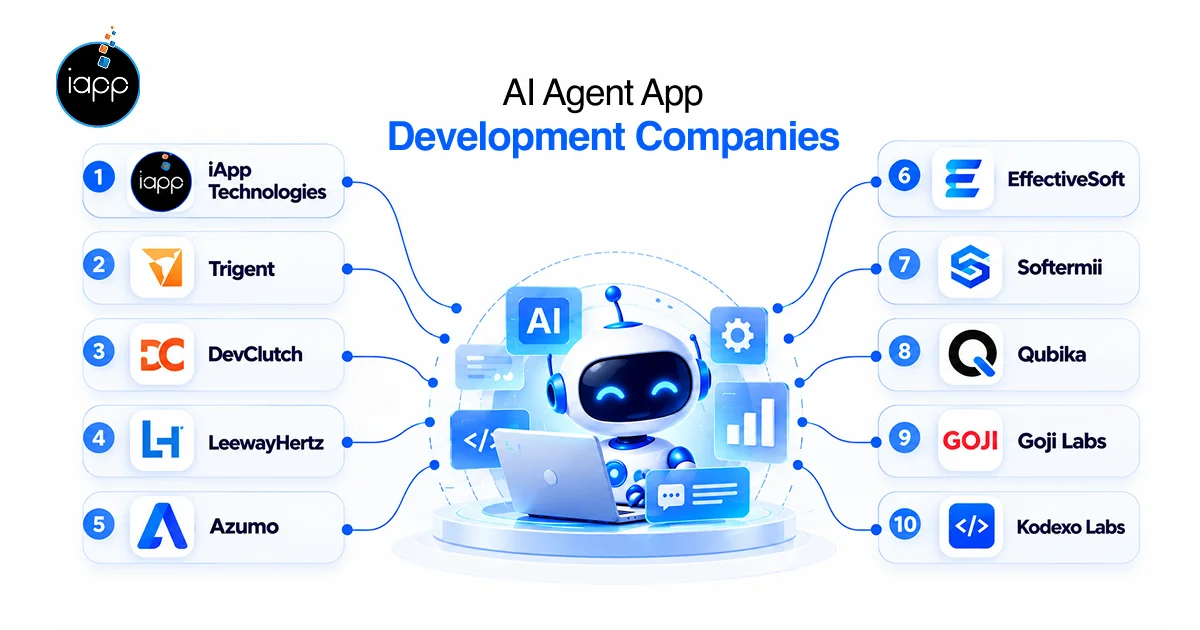
The best AI agent development companies for businesses listed below represent different development approaches and project strengths. The selection considers publicly documented AI services and software capabilities.
| Company | Location | Core Focus | Suitable Projects |
|---|---|---|---|
| iApp Technologies | USA / Global | AI, mobile, web, software | AI agents and custom applications |
| Trigent | USA / Global | Software engineering | Enterprise AI and modernization |
| DevClutch | USA / Global | Software and mobile | Custom AI applications |
| LeewayHertz | USA / India / Global | Enterprise AI | Single and multi-agent systems |
| Azumo | USA / Global | AI and software | Enterprise agent systems |
| EffectiveSoft | USA / Global | Software and AI | Complex business automation |
| Softermii | USA / Global | Product engineering | AI-enabled mobile and web products |
| Qubika | USA / Global | Digital product engineering | Intelligent enterprise products |
| Goji Labs | USA | Product strategy and development | AI-powered digital products |
| Kodexo Labs | USA / Global | AI and mobile | AI-powered mobile applications |
Headquarters: USA / Global
Core Services: AI development, mobile apps, web development, LLM applications
Best For: Custom AI products and business automation
iApp Technologies offers AI and software development services. Its services include agentic AI, generative AI, business automation, and custom software. The company also develops mobile and web applications.
iApps’ LLM development services cover RAG, model integration, and AI agents. Agents can connect with APIs, CRMs, and ERPs. The company lists use cases such as customer support agents, knowledge assistants, and document processing systems.
This makes iApp relevant for businesses building complete AI products. Its capabilities can cover both the AI layer and the application around it.
For businesses seeking AI agent development companies in USA, iApp can support projects requiring both AI and app development.
Headquarters: USA / Global
Core Services: Software engineering, AI, cloud, data, application development
Best For: Enterprise software and AI modernization
Trigent provides software engineering and AI development services. Its AI services include AI strategy, model development, application development, and integration. The company also lists agentic AI within its service portfolio. Trigent works with APIs, ERP systems, CRM platforms, data platforms, and legacy systems.
Its application engineering services support enterprise software requirements. This makes the company relevant for businesses with complex technology environments. Trigent also promotes AI Launchpad services for moving ideas toward working products.
Its focus can suit companies that need AI added to existing enterprise systems.
Headquarters: USA / Global
Core Services: Software development, mobile development, AI applications
Best For: Custom digital products
DevClutch focuses on software and digital product development. Its services can support businesses building custom applications around specific requirements. For an AI project, the development scope can include the application layer. It can also include automation, integrations, and user-facing product features.
This can suit businesses that need a custom digital product rather than a standalone AI tool. Companies should confirm the current agent architecture and integration scope during discovery.
The right project fit depends on the required agent functions and technical scope.
Headquarters: USA / India / Global
Core Services: AI agents, multi-agent systems, RAG, enterprise AI
Best For: Complex enterprise AI systems
LeewayHertz AI Agent Development develops AI agents and multi-agent systems. Its services cover the full development lifecycle. This includes use-case analysis, technical architecture, development, deployment, and AgentOps. The company also works with enterprise integrations and governance requirements.
Its AI services cover areas such as RAG and multi-agent architectures. Industries listed by the company include finance, healthcare, manufacturing, retail, and logistics. This makes it relevant for organizations with complex operational requirements.
Businesses planning complex agent environments can assess its architecture and deployment approach.
Headquarters: San Francisco, USA
Founded: 2016
Core Services: AI agents, generative AI, software engineering
Best For: Enterprise agent applications
Azumo AI Agent Development develops custom AI agents for business applications. The company works with technologies such as LangGraph, CrewAI, and Microsoft AutoGen. Its approach includes human approval and controlled levels of autonomy. Azumo lists use cases across finance, legal, sales, and marketing.
Its AI services can also connect agents with business platforms. Examples include CRM systems and sales tools. The company was founded in 2016 and operates with a distributed team.
This makes Azumo relevant for businesses developing production-focused agent systems.
Headquarters: San Diego, USA
Founded: 2003
Core Services: AI development, software engineering, enterprise systems
Best For: Complex automation and regulated industries
EffectiveSoft AI Agent Development provides custom AI agent development services in the USA. Its AI agents can support reasoning, task execution, memory, and context. The company also works with single-agent and multi-agent systems. Its services include RAG, orchestration, API integration, databases, and monitoring.
The company lists finance, healthcare, and trading among its application areas. Its technology stack includes GPT, Claude, Llama, Mistral, LangChain, and LangGraph. EffectiveSoft was founded in 2003 and is headquartered in San Diego.
This can suit projects where reliability and system integration are major requirements.
Headquarters: USA / Global
Core Services: AI development, mobile apps, web apps, enterprise AI
Best For: AI-enabled digital products
Softermii AI Development Services provides AI consulting, development, integration, and product engineering. Its AI services include automation, AI agents, NLP, computer vision, and generative AI. The company also supports mobile and web application development.
Its integration services can connect AI capabilities with an existing codebase. Softermii works with technologies including GPT, Llama, Mistral, and Claude. Its services also cover RAG and model fine-tuning. This makes it relevant for companies building AI features into existing products.
It can be considered by businesses combining product development with AI implementation.
Headquarters: Austin, Texas, USA
Founded: 2005
Core Services: AI, digital products, software engineering
Best For: Enterprise intelligent applications
Qubika provides digital product engineering and AI services. Its AI Studio covers custom AI agents, generative AI, LLM applications, and intelligent automation. The company also works with computer vision and predictive analytics. Its technology ecosystem includes cloud and data platforms.
Qubika lists enterprise-grade AI development among its capabilities. It has a US headquarters in Austin and delivery operations across Latin America. Its history dates back to 2005.
Businesses can consider Qubika for larger digital product and enterprise AI requirements.
Headquarters: Los Angeles, USA
Founded: 2014
Core Services: Product strategy, UX, mobile, web, AI development
Best For: Startups and digital product teams
Goji Labs is a Los Angeles-based digital product agency. The company works on mobile, web, software, and AI-powered products. Its AI services include assistants, RAG, data infrastructure, and workflow automation. The company also supports model orchestration and AI-focused product design.
Goji Labs reports more than 500 products launched. It also reports more than 25 million users across its products. Its approach combines product strategy with software development.
It can suit startups and businesses that need product strategy alongside technical development.
Headquarters: Austin, USA
Founded: 2021
Core Services: AI development, mobile apps, automation
Best For: AI-powered mobile and business applications
Kodexo Labs offers AI-powered app development. Its services include agentic features, on-device inference, and predictive personalization. The company supports iOS, Android, React Native, and Flutter development. Its agent systems can work with company data and multiple business databases.
Kodexo Labs also uses frameworks such as LangChain, LangGraph, CrewAI, and AutoGen. The company reports 51 AI products across more than 25 industries. It was founded in 2021 and is headquartered in Austin.
This makes it relevant for businesses planning mobile-first AI applications.
AI agent software development companies work across traditional software and AI systems. That combination matters for agent applications. A traditional application may follow predefined rules. An AI agent can interpret a goal and select actions. However, agents still require normal software engineering.
They need APIs, databases, authentication, testing, hosting, and monitoring. Businesses should therefore look for teams with both skill sets. This is especially important for enterprise applications.
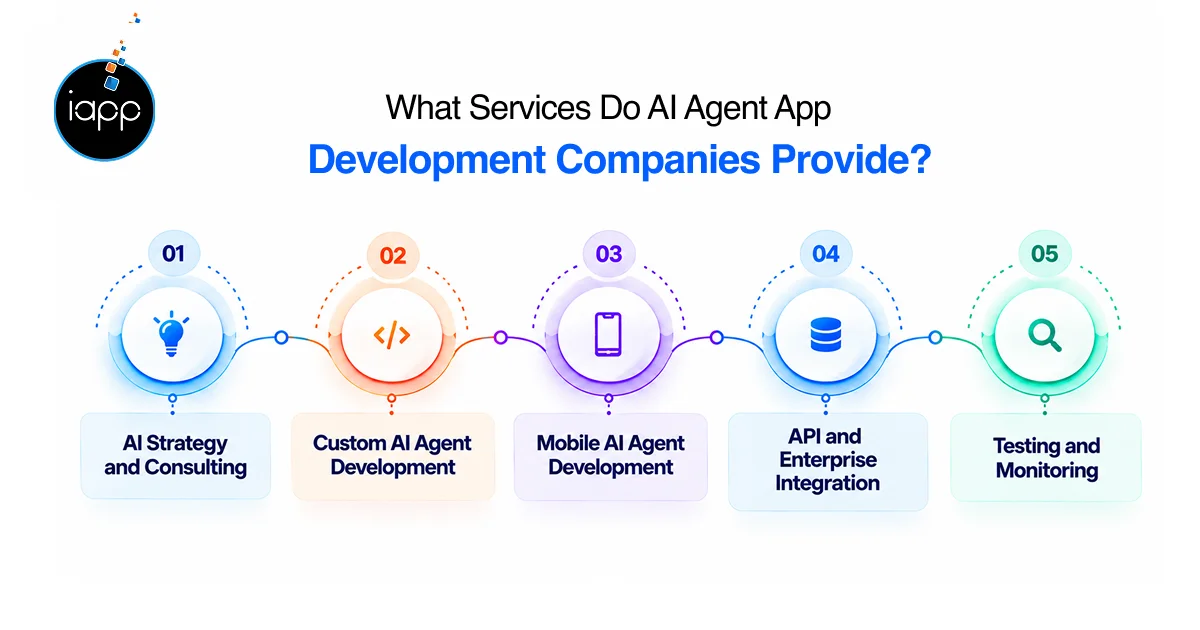
AI agent development companies usually cover strategy, development, integrations, testing, and post-launch support. The exact service mix depends on the project.
Teams first identify suitable business tasks. They then define agent responsibilities, data access, tools, and human controls. This helps prevent building an agent without a clear business purpose.
Custom AI Agent Development Companies build agents for specific business requirements. The system may use an LLM, RAG, APIs, databases, and external tools. Some projects may also require multiple specialized agents.
AI Agent Mobile App Development Companies can build agents directly into mobile applications. The app can support voice, text, notifications, user accounts, and real-time actions.
Agents often need access to business systems. Common integrations include CRMs, ERPs, payment systems, databases, calendars, customer support platforms, business APIs, and internal knowledge bases.
AI systems need testing beyond normal software testing. Teams should test accuracy, permissions, failure cases, latency, and tool usage. Monitoring should continue after launch.
The exact cost depends on the system’s complexity. The following ranges are useful for early planning. They are indicative market ranges, not fixed company prices.
| Project Type | Indicative Cost |
|---|---|
| Basic task-specific agent | $15,000 to $40,000 |
| Custom AI agent MVP | $30,000 to $75,000 |
| Multi-workflow agent | $50,000 to $150,000+ |
| Multi-agent enterprise platform | $120,000 to $500,000+ |
Several factors can change the final budget. These include the number of agents, LLM and API costs, RAG requirements, data preparation, CRM or ERP integration, mobile development, web development, security, cloud infrastructure, monitoring, human approval systems, and maintenance.
A simple internal agent may need a smaller development team. A multi-agent enterprise platform requires much more engineering work.
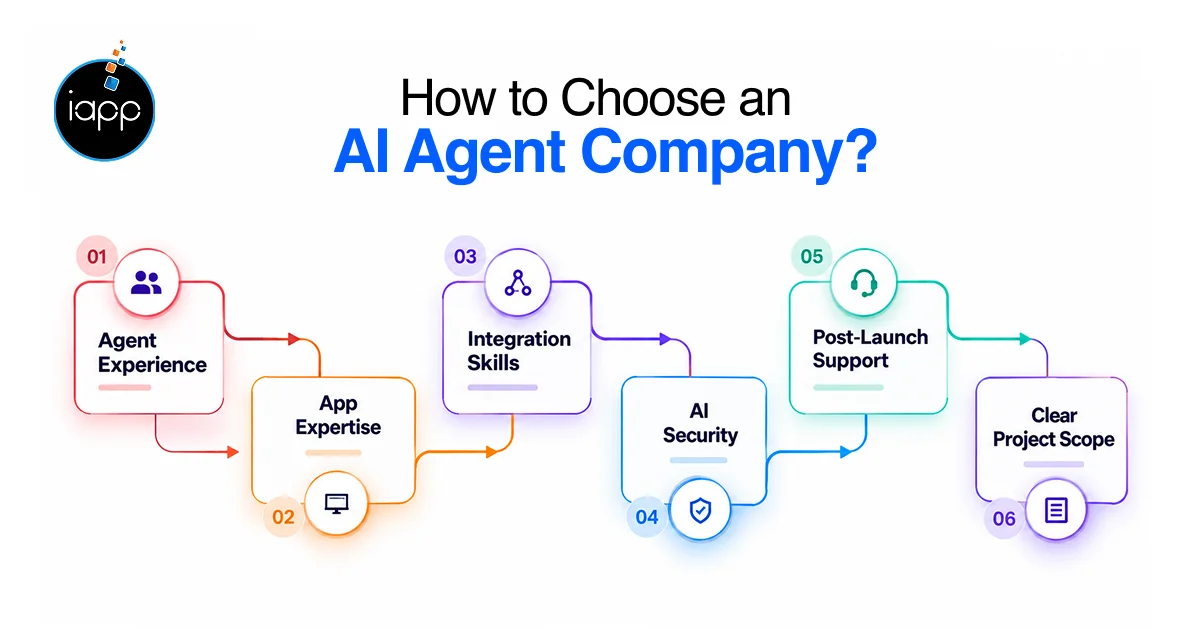
It depends on your product requirements. Do not compare AI agent development companies only by their AI service pages. Review the technical scope behind those services.
Also, AI agent development firms differ in their technical depth and product capabilities. Before selecting one, review these areas:
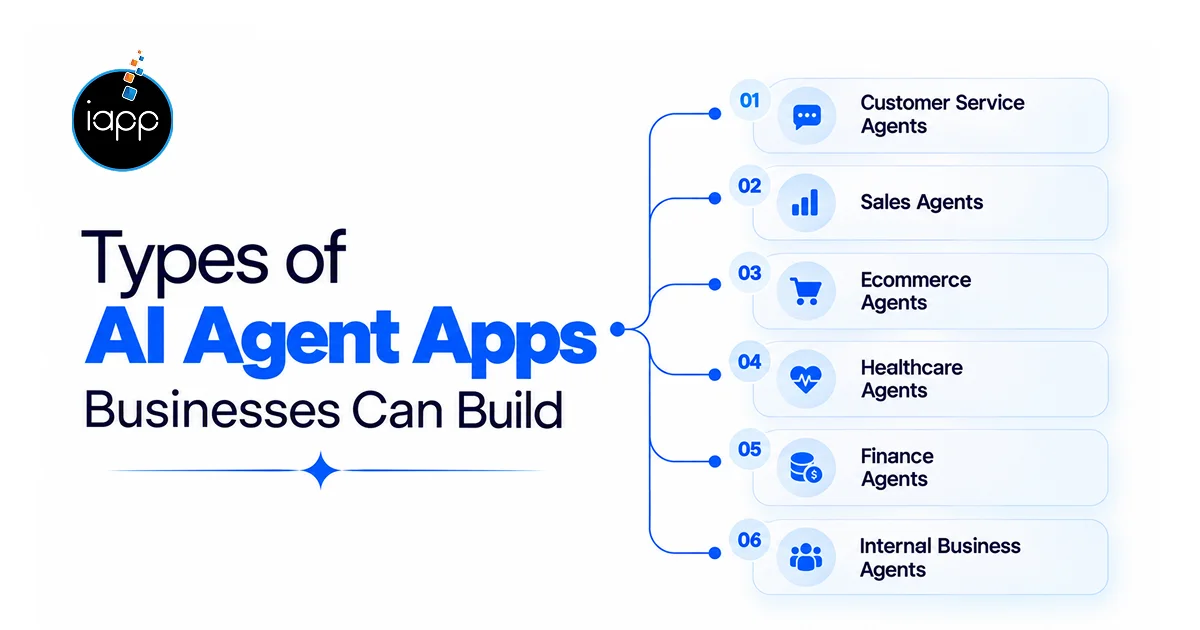
Businesses can build agents for many departments and industries. The right application depends on the business process.
AI agents are changing how businesses approach software automation. They can answer questions, use tools, access data, and complete multiple tasks. However, the development approach matters as much as the AI model. The 10 AI agent app development companies covered here have different service areas and technical strengths.
Some focus on enterprise AI and complex integrations. Others focus on mobile products, digital platforms, or custom software. The ideal pick depends on your application, data, integrations, budget, and industry. For companies planning AI agent app development, these factors should guide vendor evaluation.
 Jagwinder Singh
Wait! Before you go…
Talk to our experts and turn your ideas into powerful digital solutions.


 Trusted by 1000+ businesses

Fill out the form and our team will get back to you shortly.