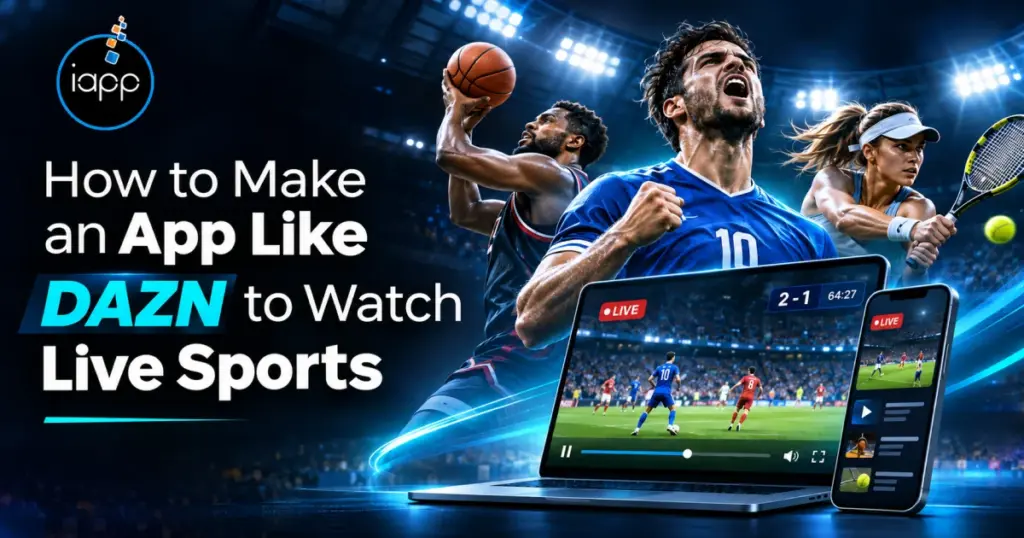
Sports fans now expect more than a television broadcast. They want live games, replays, highlights, schedules, and flexible viewing across their devices. Building a DAZN-style platform can meet this demand, but it requires the right streaming technology, content rights, monetization model, and scalable infrastructure.
To build an app like DAZN, businesses need to combine live video streaming, subscriptions, content management, multi-device support, security, and scalable cloud infrastructure into one platform.
Nielsen reports that streaming reached a 48.2% share of ad-supported TV viewing in Q2 2026, showing the continued importance of streaming distribution.
A DAZN-like platform is a digital service for watching live and on-demand sports across mobile, web, smart TVs, and connected devices.
The goal of sports streaming app development is not simply to create a video player. The platform must manage:
DAZN itself supports smartphones, tablets, computers, smart TVs, streaming devices, and gaming consoles.
Sports viewing is becoming increasingly fragmented across broadcasters and streaming services. A new platform can address this by giving fans a simpler way to find and watch relevant events.
Nielsen’s 2026 Gracenote study found that 26% of sports fans frequently cannot determine where a specific event is available, while 85% want TV interfaces to show upcoming games and where to watch them.
For businesses, this creates opportunities around:

A successful sports streaming app features a set that should cover both viewing and business operations.
DAZN’s current U.S. plans demonstrate how subscriptions can include different device and concurrent-stream limits, while PPV events can have separate viewing restrictions.
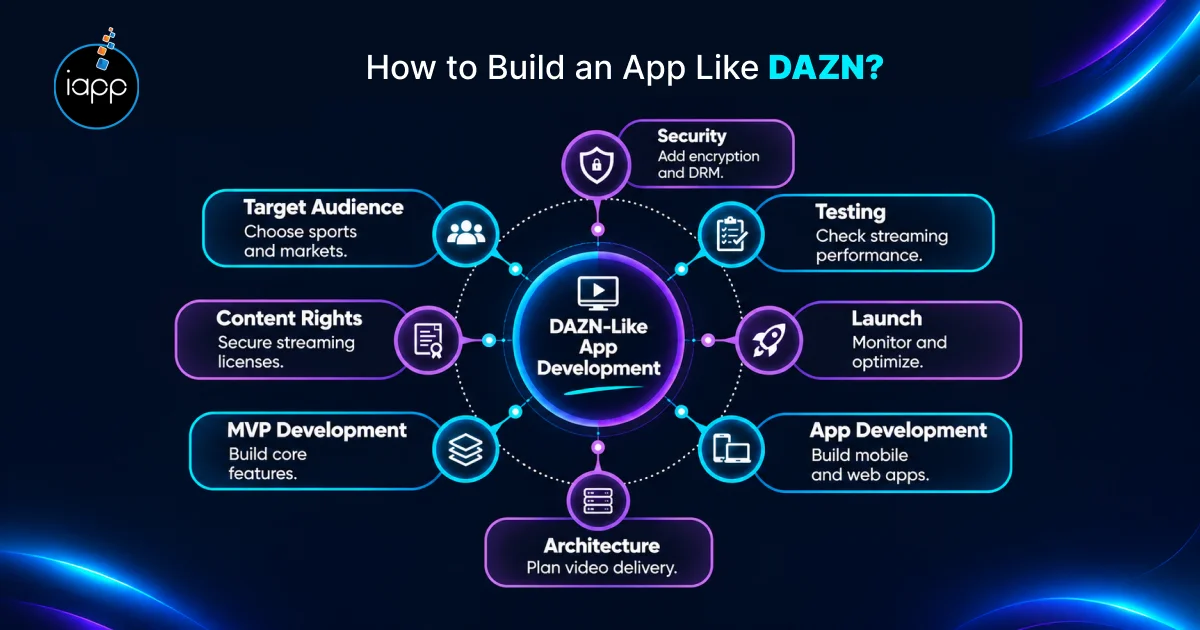
The development process should begin with the business model rather than coding.
This approach makes live sports streaming app development more manageable because businesses can validate demand before investing in every advanced platform.
A scalable architecture can include:
The typical streaming path is:
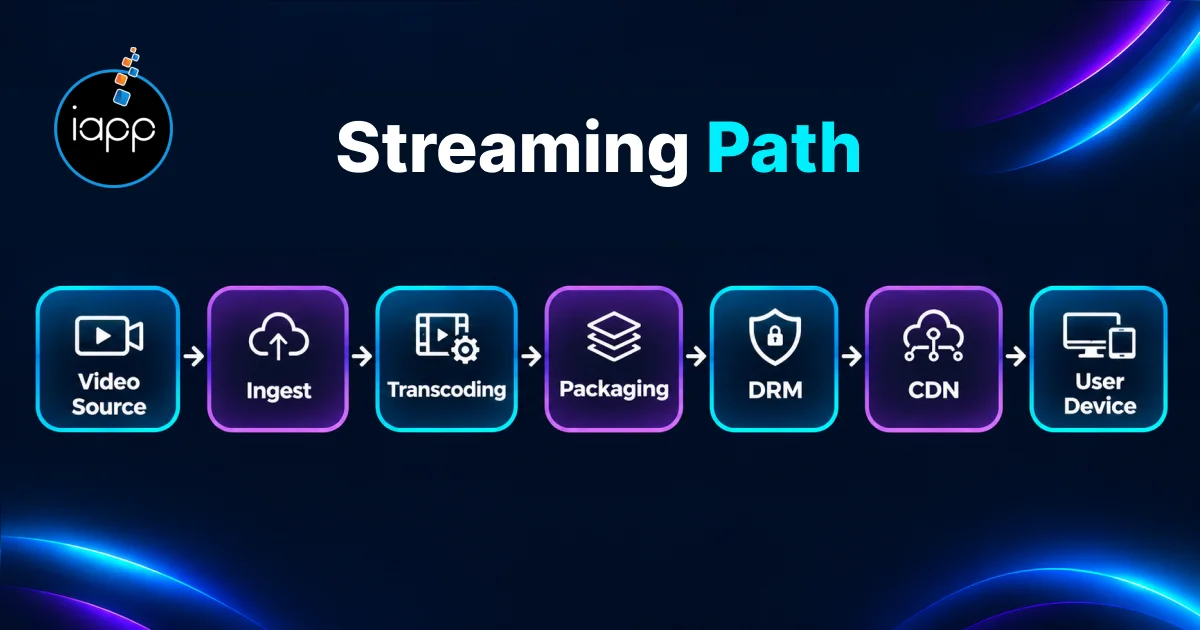
Video source → Ingest → Transcoding → Packaging → DRM → CDN → User device
For a serious OTT sports app development project, this architecture should also support traffic spikes during high-demand games.
The sports streaming app development cost depends heavily on platforms, streaming requirements, security, content management, and expected audience size.
| Platform Level | Estimated Cost | Typical Timeline |
|---|---|---|
| Basic MVP | $20K–$45K | 2–3 months |
| Standard platform | $45K–$90K | 3–5 months |
| Advanced platform | $90K–$180K | 5–8 months |
| Enterprise OTT | $180K–$400K+ | 8–12+ months |
These are development estimates, not fixed quotes. Current 2026 industry estimates show that advanced OTT products with DRM, multi-platform support, and live streaming can reach substantially higher budgets.
Ongoing costs can also include:
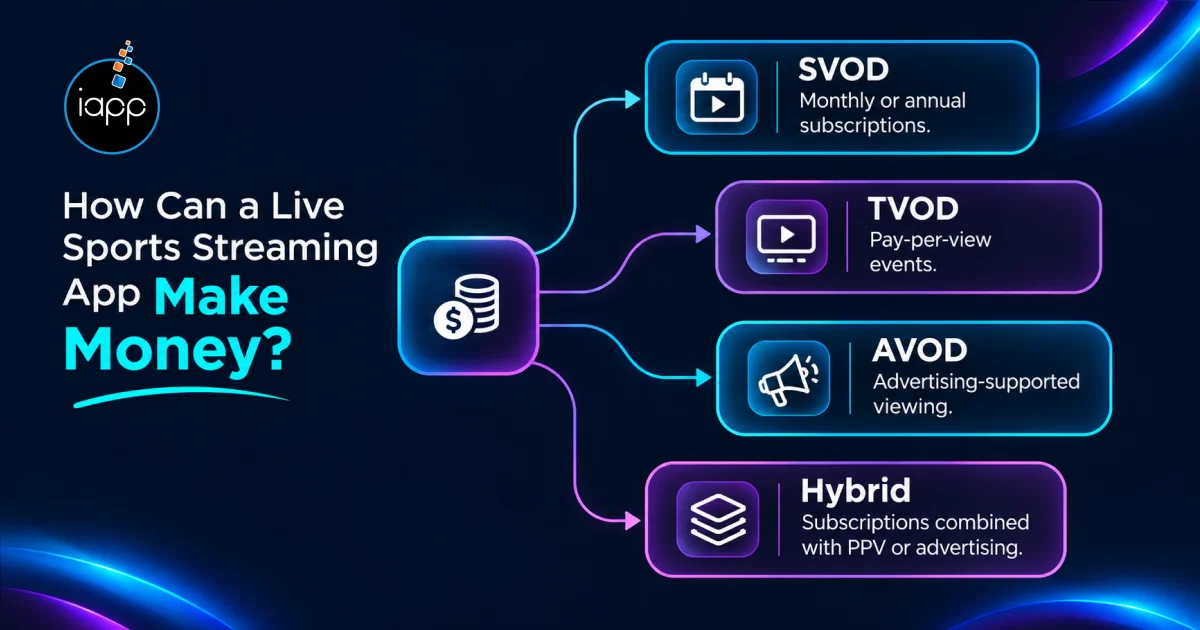
A live sports streaming app can use several monetization models.
DAZN’s U.S. offering provides a real example of subscription and PPV-based monetization. Its ultimate plan includes PPV events alongside broader sports access.
The right model depends on content rights, event frequency, audience size, and willingness to pay.
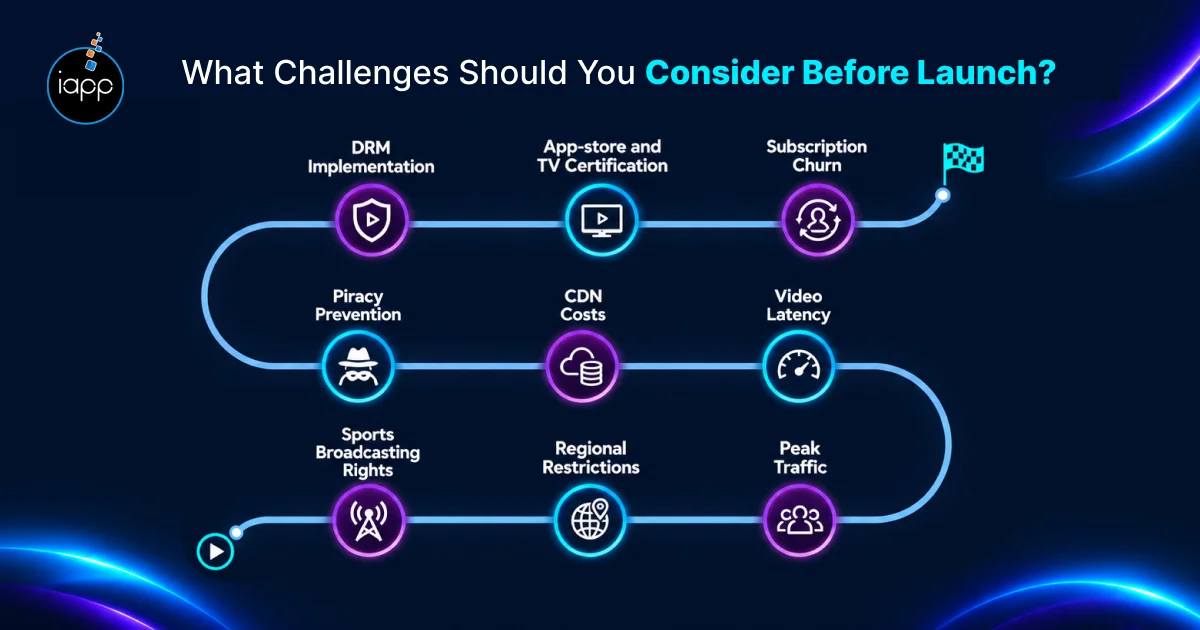
The biggest challenges go beyond app development.
This is why sports streaming app development USA projects should plan infrastructure and licensing alongside product development.

At iApp Technologies, we focus on building sports platforms around the business model, target audience, and expected scale rather than simply replicating another app’s interface.
We can structure the product around:
We design the backend and cloud architecture to handle traffic spikes, CDN delivery, secure access, and high concurrent viewing requirements.
Our approach can support:
We can help improve the platform through analytics, feature upgrades, personalization, security updates, and additional sports categories.
For businesses evaluating a sports app development company USA, the key is to choose a team that understands both application development and the technical demands of live video delivery.
Building a DAZN-style platform requires careful planning across product design, streaming technology, content rights, security, and monetization. A phased sports streaming app development strategy can help businesses launch an MVP, test viewer demand, and expand toward a larger OTT platform.
For startups, broadcasters, and sports businesses, the goal should be a platform built around their own content strategy and audience rather than a simple copy of DAZN.
The answer will cover development scope, streaming infrastructure, platforms, DRM, licensing, and ongoing operational expenses.
The answer will explain typical MVP, advanced, and enterprise development timelines.
The answer will cover broadcasting rights, territories, leagues, events, and content licensing considerations.
The answer will explain streaming protocols, cloud infrastructure, CDN, encoding, DRM, and video players.
The answer will explain how scalable content architecture can support different sports and leagues.
The answer will distinguish OTT platforms from individual live-streaming applications and explain where sports fits.
The answer will cover MVP scope, platform prioritization, managed streaming services, and phased development.
The answer will cover streaming expertise, scalability, security, multi-platform development, technical support, and relevant experience.
 Jagwinder Singh
Wait! Before you go…
Talk to our experts and turn your ideas into powerful digital solutions.


 Trusted by 1000+ businesses

Fill out the form and our team will get back to you shortly.