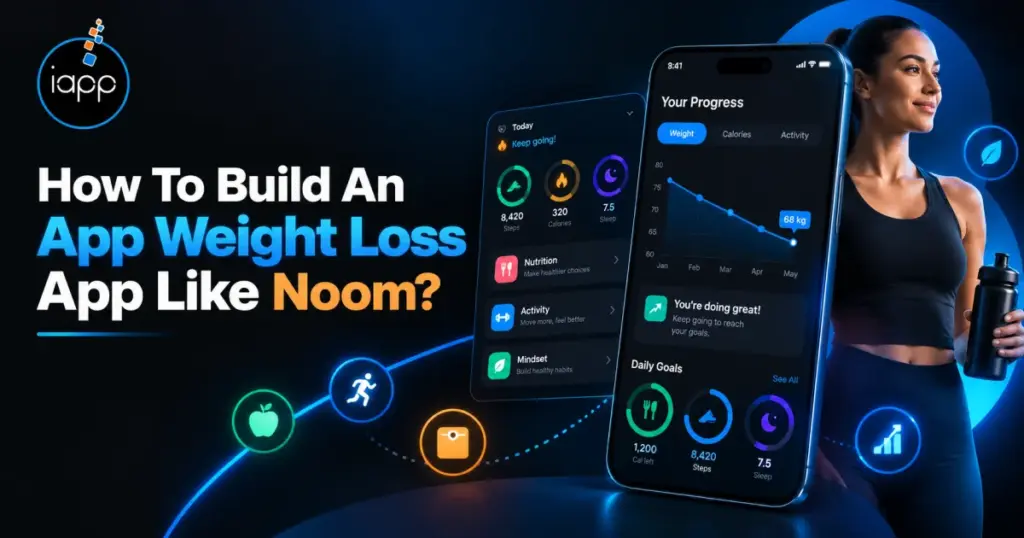
Losing weight takes more than simply tracking daily calories. Users also need support with habits, activity, nutrition, and progress. That is why personalized weight-management apps are gaining practical value.
26% of U.S. adults already track health statistics through apps. Among these users, 82% say the apps help reach health goals. This shows how digital tools can support healthier daily habits. So, weight loss app development needs more than calorie tracking. It should connect personalization, nutrition, activity, coaching, and progress tracking.
This guide explains how to build a weight loss app. It covers features, technology, development costs, and monetization.
Weight loss apps make daily health tracking more convenient. They also combine several tasks inside one mobile product. That creates opportunities for several business models. Some of them are:
However, successful products need a clear user problem. They should not simply copy existing applications. For example, one app might target busy professionals. Another might focus on nutrition coaching and meal planning. That difference should shape the product from the beginning.
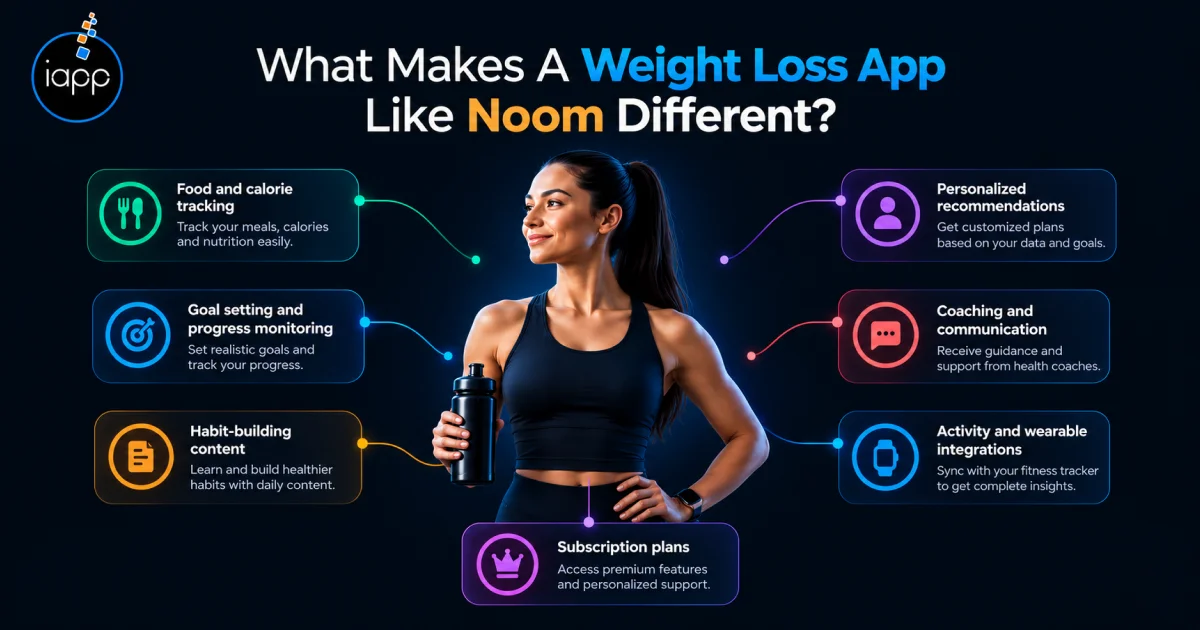
A weight loss app like Noom needs more than tracking tools. It should connect user data with personalized guidance.
A Noom-style product can include:
The main difference is ongoing personalization. A basic tracker records information from users. A stronger product uses that information for useful guidance. That can improve engagement and daily decision-making.
Start with your audience, business model, and core problem. Then build the product around those priorities.
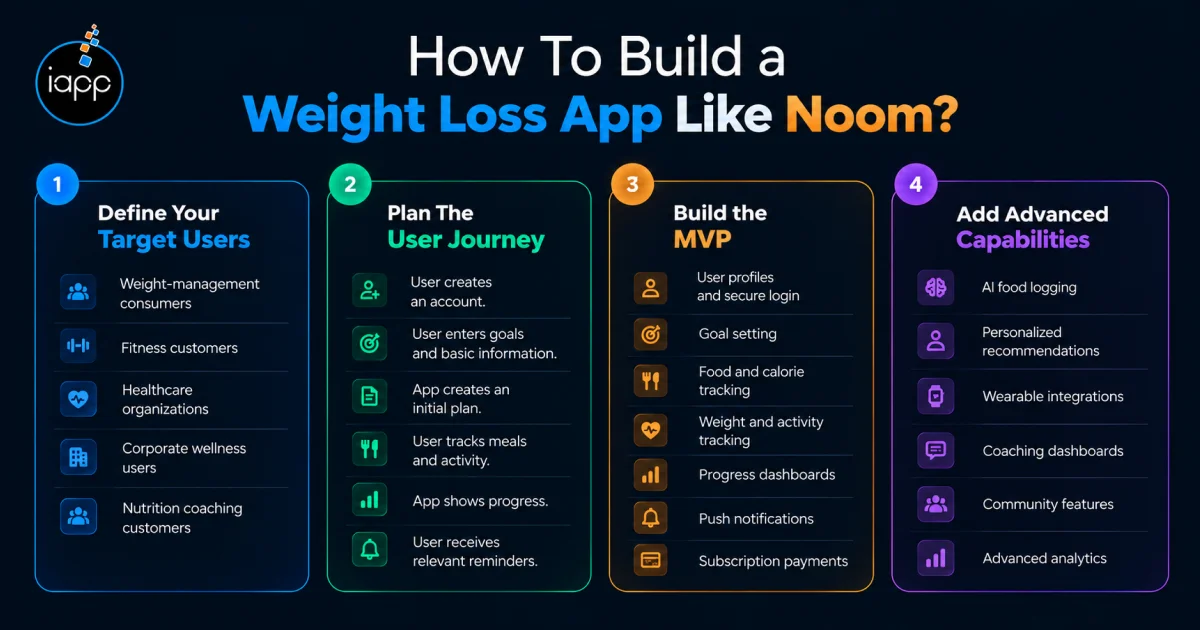
Choose one primary audience before planning everything.
Then define their biggest daily challenge.
Keep the first user journey simple.
Start with essential weight loss app features.
Add advanced functions after validating demand.
This approach can control the weight loss app development cost.
The right features depend on your target users. An MVP does not need every advanced capability.
| Product level | Main features | Estimated development cost |
|---|---|---|
| MVP | Tracking, goals, profiles, progress | $30K to $60K+ |
| Advanced | AI, wearables, coaching | $60K to $150K+ |
| Full platform | AI, coaching, integrations | $150K to $300K+ |
These figures are planning estimates for early budgeting. Actual pricing depends on scope, team, and integrations. Core nutrition features should remain easy to use. Users should log meals without unnecessary steps.
Activity tracking should also require minimal manual input. Wearable integrations can help reduce that effort.
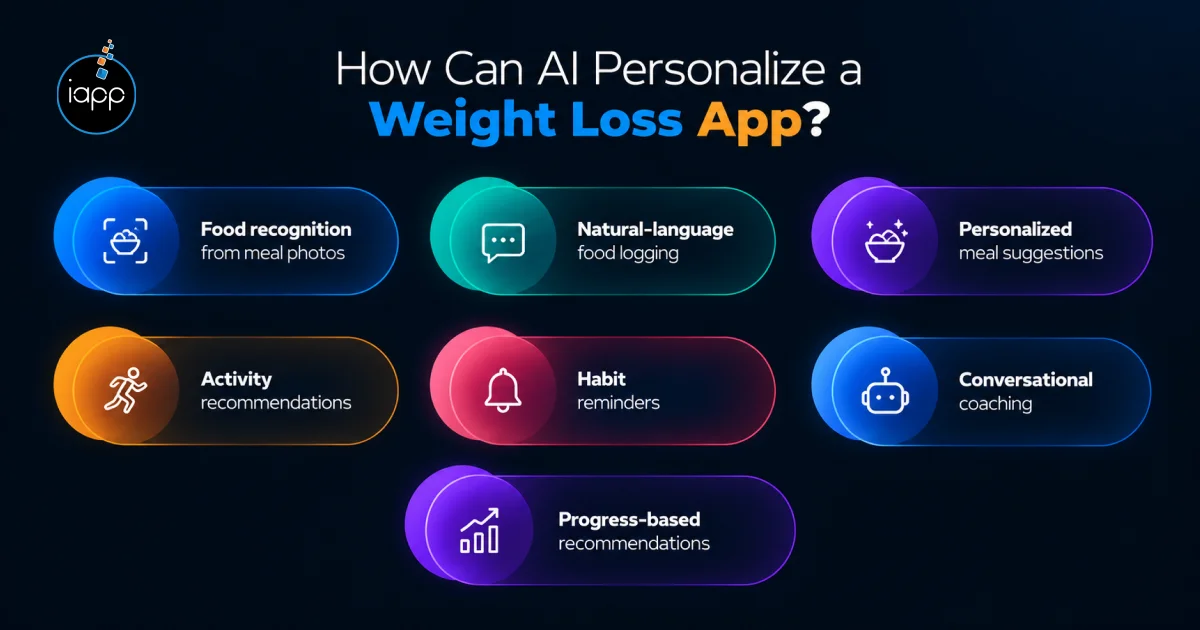
AI can reduce manual logging and personalize recommendations. It should solve specific user problems within your product.
Useful applications include:
This makes AI weight loss app development commercially useful. For example, users could describe their lunch naturally. The app could estimate nutritional values for review. AI can also support personalized weight loss app development. Recommendations can reflect goals, preferences, and previous activity.
However, AI should not replace qualified health professionals. Clinical recommendations require suitable safeguards and oversight.
Your technology stack should support future product growth. However, the first release should remain technically focused.
A practical stack could include:
Health integrations can connect activity and health information. Examples include Apple Health and Google Health Connect. This overlaps with fitness app development requirements. It can support steps, workouts, calories, and wearable data.
A broader diet app development product may need recipes. It may also need meal plans and nutrition databases.
The weight loss app development cost depends mainly on scope. AI, integrations, platforms, and security can increase budgets.
A practical planning range looks like this:
Development timelines can vary with the same factors.
These estimates assume a dedicated development team. They exclude major content and coaching expenses. The final weight loss app development cost needs detailed scoping. That includes platforms, integrations, features, and security requirements.

Health-related apps require careful data handling. However, compliance depends on your business model.
Important technical safeguards include:
Not every wellness application automatically requires HIPAA compliance. Requirements depend on healthcare relationships and data handling. Healthcare partnerships can create additional compliance obligations. Therefore, compliance planning should start before development.
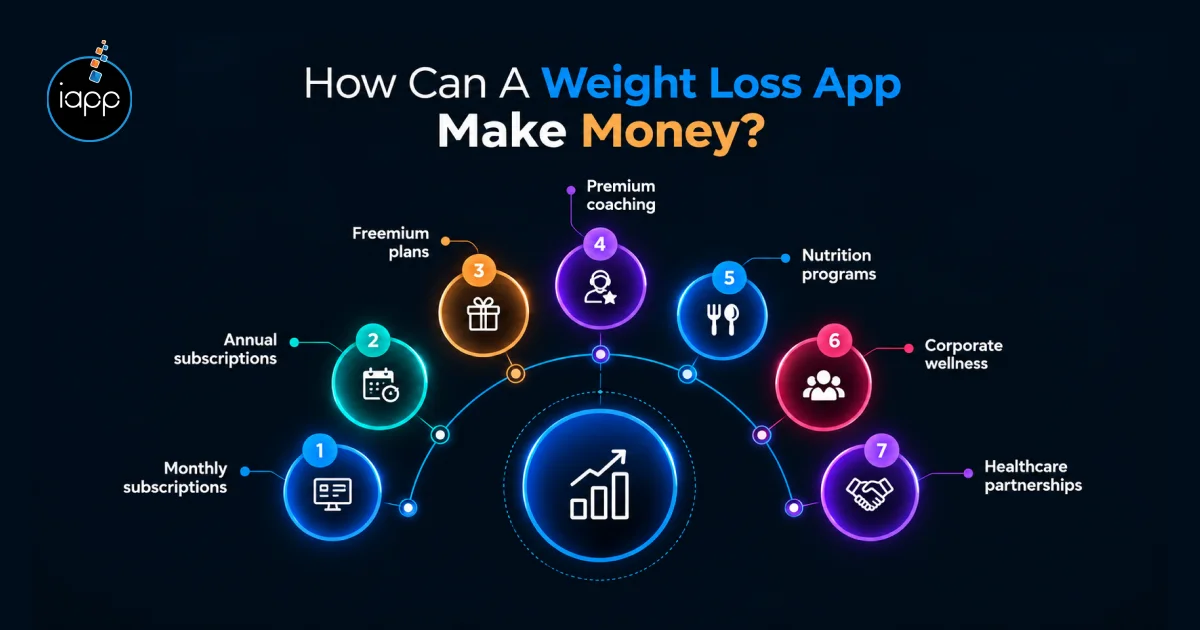
Subscriptions provide one common monetization approach. However, several models can work for different audiences.
For example, basic tracking can attract free users. Premium plans can add coaching and personalization. Your revenue model should shape product planning early. That helps prevent expensive changes later.
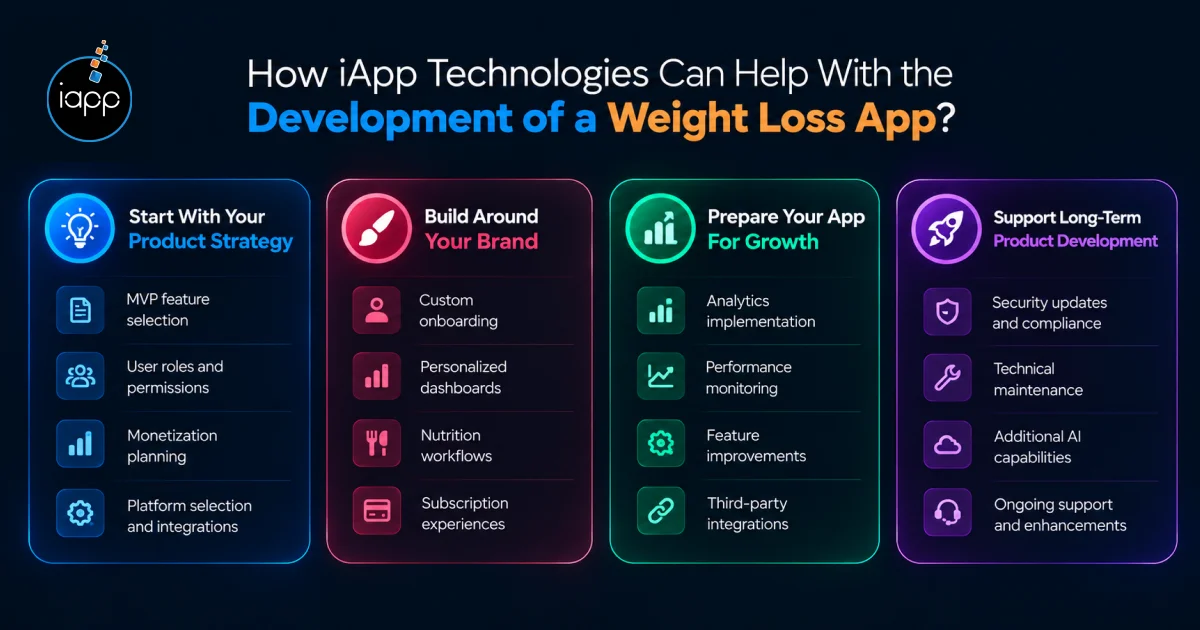
We can help turn your concept into a market-ready product. Our support can begin before the first development sprint.
We first clarify your users and business model. Then, we define the product scope around those goals.
Our planning can cover:
This helps keep the first release focused.
We create custom mobile experiences for your product. Your app does not need generic fitness templates.
We can build:
The architecture can support future product expansion.
Launch is only one part of product development. Future improvements should follow real user behavior.
We can support:
We can also support app marketing requirements. These can include ASO and conversion-focused landing pages.
Your first release should not become your final product. User behavior can guide future development priorities. We can support additional AI capabilities when justified. Our team can also add coaching and integration capabilities later.
As a weight loss app development company, we can support multiple stages. That includes planning, development, launch, and ongoing improvements.
For businesses seeking a weight loss app development company in the USA, location should not determine quality. The right partner should understand product, technology, and business goals. If you need a weight loss app development company in USA, we can discuss your requirements and development roadmap.
Building a Noom-style product requires careful product planning. The strongest apps combine tracking, personalization, and support. Weight loss app development should also support future growth. That means planning AI, integrations, security, and monetization early.
iApp Technologies can support your product from planning onward. We can handle development, integrations, improvements, and support.
A basic MVP can take 3 to 4 months. Advanced products can require 5 to 10+ months.
Maintenance can cost 15% to 25% annually. Costs include hosting, updates, support, APIs, and security.
Subscriptions are a common monetization method. Coaching, premium plans, and partnerships can add revenue.
Not every consumer wellness app needs HIPAA compliance. Requirements depend on healthcare relationships and data handling.
Apps can use user-provided health and activity information. Clinical recommendations should involve qualified health professionals.
Yes, professional coaching can become part of your product. Dashboards, messaging, scheduling, and client tracking can support it.
Yes, apps can integrate approved health and activity data. Users must provide appropriate permissions for data access.
You can use subscriptions, coaching, premium plans, or partnerships. Your audience should determine the best revenue model.
 Jagwinder Singh
Wait! Before you go…
Talk to our experts and turn your ideas into powerful digital solutions.


 Trusted by 1000+ businesses

Fill out the form and our team will get back to you shortly.