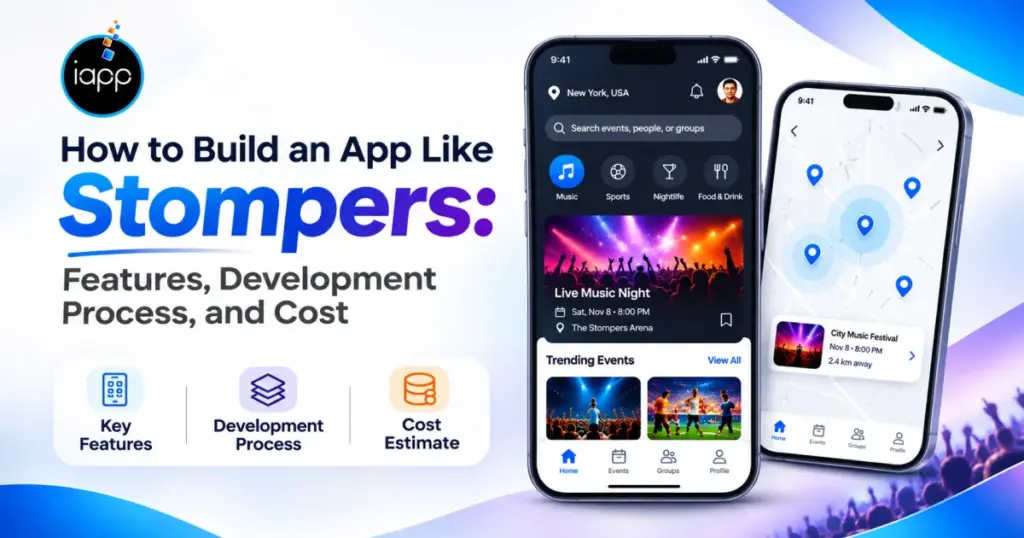
Movement may be tracked with a simple step counter. But eventually, users may stop opening it after some time. Stompers add friends, competition, rewards, and daily challenges. This increases interest among users. The creation of an app like Stompers requires more than just step monitoring.
It incorporates gamification, social elements, and health data. Its features, technology, development, schedules, and expenses are all covered in this guide.
Everyday walking is transformed into a social competition by stompers. Users may compete with buddies and keep track of their steps. As a result, regular walking becomes more interesting and competitive. At the moment, Stompers targets iPhone users. Its App Store listing includes in-app purchases.
Its core model includes:
This creates several engagement points around walking. Users do not simply check their step count. They have reasons to return each day.
For founders, that distinction matters during product planning. The goal should involve repeated daily participation. The app like Stompers model, supports that approach well.
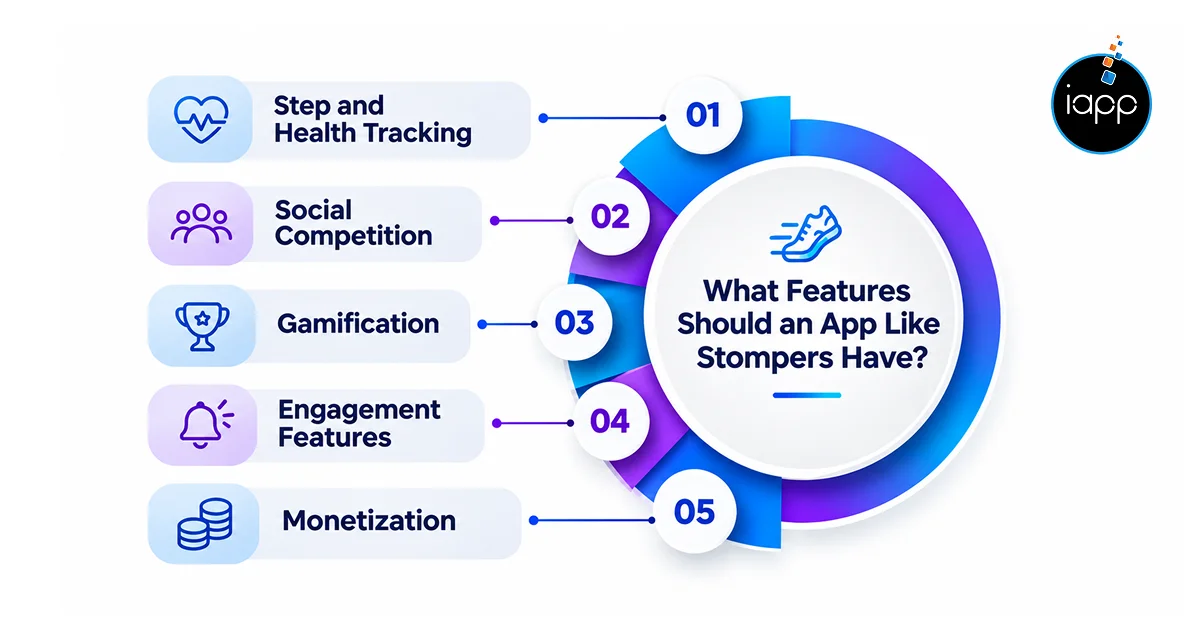
A strong app like Stompers needs four core layers. These include tracking, competition, gamification, and engagement.
Step tracking forms the foundation of the product. Your app needs reliable health-data synchronization.
A typical setup can support:
Stompers reads steps through health platforms. It does not directly read every wearable account. That approach can simplify integration planning.
Walking becomes more interesting with friends. Therefore, social features should receive early product attention.
Useful features include:
These features support social fitness app development. They can also increase daily app interaction. Users have someone else to compete against.
Gamification gives users reasons to continue walking.
A fitness app features plan can include:
Keep the first release simple. Too many game mechanics can slow development.
Start with one clear reward loop.
Then add mechanics after collecting user behavior data.
Small features can make daily usage easier.
Consider adding:
The right features depend on your audience.
For example, corporate groups need team challenges.
Consumer apps may prioritize friends and rewards.
Stompers shows another useful monetization approach.
Its App Store listing includes subscriptions and coins.
Your monetization options can include:
Do not put every feature behind payment.
The free version should demonstrate the product value.
If users enjoy the basic loop, conversion becomes easier.
A clear product scope keeps Stompers app development manageable.
It also helps control later maintenance costs.
Health integration needs careful permission and synchronization planning. It also requires reliable backend data handling. For iOS, use Apple HealthKit. For Android, use Health Connect.
Stompers follows this platform-based approach. Users grant permission before sharing step information.
Your step tracking app development should cover:
Health data needs stronger privacy controls. It should never receive casual data handling. Your backend can use encrypted connections. Access should also follow strict permission rules. This becomes important for walking app development. Incorrect totals can damage user trust quickly. Stompers even provide tools for incorrect-step reports. That shows why synchronization needs dedicated testing.
A cross-platform stack can reduce duplicate mobile development. However, health integrations still need platform-specific testing.
| Product Layer | Recommended Technology |
|---|---|
| Mobile app | Flutter or React Native |
| iOS health data | Apple HealthKit |
| Android health data | Health Connect |
| Backend | Node.js or Python |
| Database | PostgreSQL |
| Real-time updates | WebSockets |
| Cloud | AWS or Google Cloud |
| Notifications | Firebase Cloud Messaging |
| Analytics | Firebase Analytics |
| Admin panel | React or Next.js |
For an app like Stompers development, backend design matters greatly. The server manages users, steps, games, and rankings. It also handles notifications and competition results. Start with the core tracking loop first. Then add complex gameplay after validation.
This approach reduces unnecessary development work. It also gives your team faster product feedback.
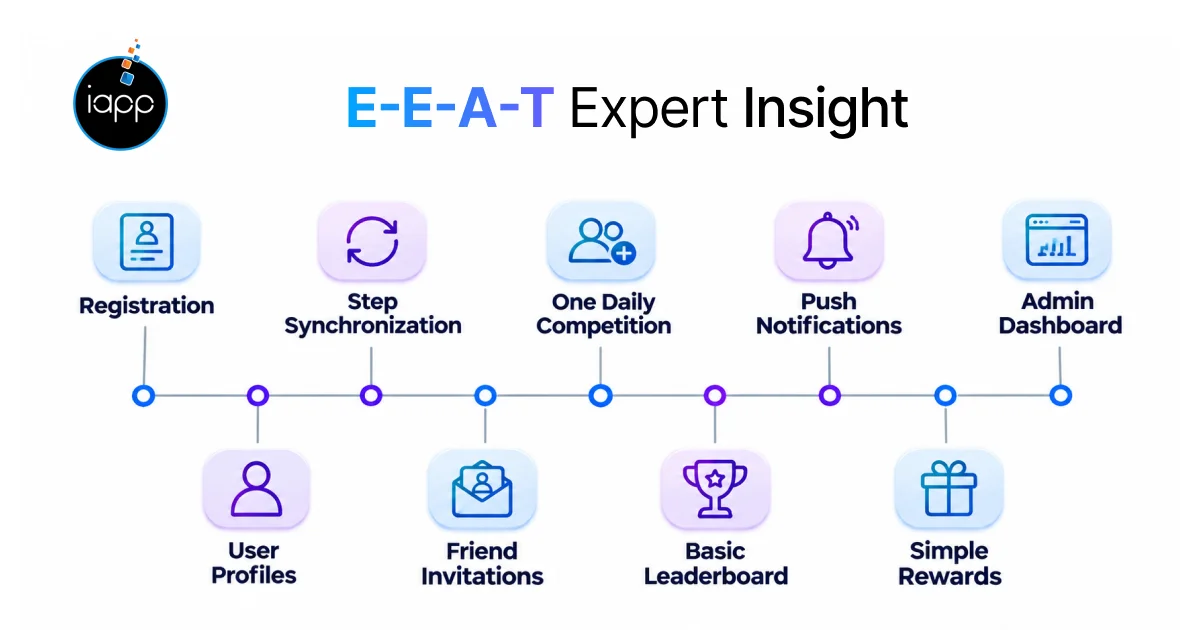
A common mistake is building too many features first. For this type of product, tracking comes first. Competition comes second. Rewards come third. That order creates a cleaner development cycle.
A practical MVP could include:
Leave advanced power-ups for the next release. That approach can reduce early development risk. It also makes retention testing easier. If your product needs scalable technical architecture, we can structure the backend around future growth.
The fitness app development cost depends on feature depth. Health integrations and social systems raise development efforts. A focused MVP can cost around $35,000 to $55,000. A larger version may reach $180,000 or more. F22 Labs places lean fitness MVPs around 20,000–30,000. Advanced platforms can exceed $200,000.
For a Stompers-style product, consider this range:
| Version | Estimated Cost | Timeline |
|---|---|---|
| Lean MVP | $35K–$55K | 3–4 months |
| Growth Version | $55K–$90K | 4–6 months |
| Advanced Platform | $100K–$180K+ | 6–9 months |
These figures are planning estimates. Your final quote depends on technical requirements.
Major cost factors include:
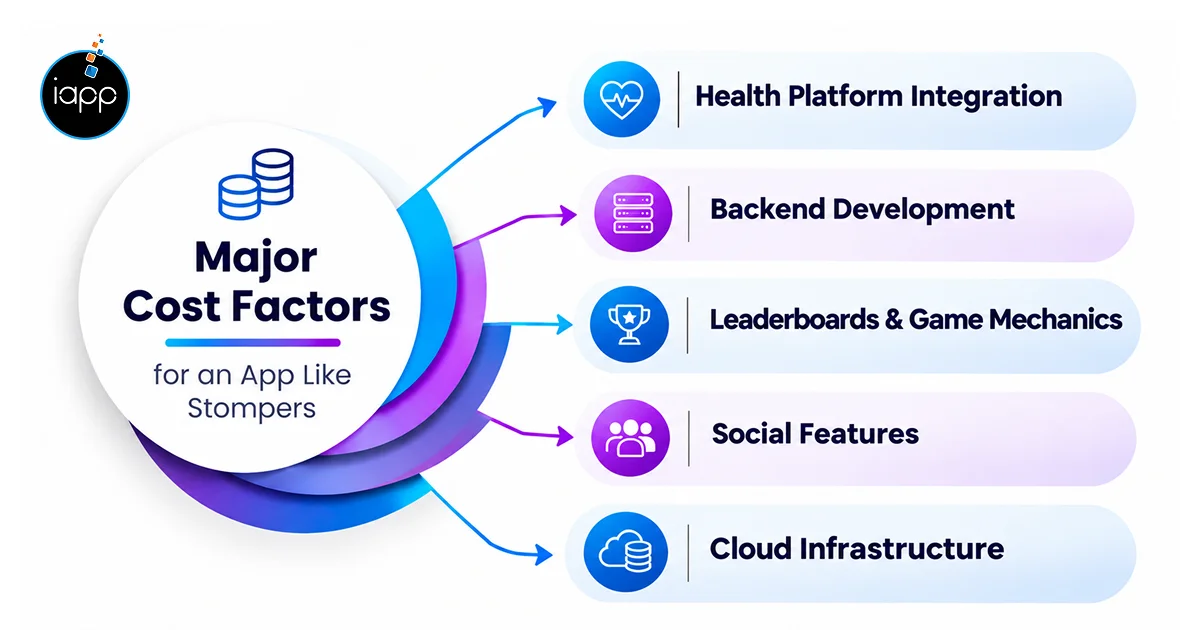
A simple tracker costs less than a social game. Real-time rankings also increase backend complexity. Likewise, custom animations can increase design costs. For step counter app development, start with essentials. Then add expensive mechanics after product validation.
A focused MVP can take about 12 to 16 weeks. Advanced versions usually require several additional months. A practical development schedule looks like this:
| Development Stage | Estimated Time |
|---|---|
| Product discovery | 1–2 weeks |
| UI/UX design | 2–3 weeks |
| Core development | 5–7 weeks |
| Health integration | 2–3 weeks |
| QA and device testing | 2–3 weeks |
| Store preparation | 1 week |
Some stages can run at the same time. For example, backend work can start during design. QA can also begin before every feature is complete. However, health synchronization needs dedicated testing.
Different devices can produce different data behaviors. That makes testing important for Android builds. Your fitness app development timeline also depends on platforms. Building iOS first can reduce initial scope. Cross-platform development can support both platforms sooner.
Still, health APIs require platform-specific validation.
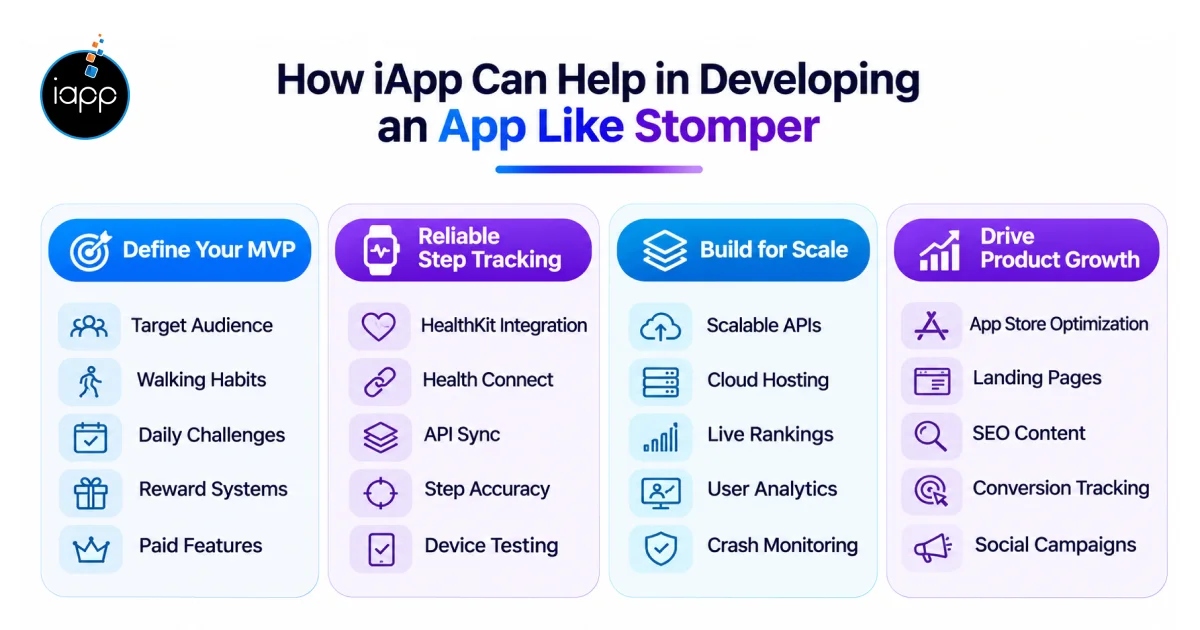
At iApp Technologies, we focus on product goals first. Then we map technology around those goals.
We start by identifying your target users. Then we map their daily walking habits. We also define your main retention loop.
That includes:
This gives your app like Stompers a clear starting point.
Health data cannot become an afterthought. We can plan integrations around HealthKit and Health Connect. Our experts also structure APIs for reliable synchronization. Our testing covers different devices and activity scenarios.
That helps reduce incorrect step counts.
A successful social fitness app needs strong backend systems.
We can structure:
This supports future feature expansion.
You can add new competitions without rebuilding everything.
Development is only one part of the product lifecycle.
We can also support:
This gives your product a stronger launch plan.
If you need complete product support, we can align development with your marketing goals.
Building an app like Stompers requires more than pedometer features. The strongest products combine tracking, competition, rewards, and social interaction. The app like Stompers development cost depends on scope. A focused MVP can control both time and budget.
At iApp Technologies, we build custom mobile products. We can help with planning, development, testing, and growth.
Yes, Stompers supports Android through Health Connect. Its health-data setup differs from iPhone integration.
Stompers use in-app purchases and paid subscriptions. Its App Store listing also shows purchasable digital coins.
Yes, you can use Apple HealthKit and Health Connect. Users can share smartphone-collected step data.
Daily challenges, rankings, rewards, and social competition can help. The core loop should remain simple and quick.
A pedometer mainly counts steps. On the other hand, social fitness apps add competition, friends, rewards, and groups.
Yes, several models can work. Subscriptions, premium features, digital items, and sponsored challenges are options.
It depends on your audience and budget. Cross-platform development can reduce duplicated mobile development.
Start with tracking, profiles, challenges, rankings, and notifications. Add advanced integrations after validating user demand.
 Jagwinder Singh
Wait! Before you go…
Talk to our experts and turn your ideas into powerful digital solutions.


 Trusted by 1000+ businesses

Fill out the form and our team will get back to you shortly.