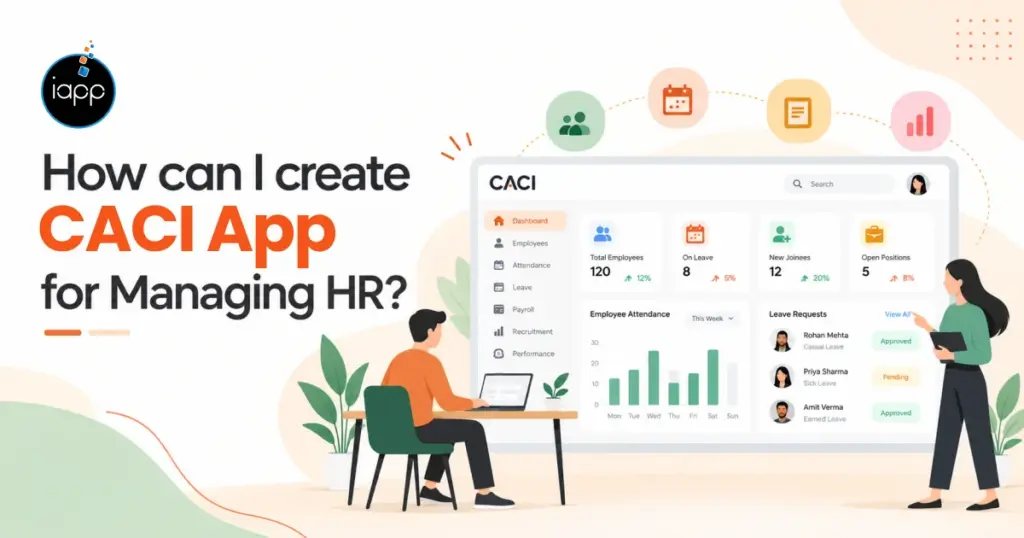
HR departments often handle leave requests, personnel records, and approvals using different systems. Routine activities may be slowed down, and reporting issues may arise from these unconnected tools. CACI apps for HR management can streamline everyday HR operations and streamline procedures.
Clear requirements, appropriate technology, safe integrations, and appropriate testing are necessary for developing CACI apps for HR management. In this guide we will cover features, development processes, expenses, security, and vendor selection while developing the CACI app.
Applications built around certain HR procedures might be referred to as CACI apps for HR management. However, there isn’t a single, widely recognized definition of CACI in HR software.
Before developing their app, businesses should clarify what CACI entails. Employee records, hiring, onboarding, attendance, and approvals all can be handled by custom HR apps.
Companies spend money on HR software to increase administrative effectiveness and decrease manual labor. According to a 2026 study by SHRM, 72% of HR experts said that staff have increased expectations from employers. This needs prompt employee assistance and accessible HR procedures.
Manager approvals and employee requests can be made easier with custom apps. They also assist HR departments in keeping accurate records and monitoring pending projects.
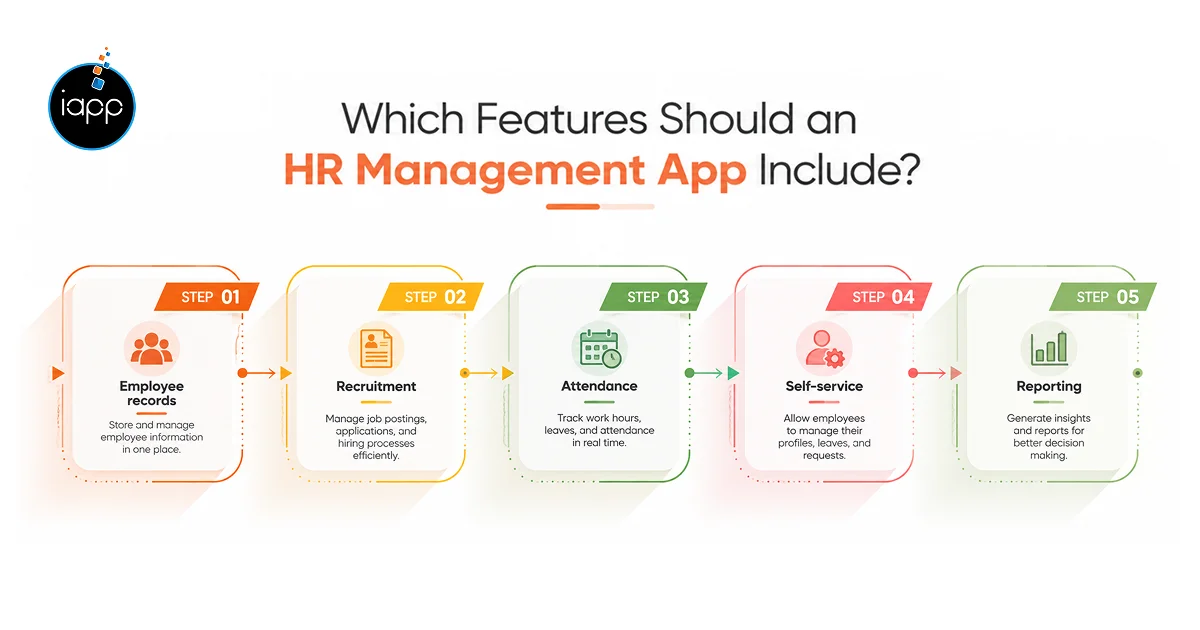
The size of the business, the demands of the workforce, and the current systems all influence the required features. Essential HR procedures should be addressed by CACI apps for human resources.
Start with basic functions prior to incorporating advanced features or AI support.
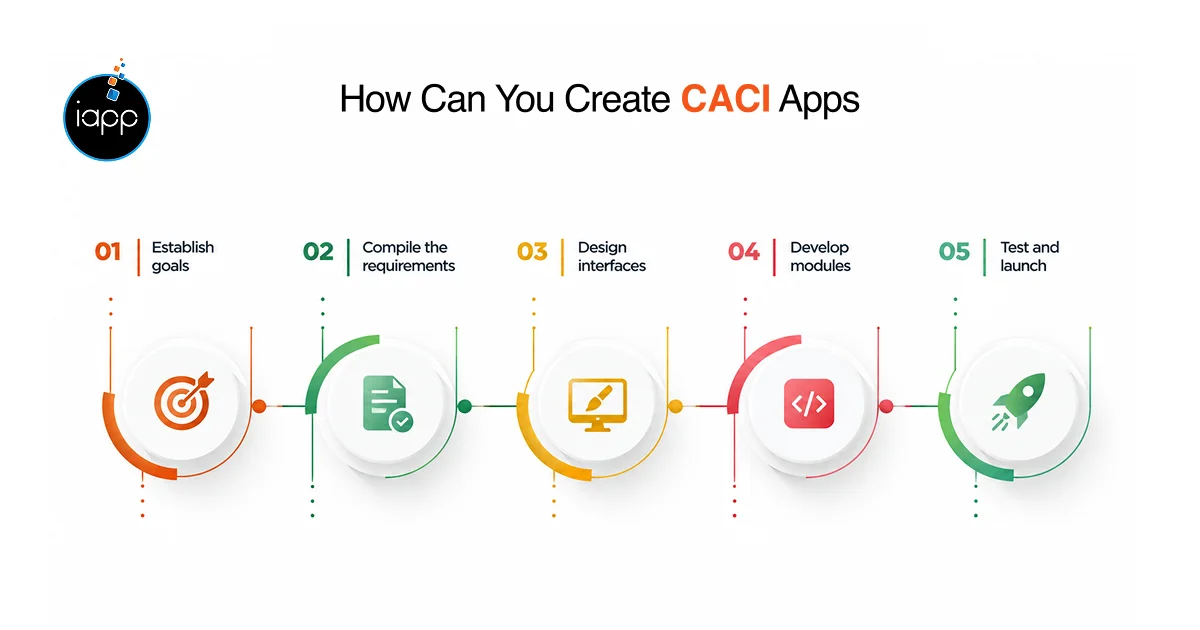
Instead of focusing on code, successful CACI app development begins with business needs. Create an application based on real-world HR requirements by following these instructions.
Establish goals: Determine issues with process and set quantifiable goals for improvement.
Compile the requirements: Consult managers, staff, HR departments, and IT stakeholders.
Design interfaces: Make wireframes for administrators, managers, and staff.
Develop modules: Create necessary workflows and link authorized business systems.
Test and launch: Verify usability, performance, integrations, and permissions.
Expert Recommendation: Start with a single complex task, like leave approvals. Prior to the start of development, note the existing processing times. To gauge real progress, compare those numbers after launch. This strategy aids companies in justifying upcoming development expenditures.
Technology decisions are influenced by anticipated expansion, integrations, and security considerations. These technologies are often used for HR management app development.
| Layer | Technology examples | Purpose |
|---|---|---|
| Web interface | React, Angular | Employee and administrator portals |
| Mobile application | Flutter, React Native | Mobile employee access |
| Backend | .NET, Java, Node.js | Application logic and services |
| Database | PostgreSQL | Structured employee records |
| Cloud | AWS, Microsoft Azure | Hosting, monitoring, and backups |
Select technologies after examining current systems and maintenance needs. Avoid adding complicated tools if you don’t have a clear business goal.
Payroll, accounting, and current HRIS platforms are connected to HR applications. APIs minimize duplicate data entry by transferring authorized information across systems.
For instance, authorized leave requests may automatically update attendance records. Integration testing must verify that proper information is sent to linked systems.
Role-based access, multifactor authentication, encryption, and audit logs are all necessary for security. Standard guidelines for handling privacy threats are provided by the NIST Privacy Framework. They must be followed by an HR app development provider. Businesses must also consider applicable employment, privacy, and data protection regulations.
Features, integrations, security, and project complexity all affect the price. These estimated price ranges can help with early preparation.
| Project scope | Estimated cost | Estimated timeline |
|---|---|---|
| Basic HR app MVP | $25,000–$60,000 | 2–4 months |
| Integrated HR application | $60,000– $150,000 | 4–7 months |
| Enterprise HR platform | $150,000– $400,000+ | 7–12+ months |
Complex permissions, historical migrations, and payroll integrations might raise expenses. Also, an added budget is needed for hosting, maintenance, support, and software licenses.
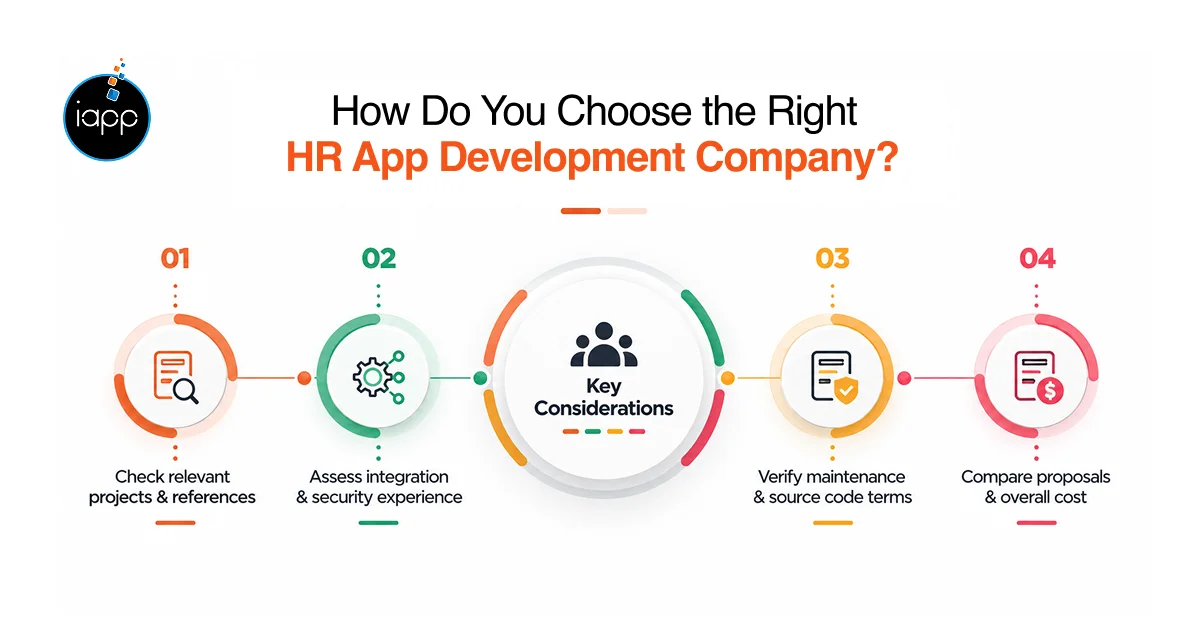
The ideal partner should have knowledge of data security, software architecture, processes, and interconnections. Compare each HR app development company in the USA or any other region against specific project needs.
Decisions to choose an HR software development company USA should be carefully taken. Instead of focusing only on pricing, compare partners based on best project fit.
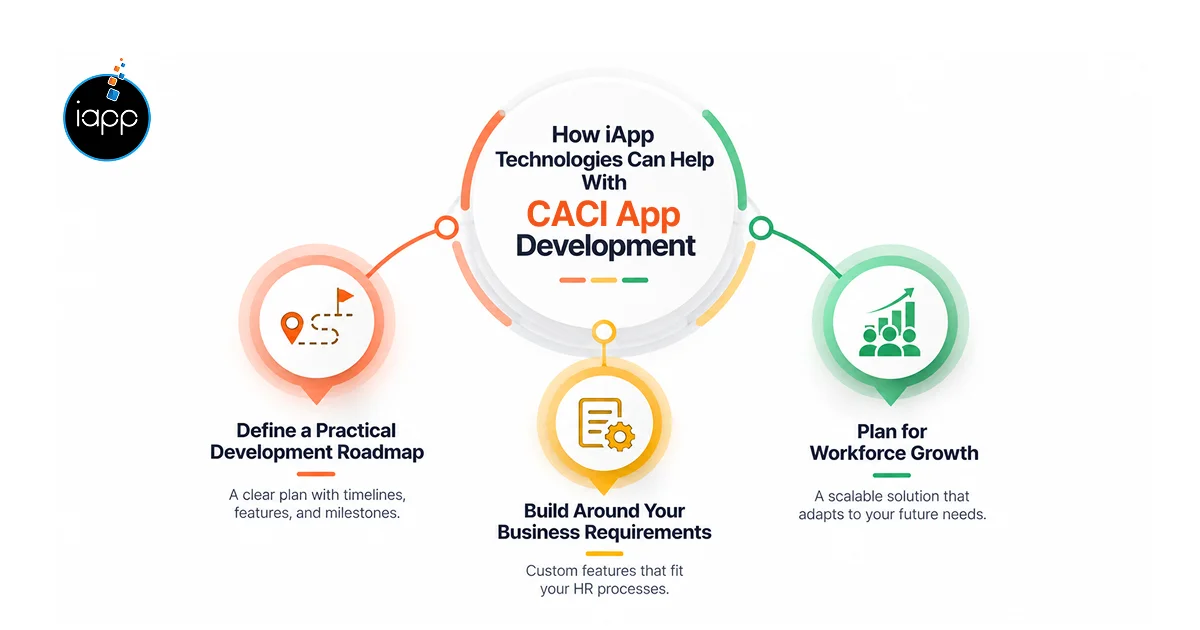
We at iApp Technologies assist companies with the planning and creation of unique digital products. Your needs assessment is the first step in our approach to CACI apps for HR management.
We can identify priority features, user roles, and integration requirements. This creates a clearer scope before development begins.
Our HR software development services can cover interfaces, APIs, and backend systems. The development approach depends on your project scope.
We develop employee management app development by keeping future requirements in mind. Planning can include future modules, reporting, and system integrations.
Clear specifications, safe integrations, and logical cost planning are necessary when developing CACI apps for HR administration. Businesses can evaluate results before expanding their apps by using a staged strategy.
iApp Technologies can help with workforce management app development. We use an advanced tech stack and AI integration. Discuss your HR software requirements with us. Contact our team.
CACI can have different meanings depending on context. Confirm the intended definition before finalizing your project terminology.
Yes. Custom HR apps can support industry-specific workflows, employee roles, and reporting requirements.
Yes. Secure mobile access, self-service portals, and digital approvals support distributed employees.
Yes. AI can assist with HR searches and document processing. But there must be appropriate privacy control.
Map existing fields, clean records, test migration, and verify accuracy before switching systems.
Ownership depends on contract terms. It generally covers intellectual property, deliverables, licenses, and source-code access.
Maintenance is a vital part of HR automation app development. It includes security patches, backups, monitoring, bug fixes, and compatibility updates.
Compare administrative costs, processing times, error rates, adoption, and operating expenses before and after implementation.
 Jagwinder Singh
Wait! Before you go…
Talk to our experts and turn your ideas into powerful digital solutions.


 Trusted by 1000+ businesses

Fill out the form and our team will get back to you shortly.