
As more travelers book flights on their phones, the demand for flight book apps is growing at lighting speed. 19% of travelers chose airline apps for booking in 2025, up from 16% in 2024, according to IATA.
Because of this change, trustworthy booking tools are crucial for travel agencies. An MVP for an airline booking app usually costs $50,000. Complex OTA and airline platforms might cost more than $200,000. Features, platforms, connectors, and business requirements all affect the ultimate cost.
More and more travelers these days are using their handy cellphones to make reservations. Because of this, airlines and travel agencies may benefit from mobile booking apps. Additionally, travelers can benefit from these applications in a number of ways.
An advanced booking app can facilitate:
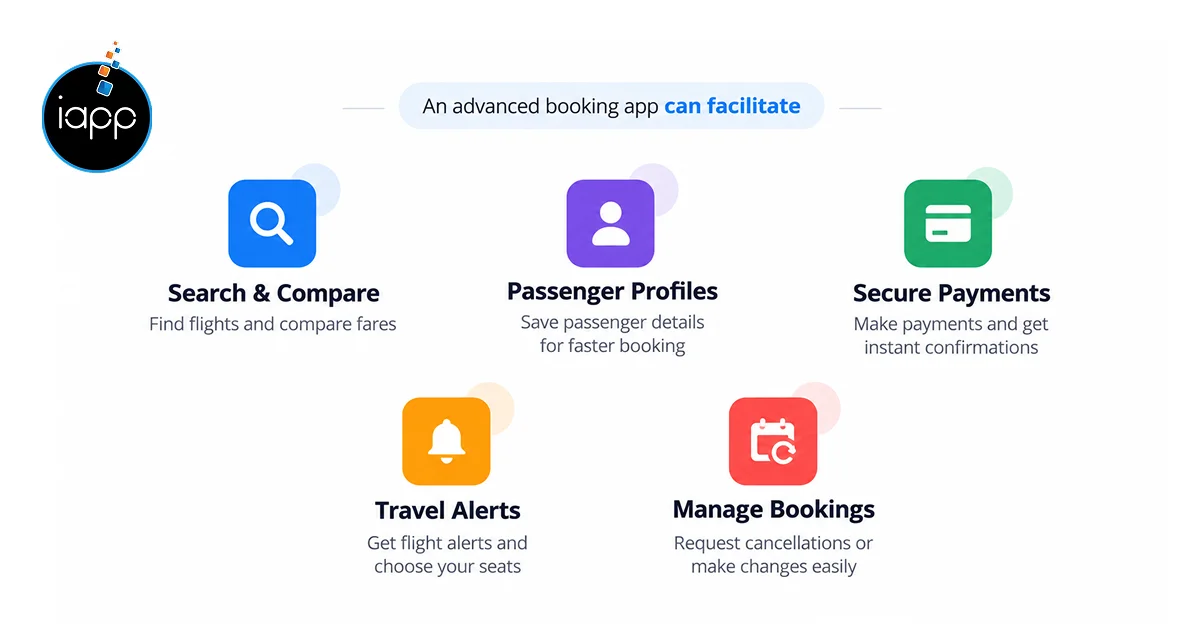
Your company model will determine which features are appropriate. Also, many people confuse the OTA platform and the airline reservation app. Remember, both of them are a bit different. OTA platforms allow travelers to compare tickets and then book from one platform. On the other hand, airline apps only help with booking on a single platform.
The typical flight booking app development cost is $50,000. However, advanced platforms can cost $200,000 or even more.
| App Type | Estimated Cost | Development Time |
|---|---|---|
| Basic MVP | $50,000-$80,000 | 3-5 months |
| Mid-level app | $80,000-$150,000 | 5-8 months |
| Advanced OTA app | $150,000-$250,000+ | 8-12 months |
| Enterprise platform | $250,000+ | 12+ months |
These numbers are not fixed quotes; rather, they represent estimated ranges. The flight booking app cost is determined by a number of technological aspects. Workflows, platforms, security, and integrations are some of these elements. The budget may also be significantly altered by API requirements.
An MVP could, for instance, support a single provider. Instead, an OTA can need many supplier links. Confirm exact price from flight booking app development company before starting project.
Development work is directly impacted by the flight booking app features. Complete booking automation is more expensive than a simple search.
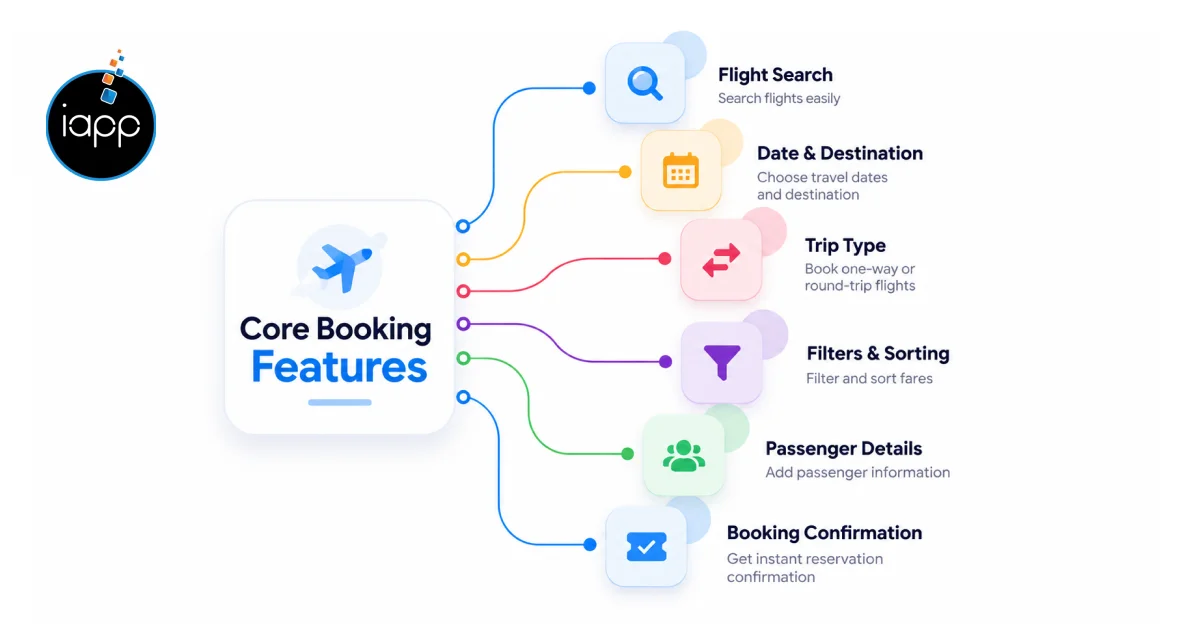
Typically, a simple product requires:
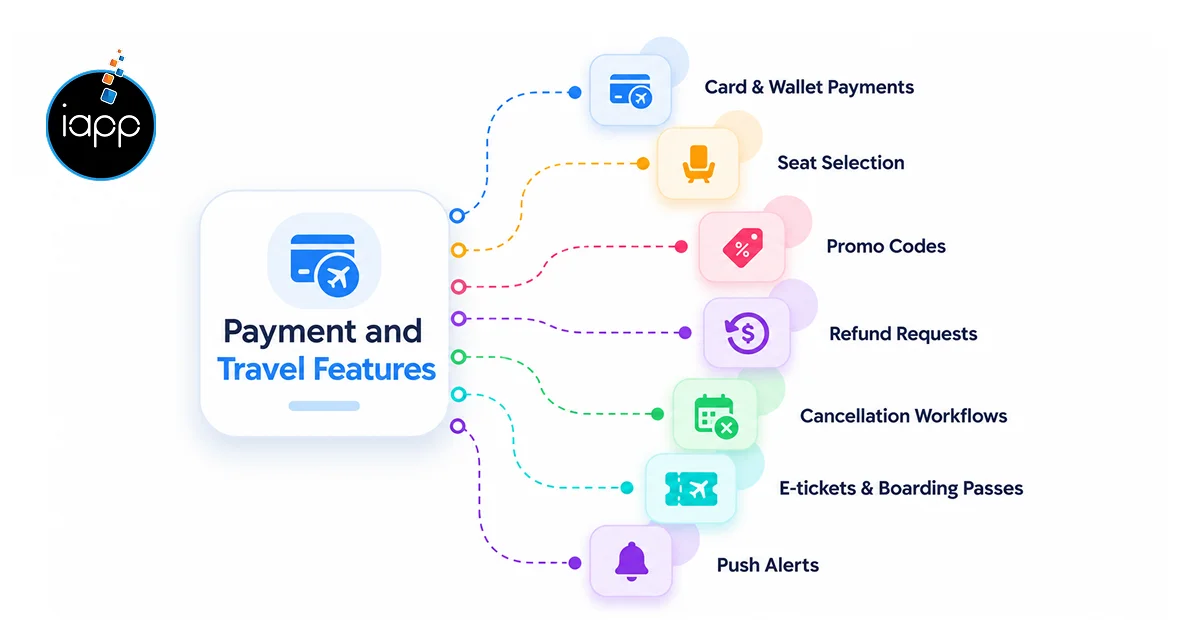
More advanced apps may include:
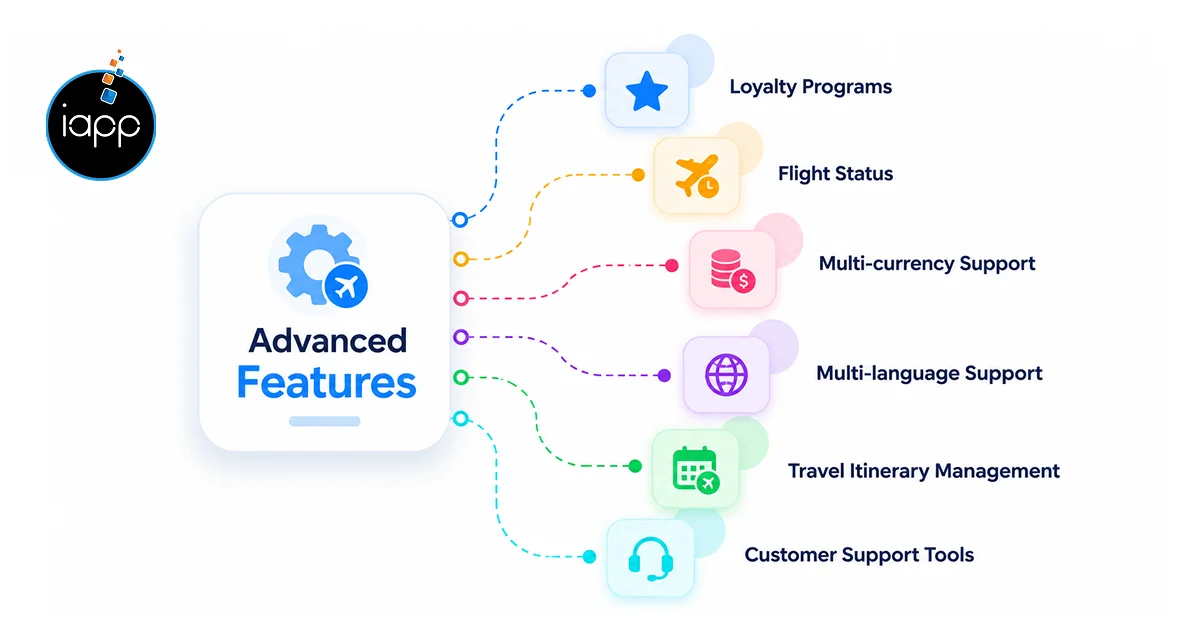
Larger platforms may add:
Because of this, flight booking app development requires careful planning. Initial prices may go up if all features are added at launch.
Work on GDS and APIs may add a significant amount to the expenditure. They link your app to real-time flight data.
Schedules and availability may be obtained using a flight API. Broader airline inventory and booking procedures can be supported by GDS connectivity.
Typical integration tasks consist of:
Verification of suppliers
The flight booking API integration cost depends on complexity. Integration time is also impacted by supplier requirements. The GDS integration cost also varies depending on the vendor. Additional testing and maintenance tasks are created by multiple suppliers. Your app may also need NDC connections. Direct airline content and offers may be supported by them.
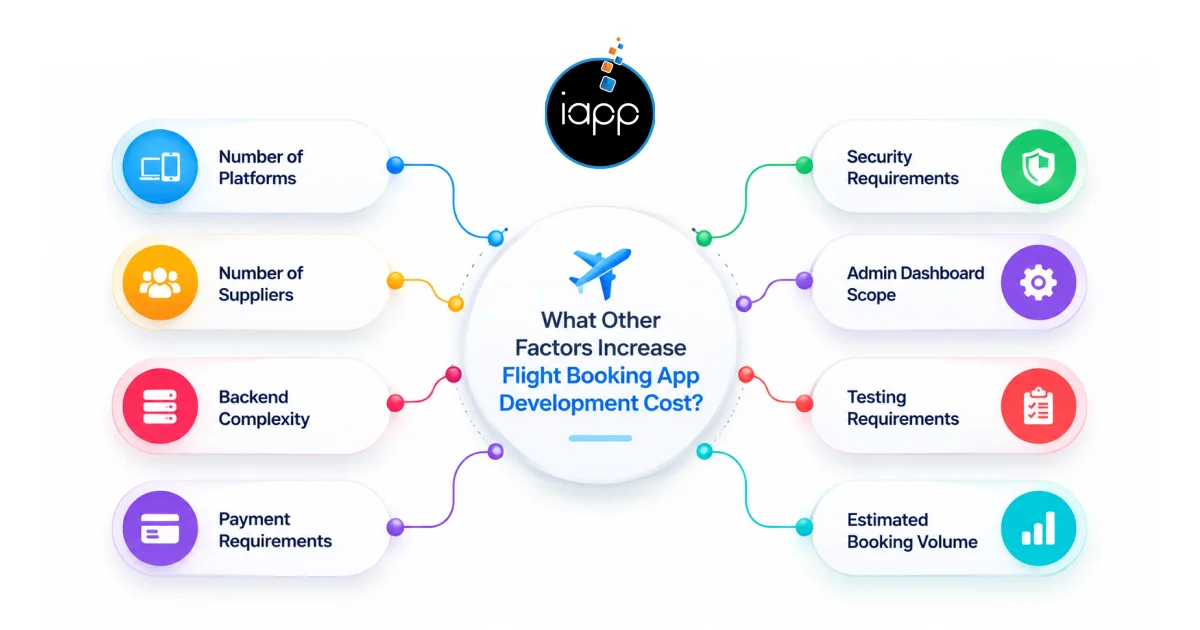
The ultimate budget may rise due to a number of technical decisions.
The major factors usually include:
Particular consideration should be given to payment security. Payment account data protection standards are provided by PCI DSS. It is applicable to systems that manage cardholder info. It is not advisable for a booking platform to regard security as optional. Payment architecture should be planned during development.
Budget and development time are impacted by platform selection.
| Platform | Budget Impact | Suitable For |
|---|---|---|
| iOS | Lower initial scope | iPhone-focused users |
| Android | Lower initial scope | Android-focused audiences |
| iOS + Android | Higher scope | Wider consumer reach |
| Cross-platform | Reduced duplication | Startup MVPs |
| Mobile + Web | Highest scope | Large OTA platforms |
Cross-platform programming can cut down on redundancy for startups. Both main platforms may be supported by Flutter or React Native. Native development, however, may accommodate intricate needs. Your product and technological requirements help to guide your ultimate decision.
This makes flight booking mobile app development more strategic. It is important to note that the least expensive platform is not always the best choice.
It might take three to five months to create a basic MVP. On the other hand, complex platforms may take up to 12 months.
| Development Stage | Estimated Time |
|---|---|
| Planning | 2-4 weeks |
| UI/UX design | 3-6 weeks |
| Core development | 8-16 weeks |
| API/GDS integration | 4-10+ weeks |
| Testing | 3-6 weeks |
| Deployment | 1-3 weeks |
Certain phases may occur concurrently. The ultimate launch date may still be impacted by integration testing. A three-month MVP should keep its scope focused. At the same time, multiple suppliers can require additional development and testing.
Development is only the first investment in technology. Additionally, a booking site requires continuous technical assistance.
Typical recurring costs consist of:
Maintenance budgets should match booking volume and complexity. A high-volume OTA needs stronger monitoring and infrastructure.
Start with the booking features that are most important to your clients. Once demand has been verified, add advanced services.
A useful MVP may consist of:
Personalization and loyalty can be included in later editions. As demand increases, more providers may be added.
This method helps reduce the initial flight booking app development cost. During launch, it also maintains the product’s focus.
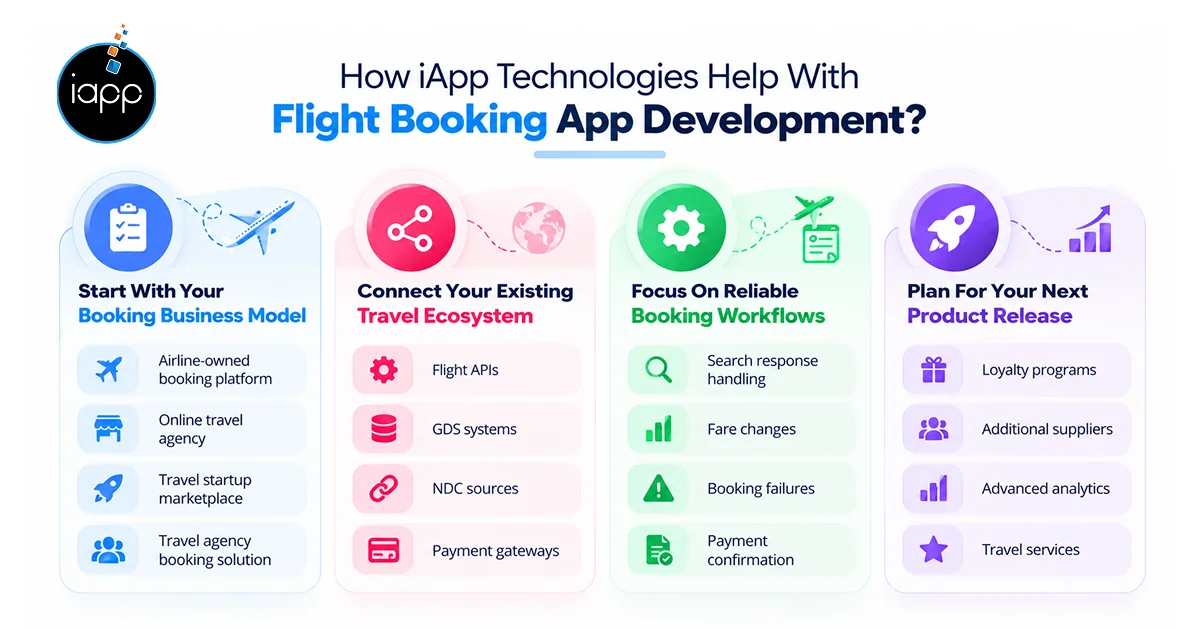
At iApp Technologies, we build custom travel products. Our strategy begins with your users and business model.
Our team first define your commercial booking structure.
The necessary user workflows are then mapped. This aids in scope management prior to the start of development.
We are able to arrange connections throughout your stack of technologies.
These may consists of:
Later on, further integrations may be supported by the architecture.
Customer confidence may be swiftly damaged by booking problems. That is why we thoroughly test important transaction pathways.
Our development checks can cover:
Payment software also needs secure development practices. PCI SSC provides secure software requirements for payment applications.
We do not treat launch as the final step. Our team assists to structure products for future feature additions.
Potential later releases can include:
Our flight booking app development services can support this roadmap.
The cost to build a flight booking app relies on scope. GDS connections, payment flows, platforms, and scale all can impact final cost. At iApp Technologies, we provide custom flight booking app development. Our team can plan integrations, mobile apps, and backend systems.
We also provide flight booking app development services for growing businesses. In case you need a detailed explanation, start with your requirements.
Large flight booking app development prices can cost $250,000 or even more. Their scope includes loyalty, check-in, operations, and enterprise integrations.
The cost of API integration varies depending on the supplier and complexity of the procedure. Additionally, development costs are not the same as the provider’s commercial fees.
Yes, based on how you manage your inventory. Instead, you can utilize aggregators, NDC sources, or airline APIs.
Many MVPs can benefit from Flutter or React Native. However, complex platform-specific needs may be met by native development.
Apps can earn through commissions, service fees, and ancillary sales. Some businesses also use supplier partnerships and premium services.
Maintenance varies with integrations, traffic, and feature complexity. Budget separately for hosting, APIs, security, fixes, and updates.
Yes, a focused MVP can fit that timeframe. Multiple suppliers and advanced features usually require more time.
A typical team includes developers, designers, QA, and project management. Backend and API expertise becomes important for booking platforms.
 Jagwinder Singh
Wait! Before you go…
Talk to our experts and turn your ideas into powerful digital solutions.


 Trusted by 1000+ businesses

Fill out the form and our team will get back to you shortly.