Want a 10X Faster Blockchain App With Faster Transactions? Choose Solana over Ethereum
Solana has become a practical choice for businesses building payments, DeFi, gaming, and other Web3 applications. Its development model differs from traditional app development, especially around programs, wallets, accounts, and transactions.
But building a reliable product takes more than connecting a wallet and deploying a program. This guide explains Solana app development, including the setup process, key features, development steps, cost, timeline, and technical choices U.S. businesses should consider before hiring a development team.
A Solana blockchain app is an application that uses Solana programs and accounts for on-chain actions. The app can run through a web interface, mobile interface, or both.
Solana uses programs for application logic instead of traditional smart contracts. Programs can be written in Rust, while client applications can use JavaScript or TypeScript tools.
A typical Solana app can include:
For example, a business could build a payment app that connects wallets. The app can then send transactions through a Solana program. The important point is that not every feature needs blockchain storage. Sensitive or large business data can remain in traditional databases.
This approach can reduce unnecessary blockchain usage. It can also make the product easier to maintain.
A Solana app normally has three main layers. These are the user interface, application services, and Solana programs. The frontend handles what users see and interact with. It can connect wallets and request blockchain transactions.
The application layer manages services that do not need to run on-chain. This can include user profiles, notifications, analytics, and external APIs. The Solana program handles the rules that must run on-chain. It receives instructions and works with the accounts supplied by the transaction.
Solana’s official templates currently support stacks using React, TypeScript, @solana/kit, and Anchor with Rust.
A simple transaction flow looks like this:
User → Frontend → Wallet → Solana Transaction → Program → Updated Accounts
This structure matters during Solana blockchain app development. Poor separation between on-chain and off-chain features can increase cost and complexity.
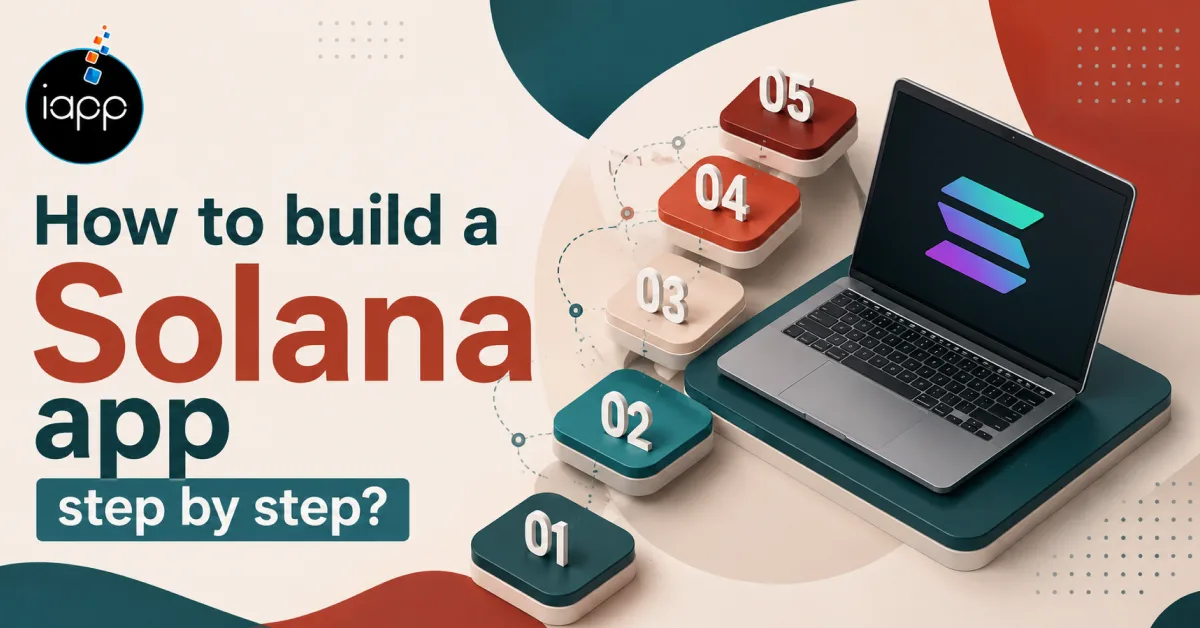
The process starts with product planning, then moves through architecture, development, testing, and deployment. A practical Solana app building process should include the following stages.
Start by identifying what the blockchain must actually do. Do not put every application feature on-chain.
Define:
This decision affects architecture, development effort, and operating costs.
The technical stack depends on the app type and team skills. Solana programs are primarily developed with Rust. Solana’s documentation recommends Anchor for developers who want a higher-level development framework.
Modern Solana templates also use React, TypeScript, @solana/kit, and Codama-generated clients.
A common stack can include:
| Layer | Common technology |
|---|---|
| Frontend | React, Next.js, TypeScript |
| Solana client | @solana/kit |
| Program | Rust |
| Framework | Anchor |
| Client generation | Codama |
| Testing | LiteSVM |
| RPC | Solana RPC provider |
| Wallet | Wallet Standard compatible wallet |
| Database | PostgreSQL or another suitable database |
The exact stack should follow the application’s requirements. A team should also confirm library versions before development begins.
Developers need Rust, Solana CLI, Anchor, and Node.js for a typical setup. Current Anchor development guidance also uses Surfpool and LiteSVM for local development and testing.
The setup normally includes:
Solana’s current templates also provide ready project structures. This can reduce setup work for teams starting a new application.
The program contains the core blockchain rules. For example, it can control deposits, withdrawals, ownership, or token operations. With Anchor, developers can define instructions and validate accounts. Anchor also supports account constraints and program client generation.
Developers may also use Program Derived Addresses, or PDAs. A PDA provides a deterministic address derived from seeds and a program ID. PDAs are useful for user-specific records and program-controlled accounts. They can also support vault and ownership patterns.
This stage forms the core of Solana smart contract development. In Solana terminology, these contracts are generally called programs.
The frontend lets users interact with the blockchain. It can show balances, request signatures, and display transaction results. Wallet connectivity is a major part of this stage. The app should also handle rejected signatures and failed transactions clearly.
Solana’s official templates provide wallet UI and client wiring.
They also support generated clients for program interactions.
A Solana app does not need to put everything on-chain. A backend can handle data that does not require blockchain verification.
Common backend functions include:
This hybrid architecture can make the product easier to operate. It also helps control on-chain transaction volume.
Testing should happen before real assets are used. Start with local development and then move to devnet. Current Solana templates use LiteSVM for program testing. They also provide local deployment and devnet deployment workflows.
Test at least:
Security testing is especially important for financial applications. A program bug can affect assets or user balances.
After testing, the program can be deployed to Solana mainnet. Mainnet transactions use real SOL and require careful deployment controls. Anchor’s current deployment guidance recommends thorough devnet testing before mainnet deployment.
Teams should also document program IDs, deployment settings, wallet permissions, and recovery procedures.
The right features depend on the business model. However, most production apps need a reliable wallet, transaction, account, and security layer.
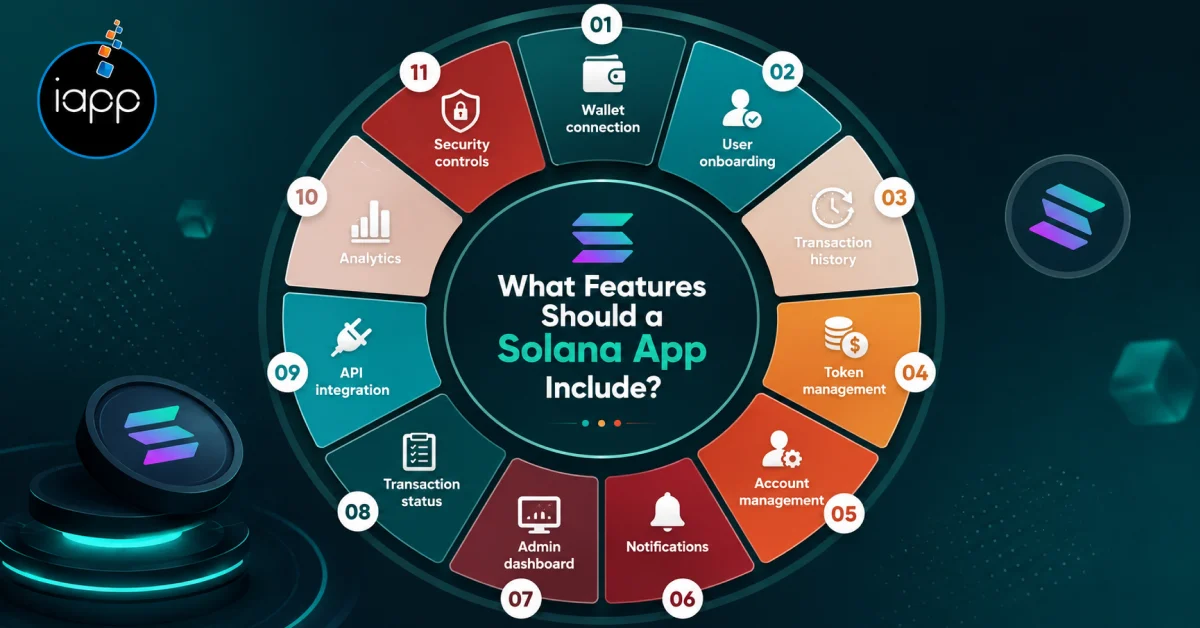
Core features can include:
A DeFi product may also need swaps, liquidity pools, staking, or lending. An NFT product may need minting, ownership records, and marketplace functions. A payment application may focus on transfers, invoices, receipts, and transaction reporting.
For U.S. businesses, compliance requirements should also be reviewed early. The exact requirements depend on the product, users, assets, and operating model.
Solana provides a program-based architecture and a mature developer toolchain.
Its current documentation includes templates for React, Next.js, Anchor, and TypeScript applications.
For businesses, the main value comes from choosing the right blockchain tasks. A good architecture keeps critical transaction rules on-chain. It keeps general application functions in suitable off-chain systems. That separation can improve maintainability and control development costs.
This is where Solana dApp development requires careful technical planning. The blockchain should support the product instead of becoming the product itself.
Solana blockchain development requires knowledge of programs, accounts, transactions, wallets, Rust, and client-side integration. Developers also need to understand account ownership and transaction execution.
They should know how PDAs and cross-program invocations work when building advanced applications. That is why blockchain development should involve developers who understand both backend systems and on-chain architecture.
[Discuss Your Solana Project]
The Solana app development cost depends mainly on app complexity, program logic, integrations, platforms, and security requirements.
A basic application with wallet connectivity and limited blockchain functions costs less.
A DeFi platform with complex programs requires much more development and testing.
For planning purposes, businesses can use these broad estimates:
| App type | Estimated cost | Estimated time |
|---|---|---|
| Basic Solana MVP | $25,000 to $50,000 | 3 to 4 months |
| Mid-level dApp | $50,000 to $100,000 | 4 to 7 months |
| Advanced dApp | $100,000 to $200,000+ | 7 to 10 months |
| Complex DeFi platform | $200,000 to $400,000+ | 9 to 15+ months |
These are planning ranges, not fixed development quotes. The final budget depends on the actual feature list and technical architecture. The cost to build a Solana dApp can increase with custom programs and security audits.
Mobile apps, complex dashboards, third-party services, and multiple wallets can also add work.
iApp Technologies provides blockchain development covering smart contracts, dApps, wallets, tokenization, and public blockchain solutions. We have experience with React, Node.js, Python, JavaScript, Flutter, Kotlin, Swift, and other technologies.
The Solana app development time usually ranges from three months for a focused MVP.
More complex applications can take nine months or longer.
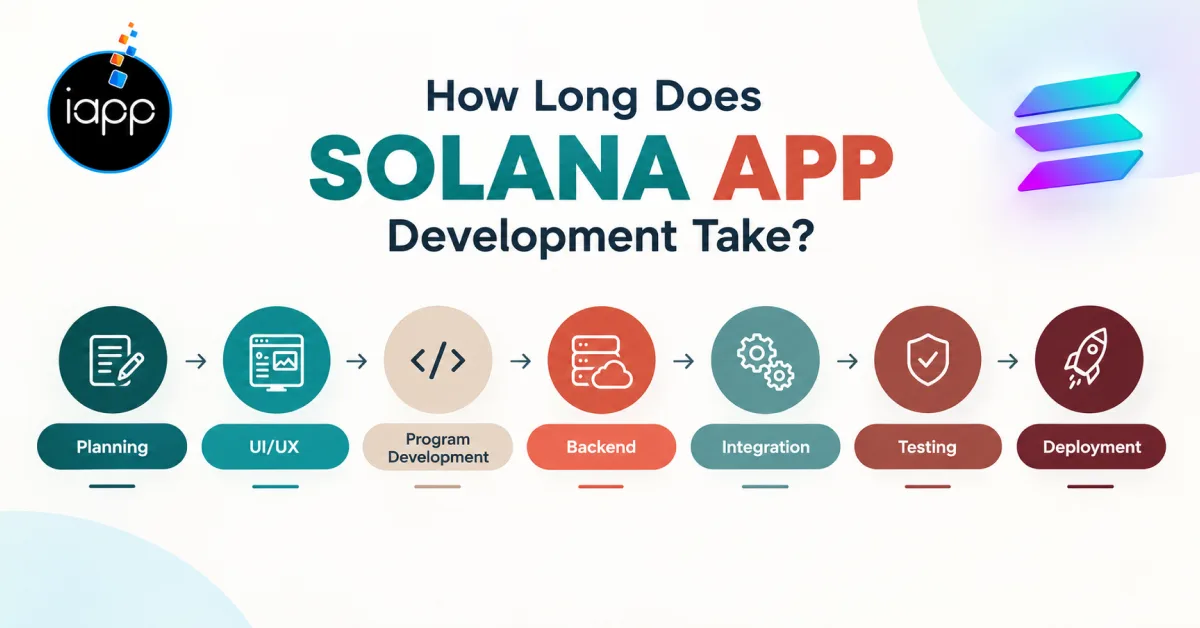
The timeline usually includes:
Planning → UI/UX → Program Development → Backend → Integration → Testing → Deployment
A basic MVP may need around three to four months. A larger product may require seven to ten months. Complex financial applications can take longer because testing and security work require additional time.
The biggest difference is the addition of blockchain programs, wallets, transactions, and on-chain data.
| Area | Traditional app | Solana app |
|---|---|---|
| User login | Email or social login | Wallet or traditional login |
| Backend logic | Server-side code | Server code plus Solana programs |
| Data | Database | Database plus blockchain accounts |
| Payments | Payment gateway | Blockchain transactions |
| Ownership | Database records | On-chain ownership |
| Security | App and server security | App, wallet, and program security |
| Testing | App and API testing | App, API, transaction, and program testing |
This comparison does not mean every Solana app needs fewer backend services. Instead, the architecture changes based on which records need blockchain verification.
Choose a team based on technical capability, security practices, and delivery process. Do not select a vendor only because it lists Solana on its service page.
A suitable Solana app development company should understand:
Ask for technical examples and request a clear architecture before signing the project.
iApp Technologies’ blockchain team works on dApps, smart contracts, wallets, tokenization, and blockchain consulting. Our broader development approach includes strategy, development, rigorous testing, and deployment support.
For businesses searching for a Solana app development company USA, the same technical checks should apply.
Look for proven blockchain skills rather than relying only on marketing claims. Likewise, a Solana blockchain development company in the USA should explain its architecture before estimating the project budget.
How to develop a Solana dApp securely starts with clear program rules and strict account validation. Testing should cover both normal transactions and failed or malicious inputs. Developers should validate accounts and permissions inside programs. They should also test transaction failures and unexpected account states.
PDAs need careful seed and ownership design. Cross-program calls also need controlled account handling. For financial applications, an independent security audit should be considered before mainnet launch.
The main challenges involve program security, wallet handling, blockchain architecture, testing, and integration. Teams also need to manage the difference between on-chain and off-chain data.
Another issue is changing development tooling. For example, Anchor 1.0 introduced changes to its TypeScript package and testing workflow in 2026. Therefore, developers should confirm current package versions before starting implementation.
A strong technical team also keeps deployment settings documented. This reduces mistakes when moving from localnet to devnet and then mainnet.
Solana app development requires precise planning across programs, wallets, frontend systems, backend services, testing, and deployment. The Solana blockchain app development budget can range from tens of thousands to several hundred thousand dollars.
For U.S. startups and businesses, the best approach is to define the on-chain requirements first. Then select the stack, estimate the Solana app development cost, and plan security testing.
iApp Technologies provides blockchain development services for dApps, smart contracts, wallets, tokenization, and public blockchains. Our team can assist you in planning the right architecture, building core blockchain features, and preparing your app for deployment.
In case you have a Solana app idea. Our team will give you a clear technical plan and realistic budget. Talk to iApp Technologies to discuss your Solana project and development requirements.
A Solana app can cost about $25,000 – $50,000 for an MVP. However, advanced products can exceed $200,000. The exact cost depends on features and security needs.
A focused Solana MVP can take about three to four months. Complex dApps can require seven to fifteen months or more.
Rust is the primary language for Solana programs. Frontend applications commonly use JavaScript or TypeScript tools.
No, Anchor is not required for native Solana program development. However, Solana documentation recommends Anchor as a starting framework for beginners.
A Solana dApp is an application that uses Solana programs and accounts for blockchain-based functions. It can also include traditional frontend, backend, and database systems.
Yes, Solana applications can provide mobile interfaces. The mobile architecture depends on wallet support, platform requirements, and the app’s transaction flow.
The cost to build a Solana dApp commonly starts at approx. $25,000 for a basic MVP. Complex DeFi or trading products may require $200,000 or more.
A startup can hire a Solana development company when it lacks key skills in-house. For instance, Rust, blockchain, wallet, and program development. The expert team can handle architecture, development, testing, and deployment.
 Jagwinder Singh
Wait! Before you go…
Talk to our experts and turn your ideas into powerful digital solutions.


 Trusted by 1000+ businesses

Fill out the form and our team will get back to you shortly.