
In Dubai, nearly 99% of the people own a smartphone. And the people here spend 4-5 hours on them daily. In case you have a business here and you don’t have an app, you’re missing the channel your customers already live in. Here in this guide, we’ll break down what it really costs to build a mobile app and the step-by-step process. It will also show what truly changes in 2026. So you can plan your project without a guess.
Mobile is the lifeblood of the Dubai economy. Mobile app development in Dubai has become the core of retail, real estate, healthcare, and government services. It’s obvious that if you don’t do apps, you lose visibility quickly.
More than 95% of the internet users in the UAE are on mobile devices, not PCs. This implies that the mobile version of your website is no longer an option. People typically discover you via it first. Also, the UAE e-commerce industry is estimated to increase from $12.42 billion in 2026 to $20.54 billion by 2030. The data makes it clear why local businesses are choosing to build custom apps in lieu of relying on third-party platforms.
As of January 2026, Android accounts for over 81% of the OS market share in the UAE. And iOS continues to extend its presence among better high-income users. This is why most Dubai companies need applications to be created for both platforms.
Mobile app development in Dubai is the process of developing, coding, testing, and launching apps made specifically for UAE users. These are built by considering language preferences, payment habits as well as the regulatory framework. It is different from generic app development. This type of project takes into account things like Arabic RTL layouts, UAE Pass integration, and local payment gateways.
Generally, the following businesses need them:
In case your consumers are booking, ordering, browsing, or paying on their phones, you need a trusted mobile app development company in Dubai. The vendors must be aware of local compliance and fulfill UX expectations.
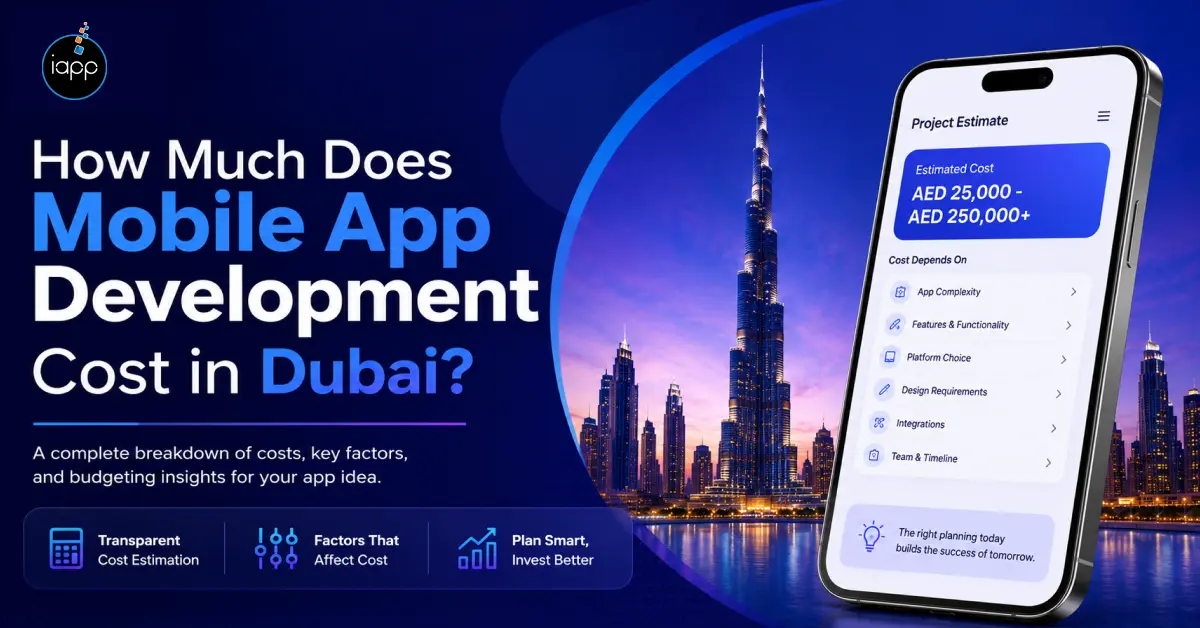
Mobile app development cost Dubai for a basic app is around AED 20,000. But if you need a complex app with multiple features, it may reach AED 500,000+. The exact cost depends heavily on features, platforms, as well as design complexity.
Here’s a general breakdown for the cost to build a mobile app in Dubai:
| App Type | Features Included | Estimated Cost (AED) | Timeline |
|---|---|---|---|
| Basic App (MVP) | Login, listing, basic UI, single platform | 20,000 – 60,000 | 4-8 weeks |
| Mid-Level App | Payments, push notifications, admin panel, both platforms | 60,000 – 180,000 | 3-5 months |
| Advanced App | AI features, real-time tracking, custom backend, integrations | 180,000 – 400,000+ | 6-9 months |
| Enterprise App | Multi-role systems, high security, scalable architecture | 400,000 – 800,000+ | 9-12 months |
The mobile app development process Dubai companies typically follow six steps. Skipping any of these can result in unsuccessful app initiatives.
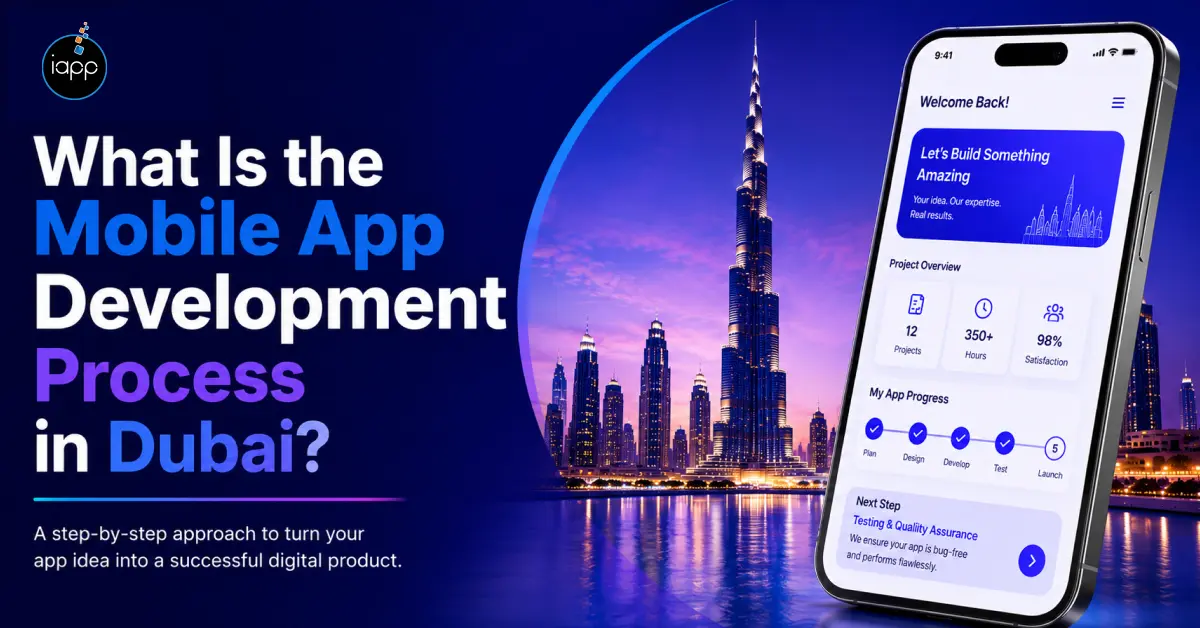
A trusted custom mobile app development Dubai service team will take you through each step with clear deliverables.
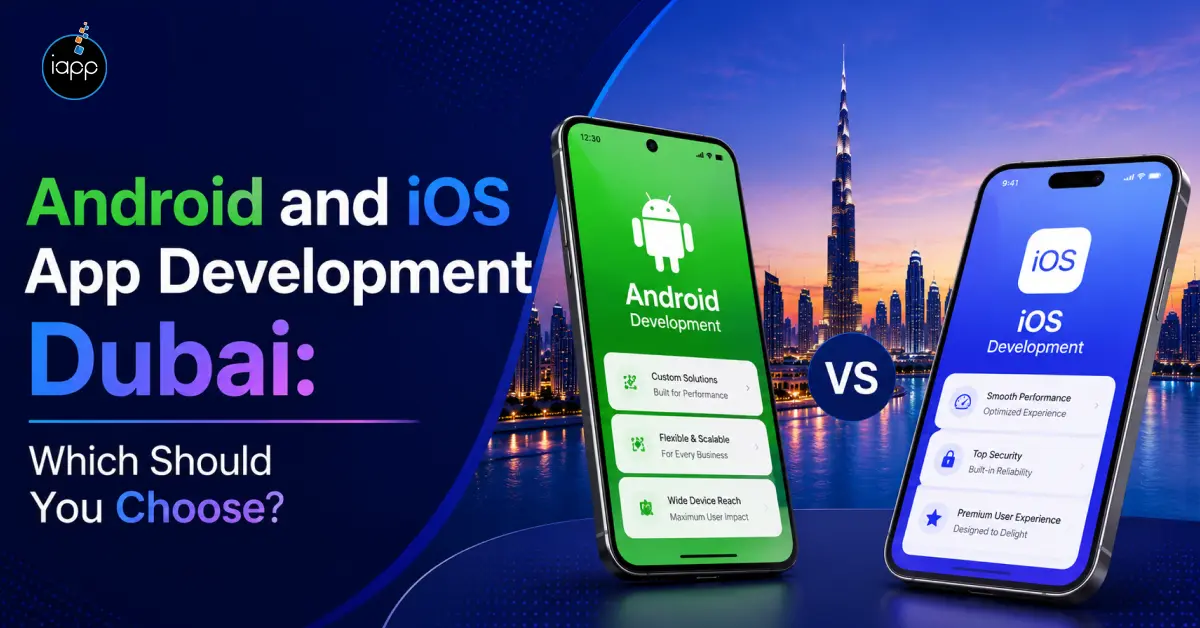
Most established businesses in Dubai will eventually need both platforms. But where you begin depends on your audience. Android and iOS app development Dubai selections should be made based on your real user data, not assumptions.
The key trend driving mobile app development services Dubai in 2026 is increased integration of government digital identification and AI-driven customization. This is not hype; it’s already showing up in the way apps are built here.
Businesses that partner with mobile app developers in Dubai that understand these trends are getting a genuine head start over rivals that are still operating static, feature-poor apps.
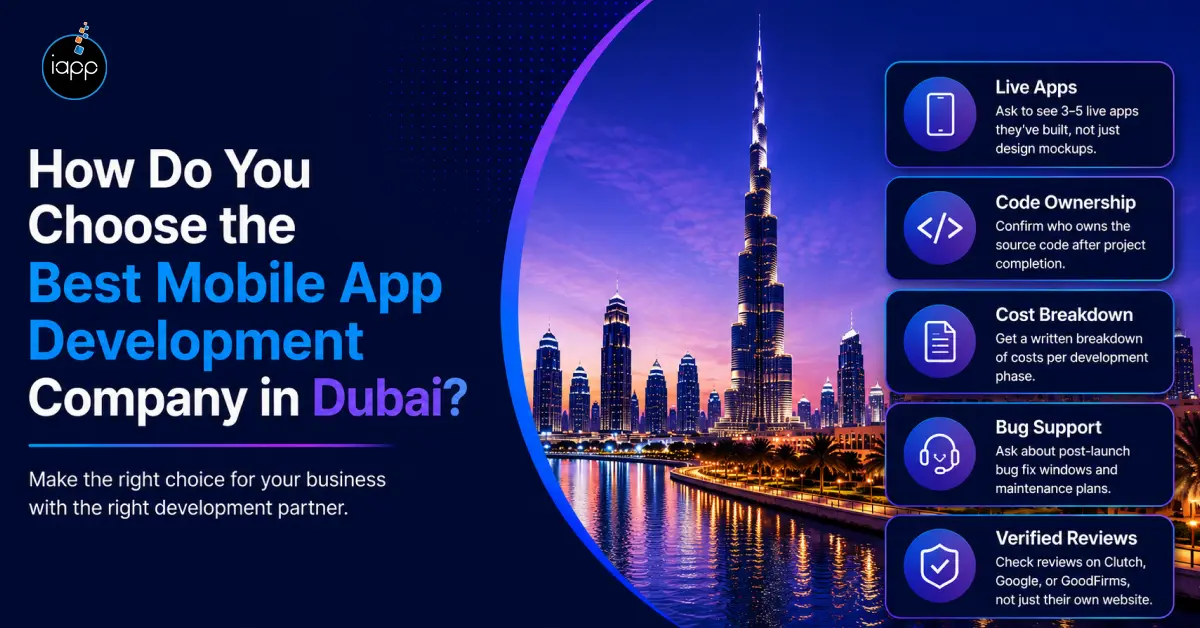
When looking for the best mobile app development company in Dubai for your project, choose one that has previous experience in your field. It must also have clear pricing and not disappear after launch. Forget the glitzy sales presentation; a portfolio and post-launch support is more important.
Check these before signing a contract with any agency:
Agencies offering true mobile app development services Dubai businesses can rely on long-term will also offer AI integration, not just standard CRUD app builds, since that’s where the market is heading.
Building an app in Dubai is about more than just presence. It’s about being where most of your customers are spending their time on the internet. Prices vary a lot based on features and platforms you choose. However, the procedure is rather straightforward if you have a staff walking you through each step. Get the right support and your app will become one of your leading growth channels in 2026.
In case you’re ready to move from planning to building, iApp Technologies can help. We plan cost, timeline, and features based on your specific business, not a generic template.
A basic app starts from about AED 20,000. Payment and custom features for mid- to advanced apps range from AED 60,000 – AED 400,000 or more.
A basic MVP software takes 4-8 weeks. On the other hand, a full-featured app with both iOS and Android versions usually takes 3-6 months.
Android appeals to a larger and more price-sensitive audience, commanding over 81% of the UAE market. At the same time, iOS is more appropriate for premium and high-income client groups.
Not at all; you may go for cross-platform frameworks like Flutter and launch on both the platforms from one codebase. It will reduce the cost by about 30-40%.
UAE Pass is the UAE’s official digital identification system. Incorporating it allows users to log in and verify identity securely. This is usually expected for apps connected to banking, real estate, and government.
Check out their live portfolio; ask about ownership of the code. Read the written breakdown of the costs carefully. Also, check reviews on sites like Clutch or GoodFirms.
Yes, with more than 95% of internet use in the UAE being mobile and inhabitants spending 4-5 hours a day on their phones, a well-built app can help to grow your business.
At a minimum, applications should include safe payments, push alerts, and Arabic language support. It must also have an option of AI-based customization or suggestions.
Freelancers might be cheaper initially, but agencies tend to be more reliable in the long run. They provide better testing and support post-launch, which becomes more important when your app has real users.
The quickest returns are in retail, real estate, healthcare, food delivery, and logistics. That’s because these industries are driven by bookings, orders, or real-time tracking. All these things apps do a lot better than websites.
 Jagwinder Singh
Wait! Before you go…
Talk to our experts and turn your ideas into powerful digital solutions.


 Trusted by 1000+ businesses

Fill out the form and our team will get back to you shortly.