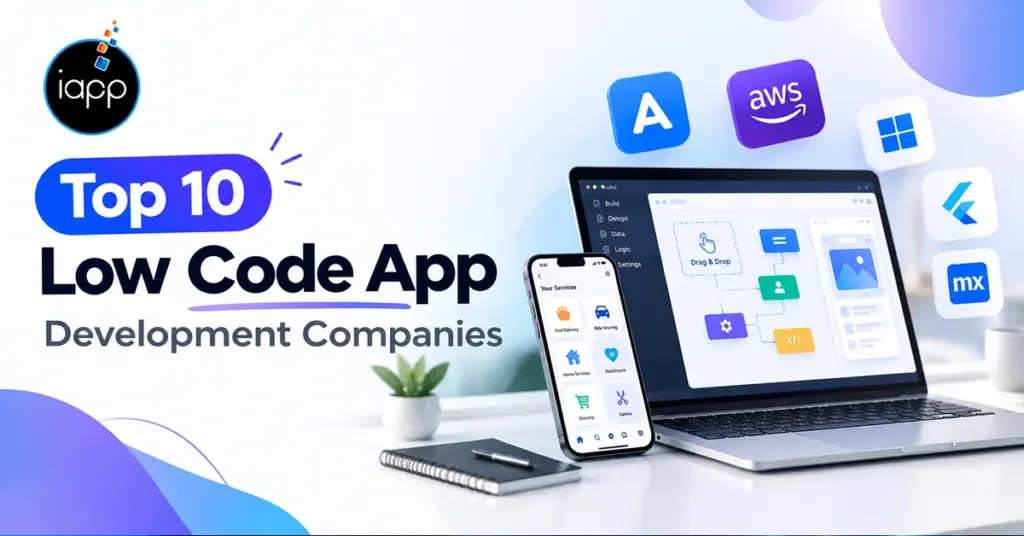
Building an app from scratch can take months when every feature needs custom code. Low-code platforms alleviate manual coding through visual tools, reusable components, and prebuilt integrations. It can aid teams build apps faster while decreasing development complexity.
This guide compares the top low code app development companies based on their published services, platforms, capabilities, and development focus.
The first thing you must be thinking about is how to choose companies that can build the low code app development platform. Well, the right company should match your app type, platform, integrations, security needs, and customization level. Also, check whether the provider supports web, mobile, enterprise workflows, or internal business tools.
Gartner forecasts the low-code application platform market to reach $16.5 billion by 2027, growing at a 16.3% CAGR from 2022 to 2027. With hundreds of providers in the market, comparing the project capabilities of low code app development companies is imperative.
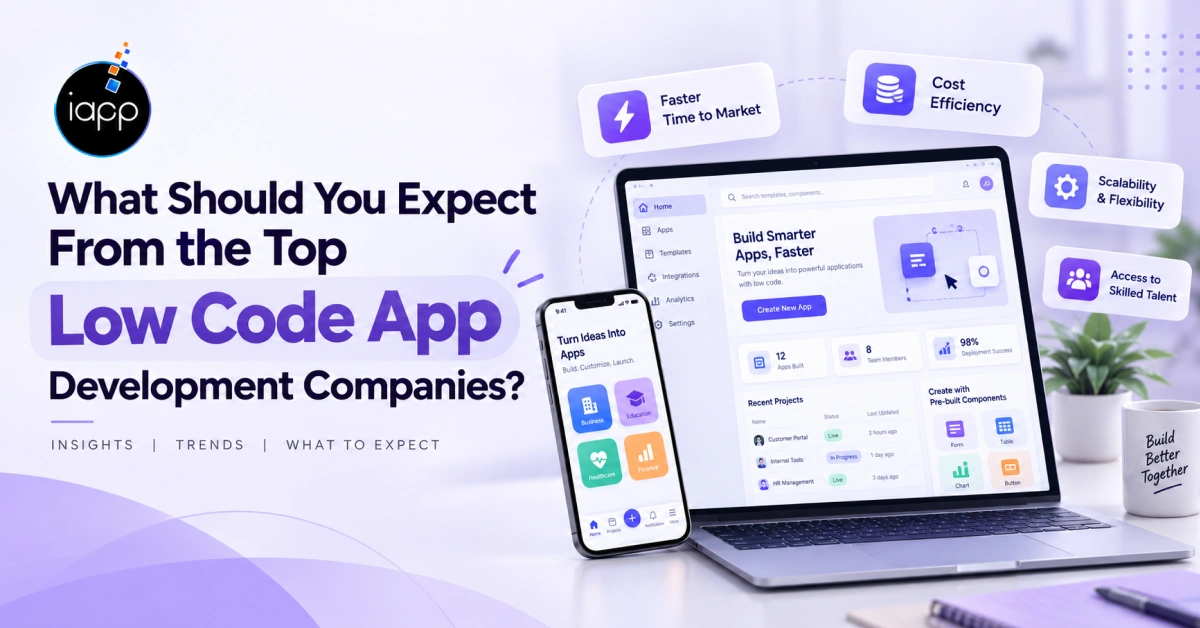
Reliable low code and no-code development companies should cover more than visual app building. Look for platform consulting, integration, testing, deployment, maintenance, and custom development. This matters because low-code still has limits. Microsoft notes that significant customization can require developer involvement.
Here are top companies to consider for low code app development:
iApp Technologies supports no-code and low-code application development for businesses that want to build apps with less manual coding. Its approach can help lessen development work while still allowing business-specific customization.
Key features
Jackrabbit Mobile provides low code app development services using visual interfaces and minimal hand-coding. It covers enterprise apps, mobile apps, legacy modernization, and business automation.
Key features
It is among the best low code development companies in the USA. VeilSun builds applications using Quickbase, Mendix, and full-stack platforms. Its services focus on mission-critical applications, integrations, governance, and enterprise requirements.
Key features
Intellias provides low-code and no-code services around Mendix, Microsoft Power Apps, OutSystems, and Appian. Its services include consulting, training, governance, prototyping, and custom application development.
Key features
Third Rock Techkno offers low-code and no-code development for web, mobile, and desktop applications. Its services also cover automation, integrations, UI customization, and application modernization.
Key features
Jellyfish Technologies also provides low-code app development services. Its offering includes full-cycle development, platform optimization, security controls, compliance support, and ongoing maintenance.
Key features
Alea IT Solutions promotes low-code application development for MVPs and internal tools. It delivers 50+ projects with 40% average cost savings. The average time a company takes for MVP delivery is 2-3 weeks.
Key features
Ramam Tech provides low-code and no-code development for applications, automation, legacy upgrades, MVPs, and integrations. Its platforms include Power Automate, Appian, Mendix, OutSystems, Zoho Creator, Bubble, and Salesforce.
Key features
Innowise offers low-code development for mobile and web applications. Its services include consulting, third-party integrations, dedicated developers, and ongoing support.
Key features
Damco Solutions provides low-code application development using Power Apps, OutSystems, Salesforce, and monday.com. Its case studies include a transportation app developed 40% to 50% faster with OutSystems.
Key features
Low-code app development services can cost around $10,000 to $100,000+ in the US. However, the actual cost depends on numerous factors. App complexity, platform licensing, integrations, customization, testing, and support all impact the price.
| App Type | Price |
|---|---|
| A basic internal tool | $10,000 to $25,000. |
| A mid-level business App | $25,000 to $60,000 |
| Complex applications | | Exceed $100,000 |
Businesses comparing low code development services USA should always request a feature-based estimate. Also ask about platform fees, upkeep, hosting, and future customization.
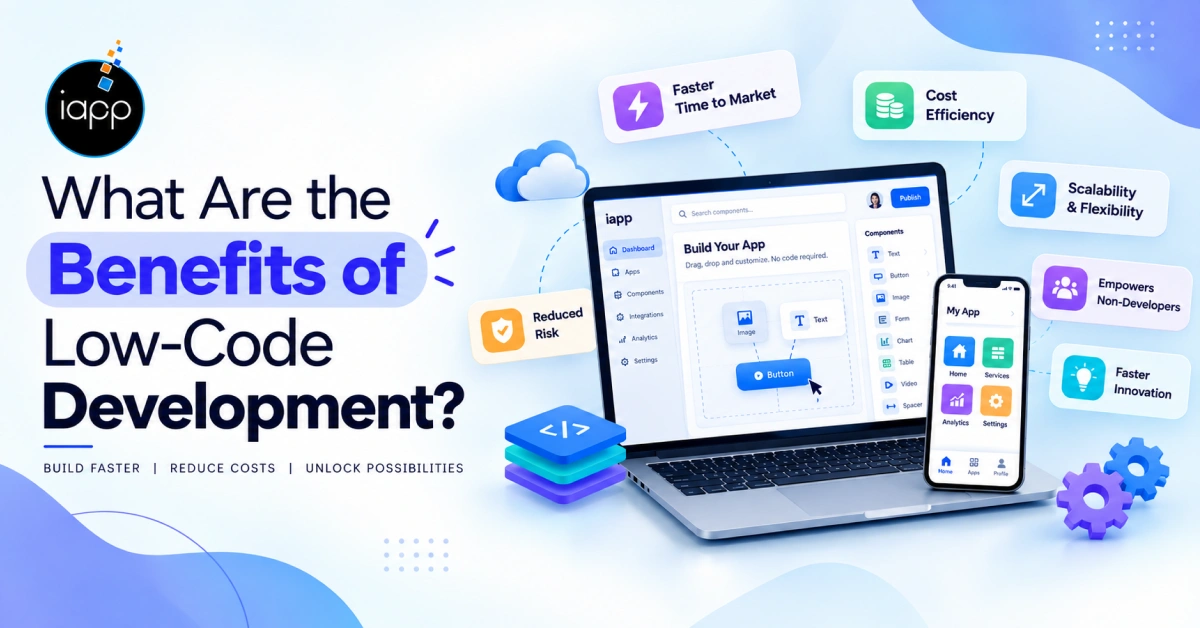
Low-code can reduce manual coding and speed up application delivery. Microsoft lists faster development, reusable components, visual tools, integrations, and reduced IT workload among its benefits. It can work well for internal tools, workflow apps, customer portals, inventory systems, scheduling tools, and business automation.
Low-code still allows developers to add custom logic and integrations. No-code is more restrictive and targets users with little or no programming knowledge. That difference matters when choosing between low code and no code development companies for a complex product.
The top low code app development companies offer different platforms, technical skills, and development capabilities. The right choice depends on your app requirements, integrations, customization, security, and budget.
iApp Technologies supports low-code and no-code app development for businesses that need faster application development with less manual coding. Our approach supports custom workflows, API integrations, business applications, and application customization.
In case you are comparing low code application development companies, we can help you plan, build, integrate, and maintain your application.
The best low code app development companies include iApp Technologies, Jackrabbit Mobile, VeilSun, Intellias, Third Rock Techkno, Jellyfish Technologies, Alea IT Solutions, Ramam Tech, Innowise, and Damco Solutions.
Low-code app development uses visual builders, reusable components, and limited manual coding to create applications faster than traditional development.
Yes. Low-code platforms can support mobile applications, while some providers also combine visual development with custom coding.
Top low code development companies in USA provide app design, development, integrations, automation, testing, deployment, and support using low-code platforms.
Yes, but complex applications may need custom code, advanced integrations, security controls, and professional developers.
A low code app development company USA helps businesses build applications using visual development tools, reusable components, integrations, and limited manual coding.
Low-code can reduce development time and manual coding, but total cost still depends on features, licensing, integrations, customization, and support.
Yes. Many low-code platforms support APIs, connectors, and integrations with databases, CRMs, ERPs, and other business systems.
 Jagwinder Singh
Wait! Before you go…
Talk to our experts and turn your ideas into powerful digital solutions.


 Trusted by 1000+ businesses

Fill out the form and our team will get back to you shortly.