
Electric taxis are moving from niche fleets to mainstream urban transport. Lower running costs, rising EV adoption, and demand for app-based rides are opening a strong opportunity for new operators. An electric taxi booking business can bring these trends together through a scalable fleet and a dedicated booking app. This guide explains how the business works, what your app needs, how much it may cost, and how to take it to market.
Electric taxi booking businesses link passengers to EVs using digital booking platforms. You may earn money from ride fares, driver commissions, subscriptions, or fleet contracts. The opportunity is linked to wider EV adoption. The IEA says one in four new cars sold worldwide in 2025 was electric.
Operators of an electric taxi business also need to plan beyond buying vehicles. The model takes into account charging access, driver supply, municipal permissions, insurance, maintenance, and trip demand.
A clear electric taxi business model should define:
| Model | How it works | Main consideration |
|---|---|---|
| Fleet-owned | Business owns and operates EV taxis | Higher vehicle investment |
| Driver-partner | Independent drivers use the platform | Faster fleet expansion |
| Fleet marketplace | Multiple operators list vehicles | Strong fleet management needed |
| Corporate service | Rides serve companies and staff | Contract-based demand |
To understand how to start an EV taxi business, first define the market and operating model.
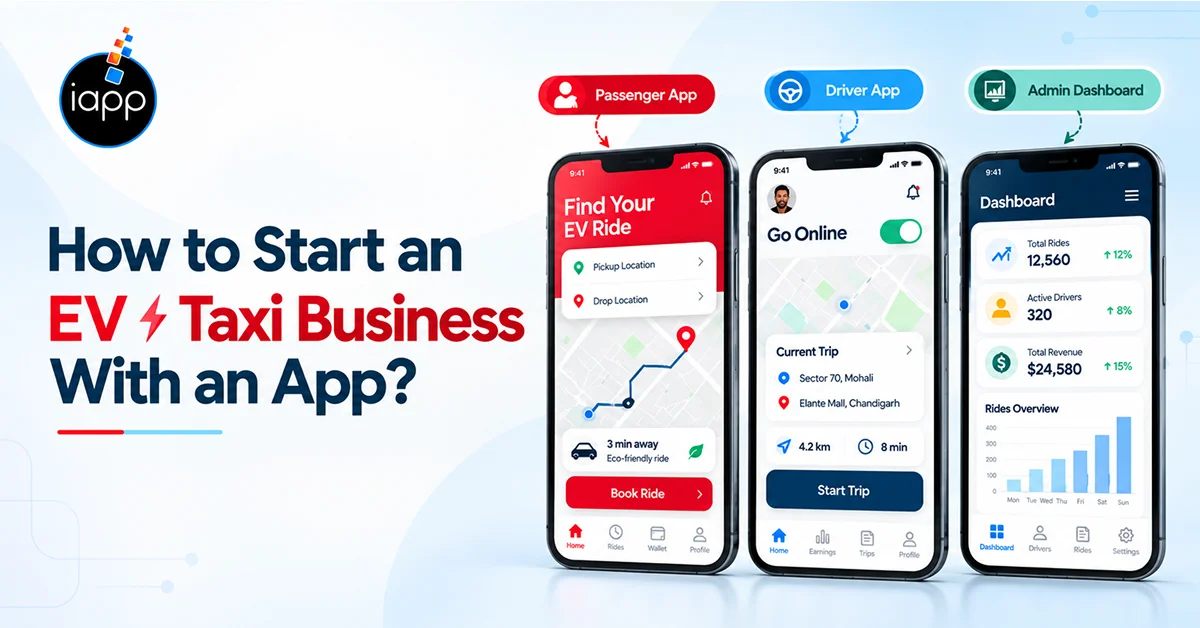
Then build the technology around actual passenger, driver, and admin requirements. An EV taxi booking business can use three connected systems. These are the passenger app, driver app, and admin dashboard.
Passenger app
Driver app
Admin dashboard
A strong electric taxi booking platform should also support EV-specific operations.
For example, operators can plan charging schedules around vehicle availability.
A modern electric taxi booking app needs reliable real-time communication.
It must connect passengers, drivers, maps, payments, and administrative systems.
A typical platform may use:
For an EV taxi app development project, charging data can also support fleet planning.
The exact integration depends on vehicle systems, charging providers, and available APIs. iApp Technologies builds iOS, Android, and cross-platform apps. We use an advanced stack. It entails Flutter, React Native, Kotlin, Swift, Node.js, Python, Laravel, and PHP.
Our expert developers offer taxi app development with passenger, driver, and admin applications. We also integrate dispatch, live tracking, fare automation, and fleet tools in our taxi solutions.
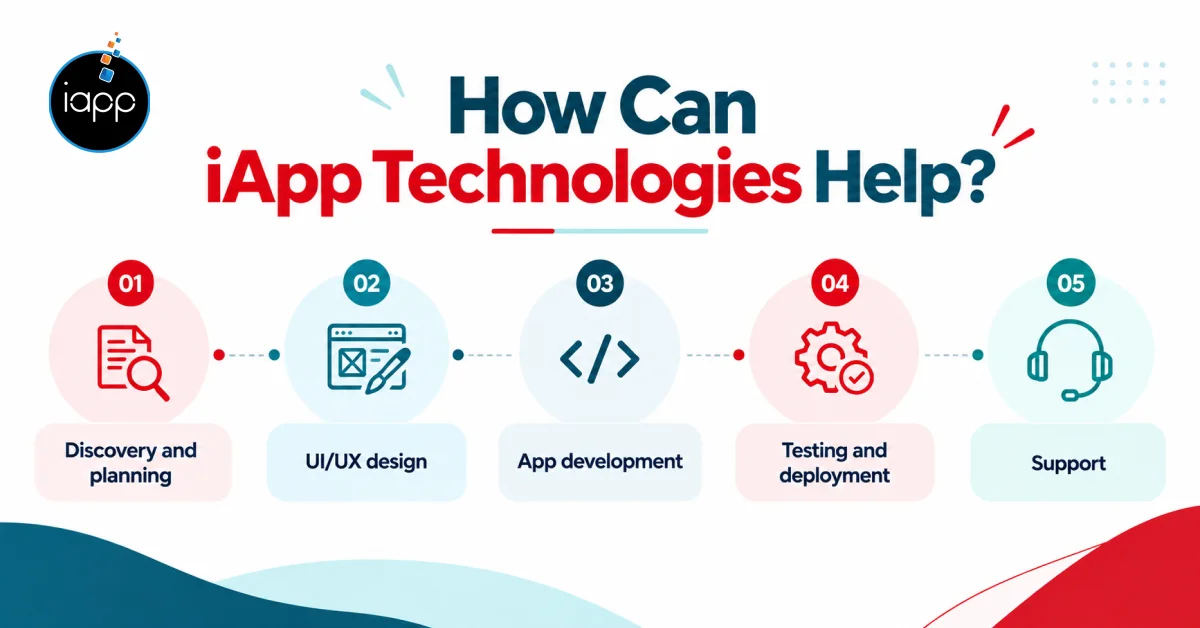
An electric taxi app development project needs more than screens and coding. It requires product planning, UI/UX, backend development, testing, deployment, and constant upkeep
iApp Technologies follows a structured mobile development approach.
Step 1: Discovery and planning
We review your business model, users, fleet, service area, and required features.
Step 2: UI/UX design
We plan passenger, driver, and admin flows before development begins.
Step 3: App development
Developers build the selected mobile apps, backend, APIs, and admin system.
Step 4: Testing and deployment
The product goes through functionality, usability, security, and device testing.
Step 5: Support
Post-launch maintenance keeps the platform updated and functional.
Building the product is only one part of launching an online EV taxi business.
Passengers must also be able to find your service online. iApp Technologies provides SEO, PPC, social media, and content marketing services.
SEO: can target searches related to EV taxis and local ride services.
PPC: can reach users searching for taxi services with high purchase intent.
Social media: can support local awareness, offers, and community engagement.
Content marketing: can answer common questions about EV rides and bookings.
The company also offers AEO and LLM SEO for search experiences beyond traditional search engines.
The cost to start an EV taxi business depends on more than app development.
Major cost areas include:
App cost also relies on platform choice, feature depth, integrations, UI/UX, and backend complexity. Custom mobile app pricing depends on features, design, complexity, and platform choice. A detailed EV taxi business plan should therefore separate technology costs from fleet and operating costs.
After development, the platform needs continuous measurement. Track bookings, completed rides, cancellations, driver activity, acquisition costs, and repeat users. These numbers can aid you adjust fares, marketing campaigns, fleet size, and service areas.
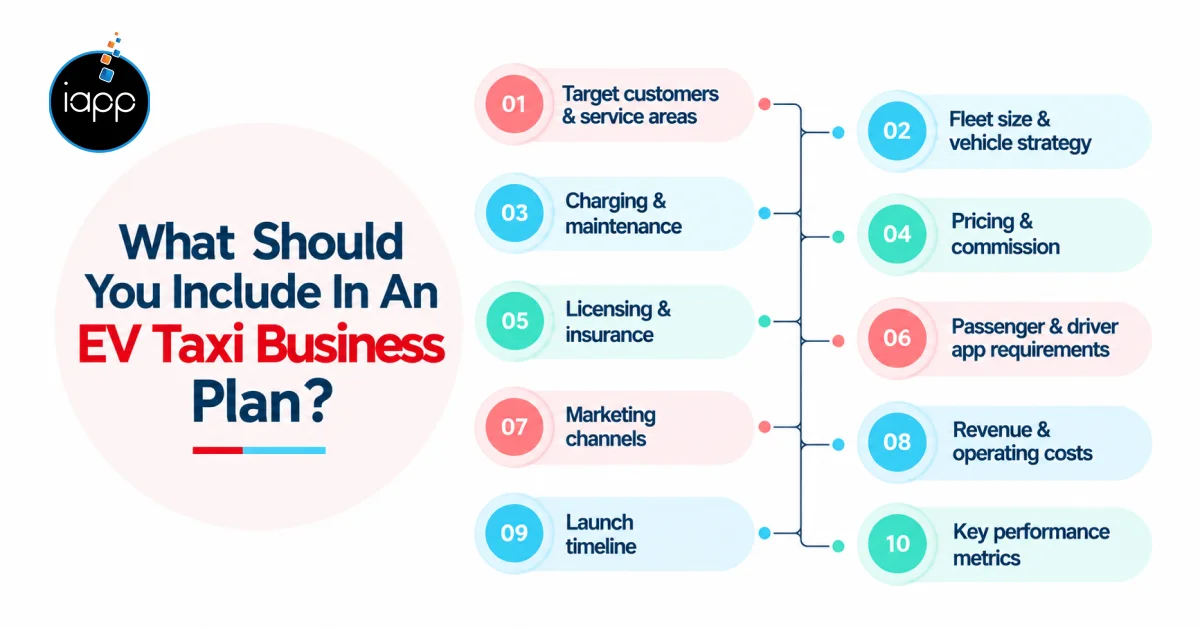
An EV taxi business plan must take into account the market, operating model, technology, fleet, finances, and growth strategy.
We include the following in our EV taxi business plan:
Local rules differ by country, state, and city. So, before launch, confirm commercial vehicle, taxi, insurance, tax, and charging needs.
Starting an electric taxi booking business requires more than an electric fleet.
You need a clear business model, reliable booking technology, and charging planning. Apart from these, compliance and a measurable marketing strategy also need to be taken into account.
iApp Technologies builds custom mobile applications across iOS, Android, and cross-platform technologies. Our services cover app design, development, testing, deployment, and maintenance. We also offer digital marketing solutions. In case you are planning an EV taxi platform, discuss your fleet, features, target market, and launch goals with our team.
The cost depends on vehicles, charging, permits, insurance, app development, staffing, and marketing. Technology costs also vary by features, platforms, integrations, and development scope.
Start by defining your market, fleet model, pricing, permits, charging plan, and technology requirements. Then develop the passenger, driver, and admin systems.
It is a transportation model that uses electric vehicles for paid passenger rides.
Revenue may come from fares, commissions, subscriptions, fleet contracts, or business accounts.
Core features include booking, fare estimates, GPS tracking, payments, driver profiles, notifications, ratings, and ride history. Admin tools should manage drivers, fleets, rides, fares, and reports.
Passengers request rides through an app, while drivers receive and accept trip requests. The platform manages matching, tracking, payments, and trip records.
It is the process of creating digital systems for EV taxi operations. The app can include passenger apps, driver apps, backend APIs, payments, maps, and admin dashboards.
Yes. The platform can be designed for multiple service areas with separate fares, fleets, drivers, zones, and operating rules. The required setup depends on the business model.
Development time depends on features, platforms, integrations, design, testing, and backend requirements. iApp Technologies states that mobile apps can take around three to nine months, depending on complexity.
Wait! Before you go…
Talk to our experts and turn your ideas into powerful digital solutions.


 Trusted by 1000+ businesses

Fill out the form and our team will get back to you shortly.


 Jagwinder Singh