
An e-scooter app can cost between $40,000 and $250,000+ to develop. However, the final e-scooter app development cost relies on a plethora of factors. For instance, platform management and integrated features like basic bookings, payments, GPS, IoT, fleet tracking, and geofencing.
The need for dependable software becomes clearer when you look at core fleet usage. In 2023, shared e-scooters averaged 1.4 trips per vehicle per day across North American systems. Each ride can generate booking, payment, location, and vehicle data that the app needs to process.
With an increase in ride volume, the platform requires robust backend systems, integrations, and fleet management tools. These needs directly impact the e-scooter app development cost. This guide will shed light on the key features, technology, development timeline, and ongoing expenses that shape your overall budget.
The e-scooter app development cost varies with the type of app and feature integration.
A basic MVP needs fewer features and therefore costs less than a full platform.
Here is the general breakdown of cost.
| App Type | Estimated Cost | Development Time |
|---|---|---|
| Basic MVP | $40,000 to $80,000 | 3 to 5 months |
| Standard Platform | $80,000 to $160,000 | 5 to 8 months |
| Advanced Platform | $150,000 to $250,000+ | 8 to 12+ months |
A basic MVP may entail registration, maps, scooter search, QR scanning, payments, and ride history. On the other hand, an upgraded platform can add IoT, geofencing, fleet tools, and an admin dashboard. But it can support multiple cities, large fleets, advanced analytics, and a myriad of integrations.
These figures are estimated ranges, not fixed market prices. Your actual scooter app development cost depends on the product scope.
The main factors affecting e-scooter app development cost are platform count, IoT, maps, payments, and fleet complexity.
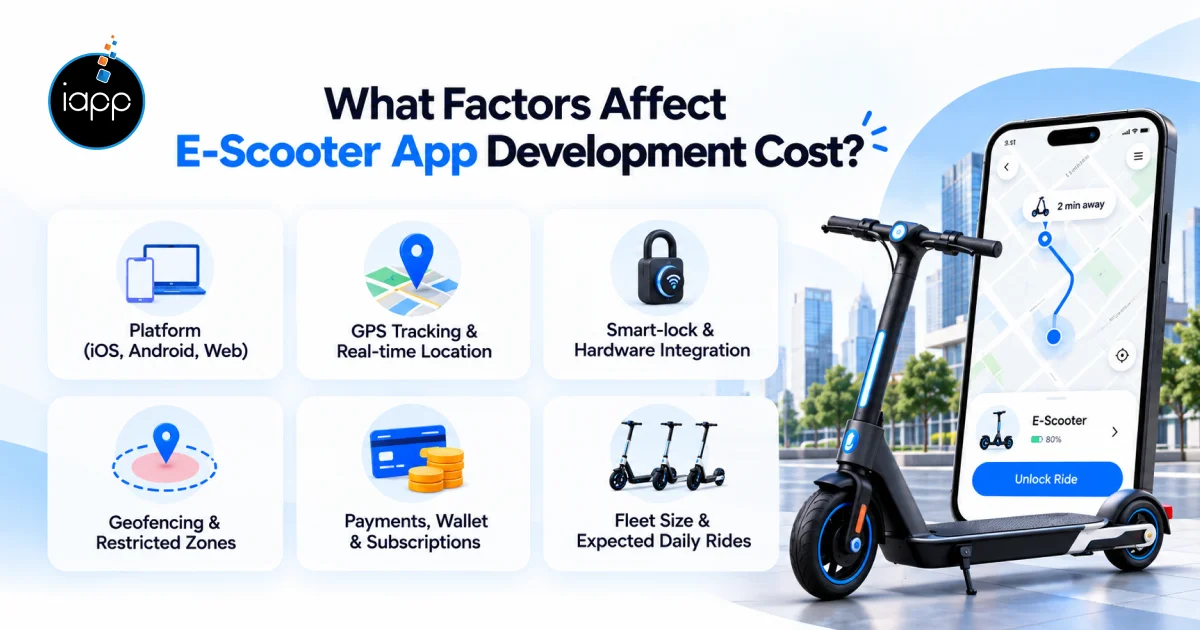
What Factors Affect E-Scooter App Development Cost_
Other important factors include:
The number of scooters also affects development needs. A 100-scooter pilot requires less backend infrastructure than a platform managing thousands of scooters across multiple cities.
One common budgeting mistake is treating an e-scooter product as one mobile app. A working service may include several connected systems:
Therefore, a realistic e-scooter app development cost should cover the complete operating system. This matters even more for scooter sharing platform development. The software must link riders, scooters, operators, payments, and location data.
The features needed for an e-scooter rental app depend on your business model. However, most commercial platforms need rider, operator, payment, and fleet functions.
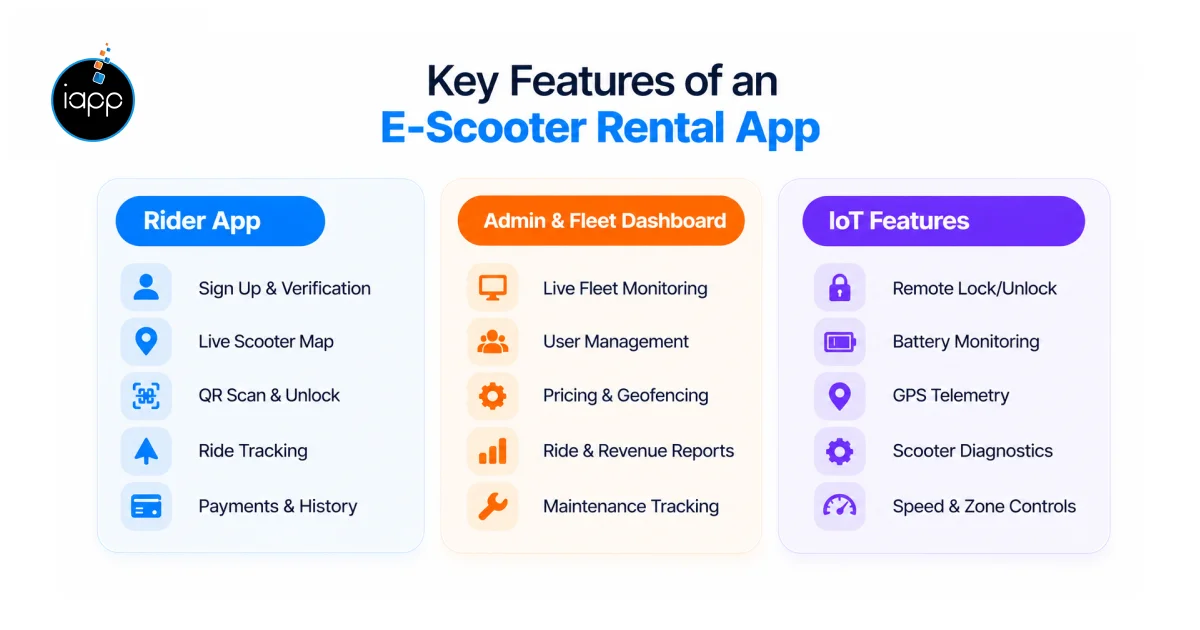
These features form the core of e-scooter rental app development.
Operators need a separate interface to manage daily operations.
Key functions include:
IoT connects the application with the physical scooter. Depending on the hardware, the system can support:
These functions connect the digital platform with the physical fleet. They can also require hardware integration, IoT protocols, real-time data processing, and additional backend development.
This is where electric scooter app development becomes more technically demanding. The Federal Highway Administration describes scooter sharing as short-term access to shared scooters. It also identifies operator responsibilities such as parking and maintenance.
When your platform needs to support these operational tasks, the development scope becomes larger. As a result, your e-scooter app development cost can increase.
Some features require considerably more backend and integration work.
| Feature | Estimated Cost | Cost Impact | Main Reason |
|---|---|---|---|
| QR scanning | $ 2,000–$ 5,000 | Medium | Scanner and ride validation |
| GPS tracking | $ 3,000–$ 8,000 | Medium | Location updates and map services |
| IoT integration | $ 8,000–$ 25,000+ | High | Hardware and backend communication |
| Geofencing | $ 5,000–$ 12,000 | High | Location rules and automated actions |
| Dynamic pricing | $ 4,000–$ 10,000 | High | Pricing engine and business rules |
| Predictive maintenance | $ 8,000–$ 20,000 | High | Device data and analytics |
For example, basic GPS can show nearby scooters. Real-time fleet tracking requires constant location updates and robust backend infrastructure. Similarly, basic payments differ from wallets, subscriptions, refunds as well as promotional pricing.
This is why the electric scooter app development cost cannot be calculated from screens alone.
The technology stack should match your scooter hardware and expected fleet size.
A typical e-scooter mobile app development stack can include the following:
For example, Flutter can support iOS and Android from one codebase. However, native development may suit hardware-heavy requirements. The right pick depends on your scooter controller, APIs, performance needs, and future scale.
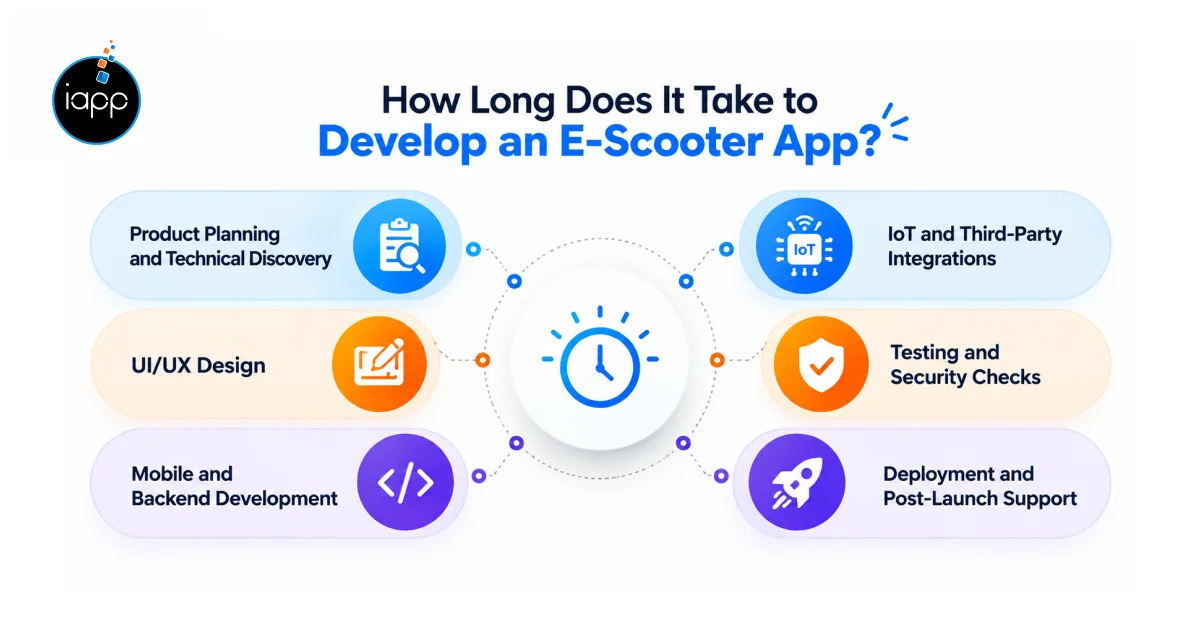
An MVP can take around three to five months to develop. A larger platform can take five to eight months or longer.
A typical timeline includes:
Hardware testing can extend the timeline. The same applies when multiple scooter models need separate integrations. Therefore, development time should be considered alongside e-scooter rental app development cost.
Development is only the initial investment. Your long-term scooter app development cost also includes technology and operational expenses.
Plan for:
A growing fleet can also increase infrastructure usage. More rides mean more location data, payment transactions, notifications, and backend requests. NACTO reported an average 2025 dockless e-scooter ride cost of $5.40 for 10 minutes. That shows how frequently these systems handle short rental transactions.
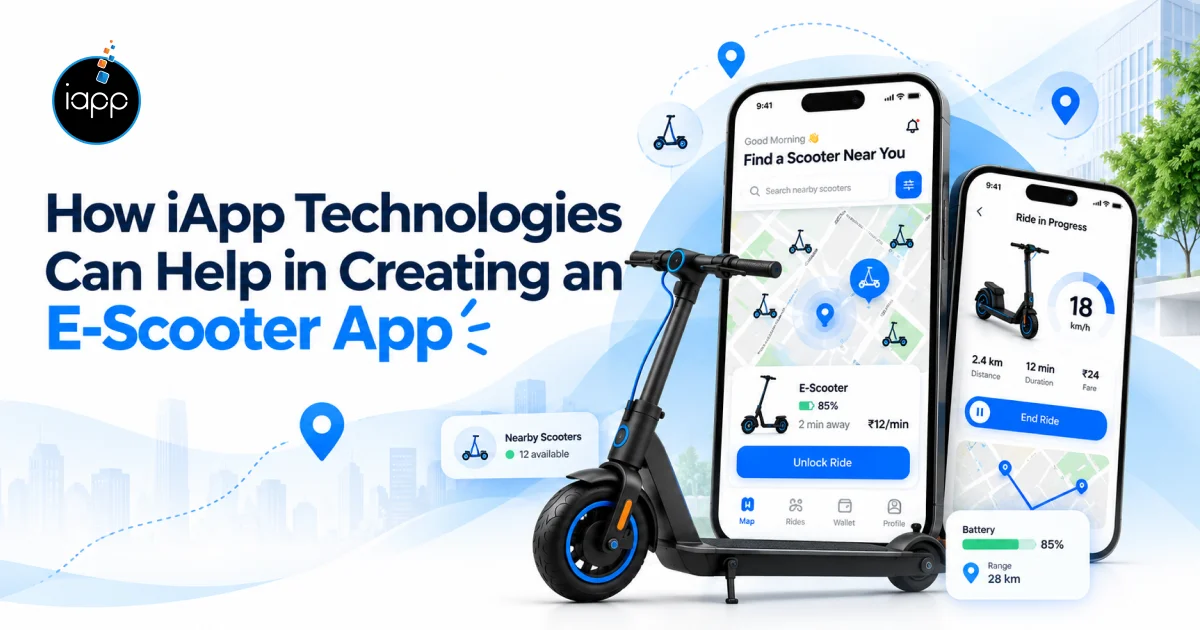
We build custom mobility products around the business model and fleet requirements. Our approach can cover the rider app, backend, admin tools, integrations, and supporting infrastructure.
We can connect the customer app with fleet operations from the start.
The product can include:
This approach keeps rider features connected with real operational needs.
We can plan integrations around your scooter hardware and communication method. The architecture can support GPS, device data, remote controls, and geofencing. That helps operators manage scooters without relying on manual updates.
We can begin with essential rental features for a limited fleet or city. Later, you can add advanced pricing, analytics, multiple scooter models, and additional cities. This can keep your initial e-scooter app development cost within a controlled budget.
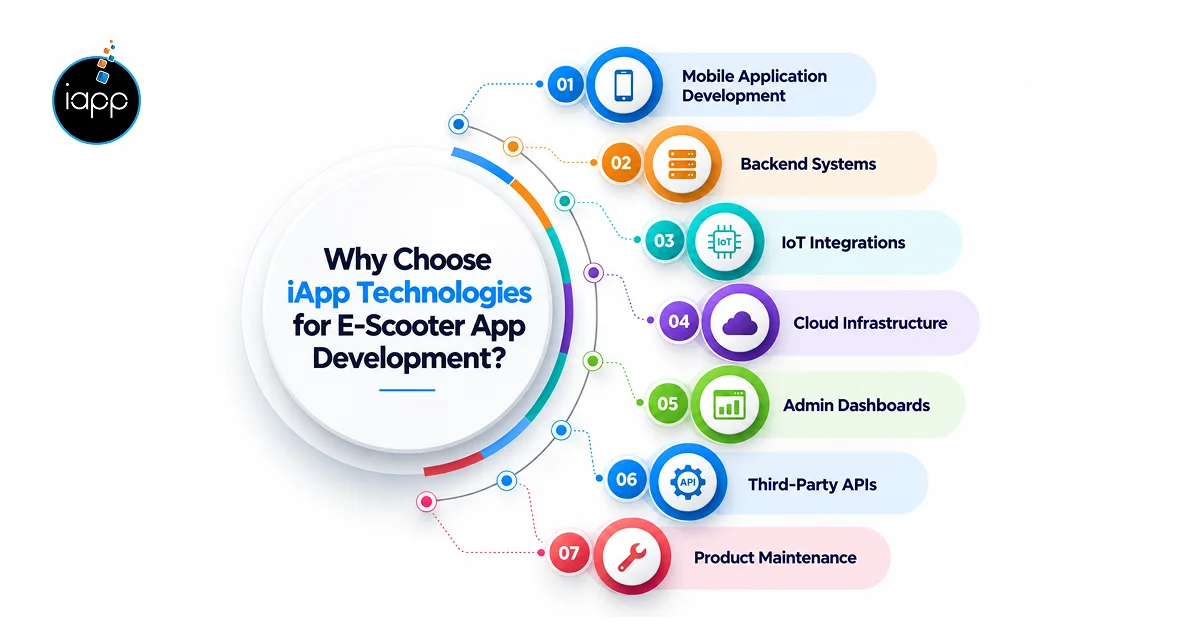
We focus on the complete product rather than only mobile screens.
Our team can work across:
We can also help define the MVP before development begins. That makes the initial scope easier to estimate and manage.
The final e-scooter app development cost depends on your features, fleet, hardware, platforms, and target market. A focused MVP has simple features, while a multi-city platform needs advanced integrations.
At iApp Technologies, we can assist in planning and building custom electric scooter app development solutions. We can cover mobile apps, backend systems, IoT integrations, dashboards, and future upgrades.
An app like Lime development cost can exceed $150,000. It may include IoT, fleet management, payments, geofencing, and multi-city support.
Yes. A smaller MVP can support one city and a limited fleet. However, you can add advanced features later.
Yes. But only if the scooter hardware provides suitable APIs, SDKs, or communication protocols for integration.
Common models include ride fees, unlock charges, subscriptions, passes, corporate plans, and promotional partnerships.
Yes, most commercial services need tools for fleet monitoring, users, pricing, payments, zones, and maintenance.
Yes. AI can support demand forecasting, predictive upkeep, fleet planning, fraud detection, and personalized offers.
Maintenance depends on cloud usage, API volume, IoT connectivity, and security updates. It also depends on support needs and fleet growth.
 Jagwinder Singh
Wait! Before you go…
Talk to our experts and turn your ideas into powerful digital solutions.


 Trusted by 1000+ businesses

Fill out the form and our team will get back to you shortly.