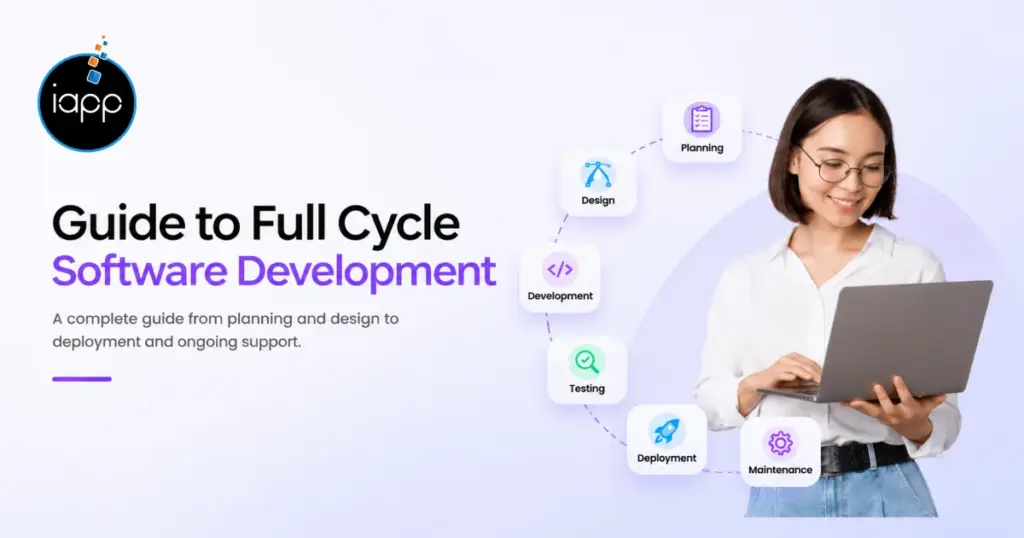
A business may have a great software idea but face delays. Separate teams can also create gaps between development and maintenance. Full cycle software development connects every stage under one coordinated process.
It covers planning, design, development, testing, deployment, and ongoing maintenance. This guide explains its stages, costs, technologies, and business benefits.
Full cycle software development covers the complete software creation process. It starts with business requirements and continues after launch. One coordinated team manages the product across its lifecycle.
This approach supports several digital products, including:
Unlike full-stack development, full-cycle development covers more responsibilities. Full-stack focuses mainly on frontend and backend engineering. Full-cycle also includes planning, QA, deployment, and maintenance.
Businesses benefit from having one accountable development partner. This reduces communication gaps between different project teams. It also improves coordination and long-term product planning.
Consider a startup building an appointment booking platform. Its requirements may change after receiving customer feedback. A connected team can plan and deliver those changes.
The benefits include:
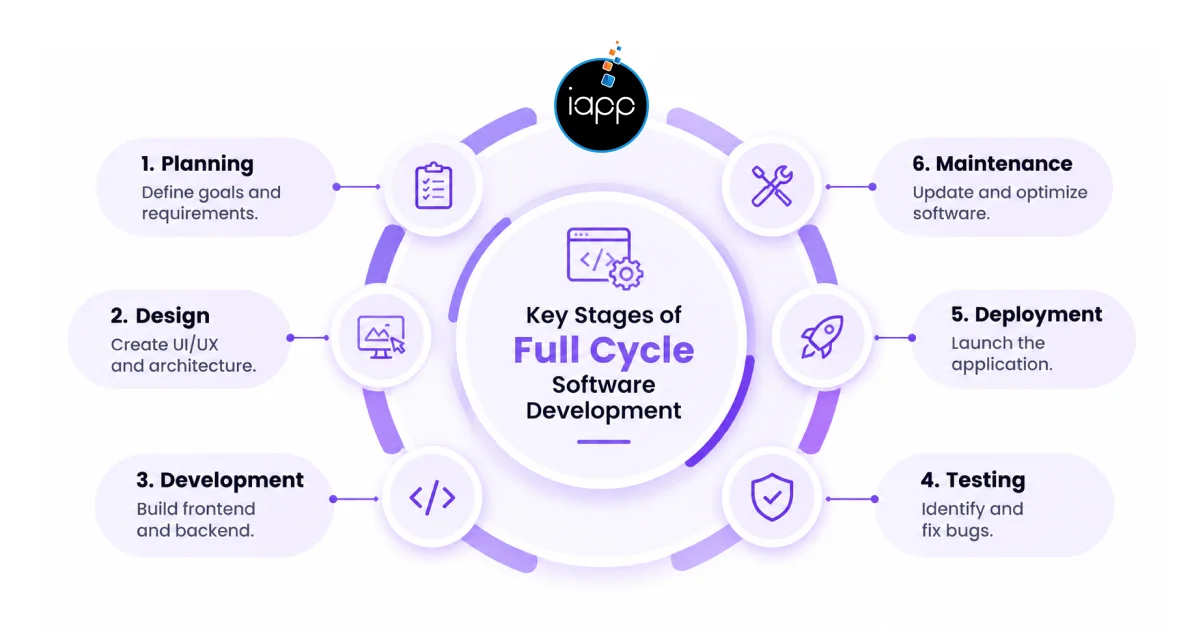
The full-cycle software development process includes six connected stages. Each stage produces deliverables for the next phase.
| Development stage | Typical deliverable |
|---|---|
| Planning | Requirements and project roadmap |
| Design | Wireframes and technical architecture |
| Development | Working software modules |
| Testing | QA and security reports |
| Deployment | Production application |
| Maintenance | Updates and performance reports |
Each stage should have measurable approval criteria. This prevents unresolved issues from moving forward.
The right methodology depends on project requirements. End-to-End software development can use different delivery models.
| Methodology | Suitable projects | Suitable projects |
|---|---|---|
| Agile | Evolving products | Evolving products |
| Waterfall | Fixed requirements | Fixed requirements |
| DevOps | Frequent releases | Frequent releases |
| Hybrid | Complex business systems | Complex business systems |
Agile supports regular feedback and feature improvements. Waterfall provides structured planning for fixed requirements. DevOps connects development with deployment and operations.
Hybrid approaches combine planning with iterative delivery.
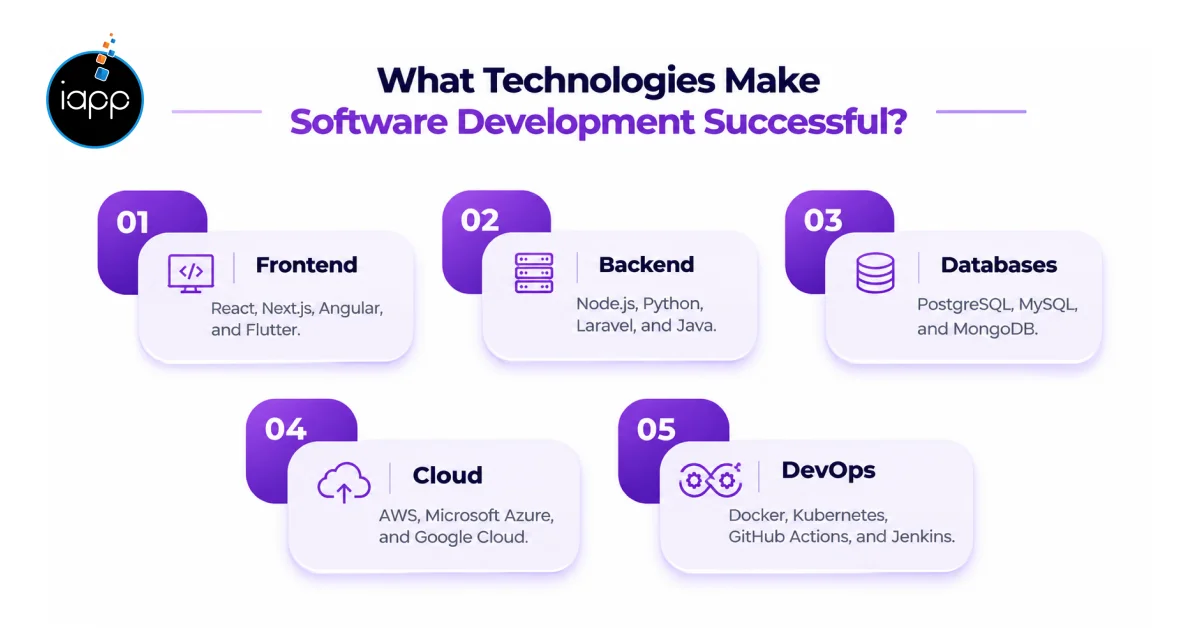
Technology choices directly affect software performance and security. Select tools according to product requirements and future needs.
Common technology choices include:
AI tools can also support development workflows. Google’s 2025 DORA research surveyed nearly 5,000 professionals. It found 90% used AI at work. Over 80% reported improved productivity.
However, generated code still requires careful review. Read the 2025 DORA research for details.
Security must remain part of every development stage. NIST recommends secure practices across software lifecycles. Its Secure Software Development Framework provides practical guidance.
Software development costs depend on scope and complexity. Integrations, security, and team size also matter.
Here are illustrative US project planning ranges:
| Project type | Estimated timeline | Illustrative budget |
|---|---|---|
| Basic MVP | 8–12 weeks | $30,000–$80,000 |
| Mid-sized platform | 4–7 months | $80,000–$200,000 |
| Enterprise software | 6–12+ months | $200,000–$500,000+ |
These figures are planning examples, not fixed market rates. Actual estimates require technical discovery and scope assessment.
Remember to budget for ongoing expenses. Cloud hosting, monitoring, and maintenance need recurring investment. Reserve a maintenance budget for each release cycle.
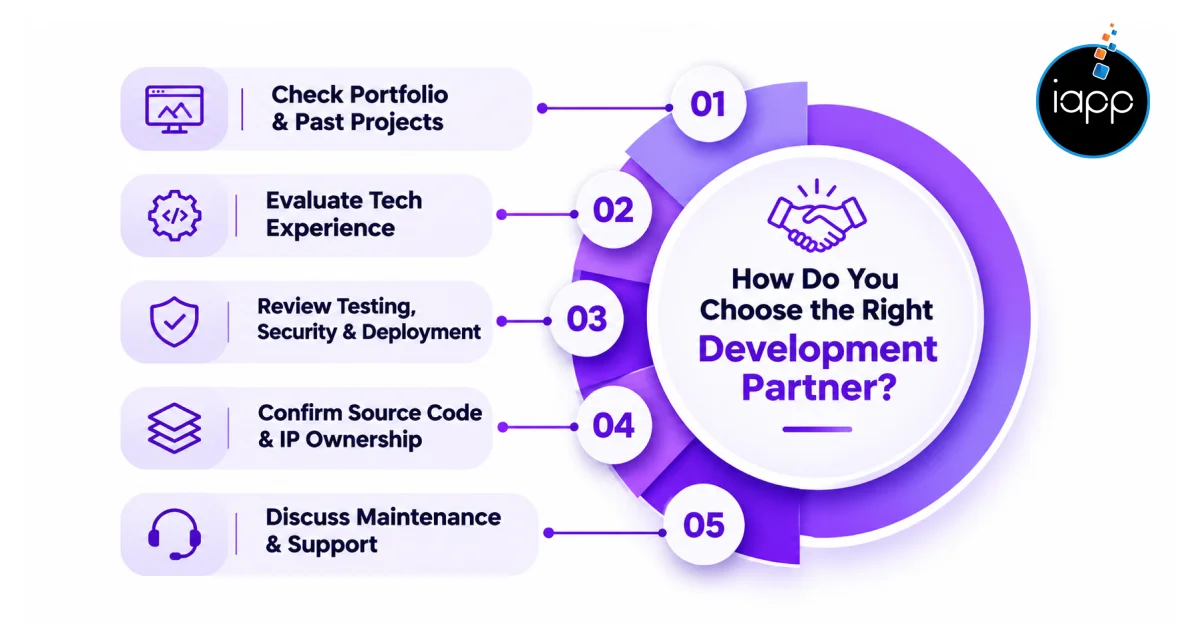
A reliable full cycle software development company should offer more than coding. Evaluate its technical capabilities and delivery practices.
Check these factors before signing an agreement:
Ask for clear milestones and written deliverables. This makes project accountability easier to measure.
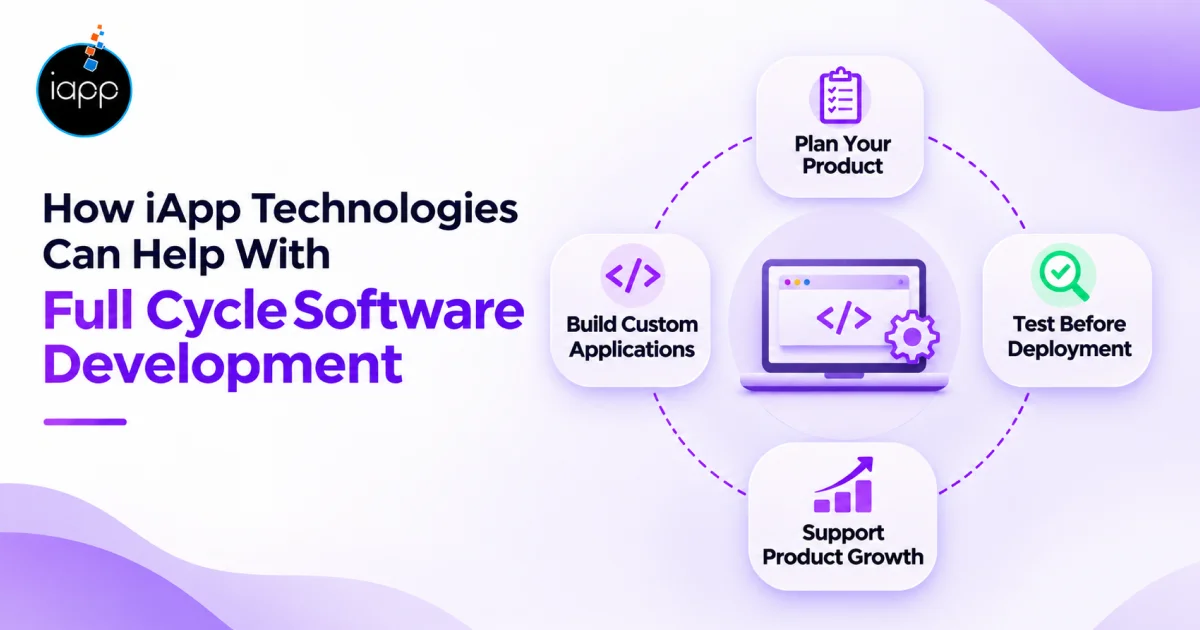
At iApp Technologies, we support custom digital product development. Our services cover mobile, web, AI, and QA. We work with businesses across different industries.
We begin by understanding your business objectives. Our team reviews users, features, and technical requirements. We then prepare a practical development roadmap.
We develop web and mobile applications. Our capabilities include React, Laravel, Flutter, and Python. We also support APIs and AI integrations.
Our QA team checks functionality and application performance. We identify issues before production releases. This helps reduce avoidable post-launch problems.
We also provide digital marketing and ongoing support. Our team can help improve product visibility. We support updates as business requirements change.
Our portfolio includes products across multiple business sectors. These include healthcare, logistics, e-commerce, and entertainment.
Full cycle software development connects every stage of software creation. It supports better planning, delivery, security, and maintenance.
At iApp Technologies, we build custom digital solutions. Our team supports businesses from planning through deployment. We also provide ongoing technical and marketing support.
Have a software idea ready for development? Let’s discuss your requirements and project goals.
A basic MVP may take 8–12 weeks. Complex enterprise platforms can require 6–12 months.
Yes, developers can audit and modernize existing applications. They can also continue development and maintenance.
Common deliverables include source code, documentation, test reports, and deployment access. Maintenance guidelines should also be provided.
Ownership depends on contractual intellectual property terms. Confirm code ownership and licensing before signing agreements.
Yes, teams can build an MVP first. They can then add features using customer feedback.
Teams manage changes through documented requests and revised estimates. Agile teams can prioritize approved changes within sprints.
Yes, teams can migrate applications and databases. AWS, Azure, and Google Cloud support these migrations.
Handover should include source code, credentials, and documentation. It should also cover deployment and maintenance instructions.
 Jagwinder Singh
Wait! Before you go…
Talk to our experts and turn your ideas into powerful digital solutions.


 Trusted by 1000+ businesses

Fill out the form and our team will get back to you shortly.