Consumers expect prompt prescription refills, dependable delivery, and easy pharmaceutical ordering. Pharmacies may lose revenues and find it difficult to handle requests effectively without a digital ordering system.
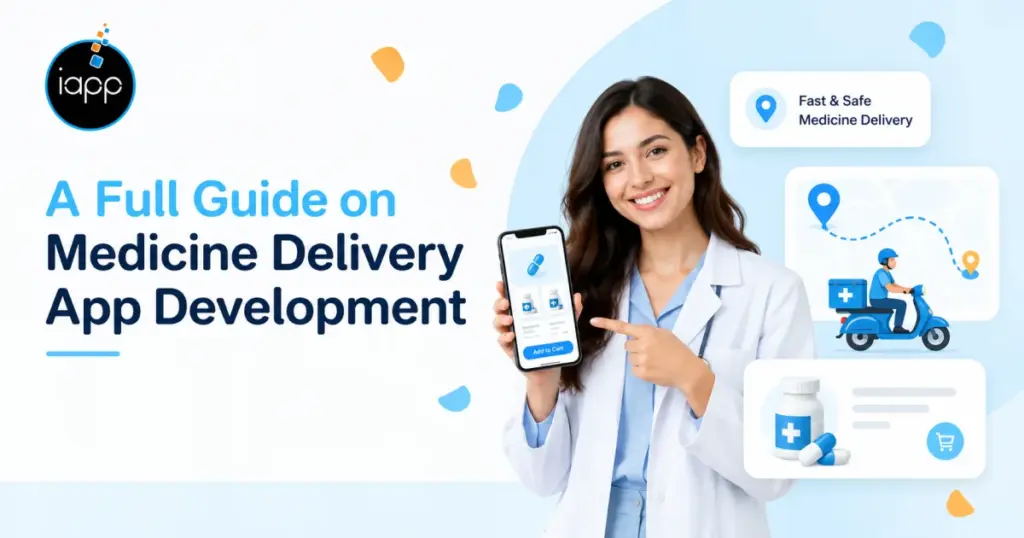
Businesses may manage prescriptions, arrange deliveries, and improve pharmacy operations with the aid of medicine delivery app development. We will cover essential features, business models, development expenses, and compliance needs in this guide.
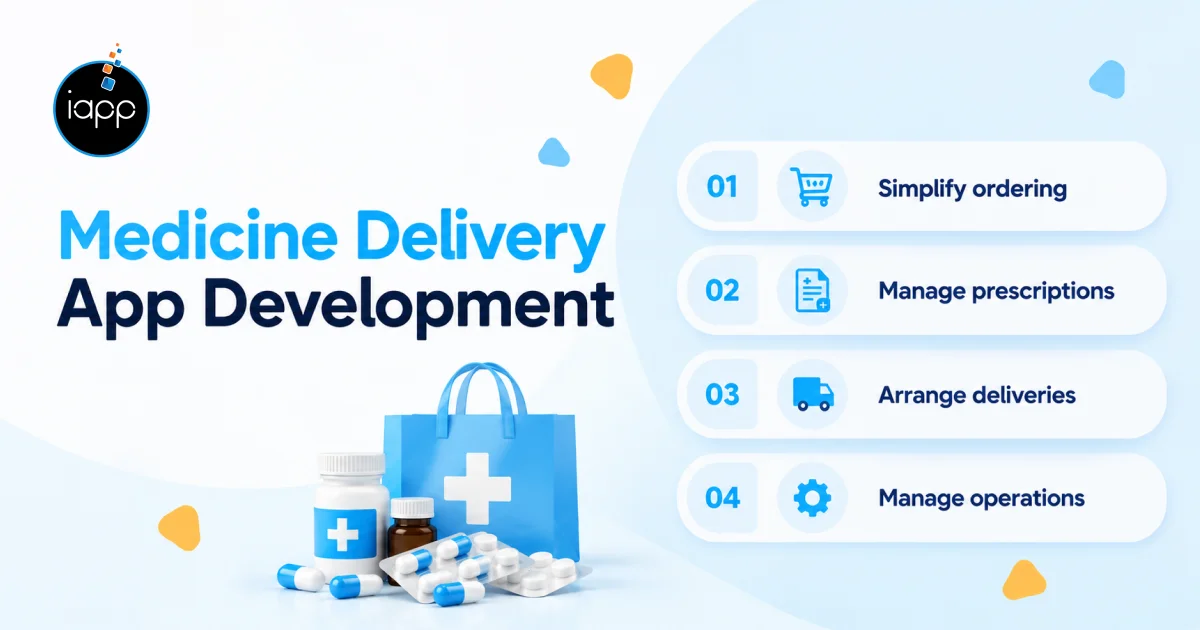
Medicine delivery app development entails building software that enables customers to order medicines online. Web or mobile apps aid to connect patients, pharmacies, and delivery teams.
When placing an online medication order, trust and security are crucial. Roughly 95% of websites that offer prescription drugs either operate illegally or do not adhere to relevant pharmacy standards, according to the National Association of Boards of Pharmacy. Because of this, secure ordering, prescription checks, and pharmacy verification are crucial factors for app developers to take into account.
Businesses use medicine delivery app development to:
Platform needs and income potential are determined by your company strategy. Prior to establishing the scope of development, select one.
| Model | Best suited for | Revenue source |
|---|---|---|
| Single pharmacy | Independent pharmacies | Medicine sales |
| Pharmacy chain | Multi-location businesses | Branch sales |
| Marketplace | Pharmacy startups | Partner commissions |
| On-demand delivery | Local delivery services | Delivery fees |
Online ordering may be the first step for a nearby pharmacy. Commission management and pharmacy onboarding are also necessary for a marketplace.
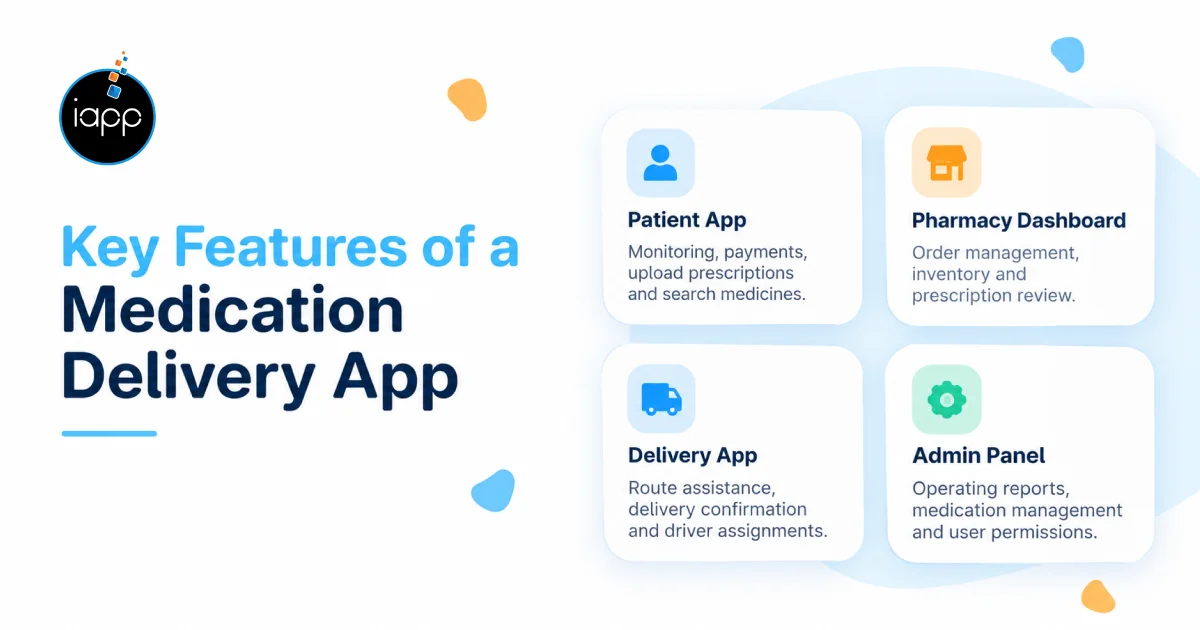
Your business strategy will determine medicine delivery app features for your business model. Prior to adding more complex features, start with the most basic workflows.
Patient app: monitoring, payments, uploading prescriptions, and searching medications.
Pharmacy dashboard: Order management, inventory, and prescription review.
Delivery app: route assistance, delivery confirmation, and driver assignments.
Admin panel: operating reports, medication management, and user permissions.
Flutter is compatible with both iOS and Android online pharmacy app development. Another alternative for cross-platform programming is React Native. Backend services can be powered by Django or Node.js. Structured order and inventory data may be stored in PostgreSQL.
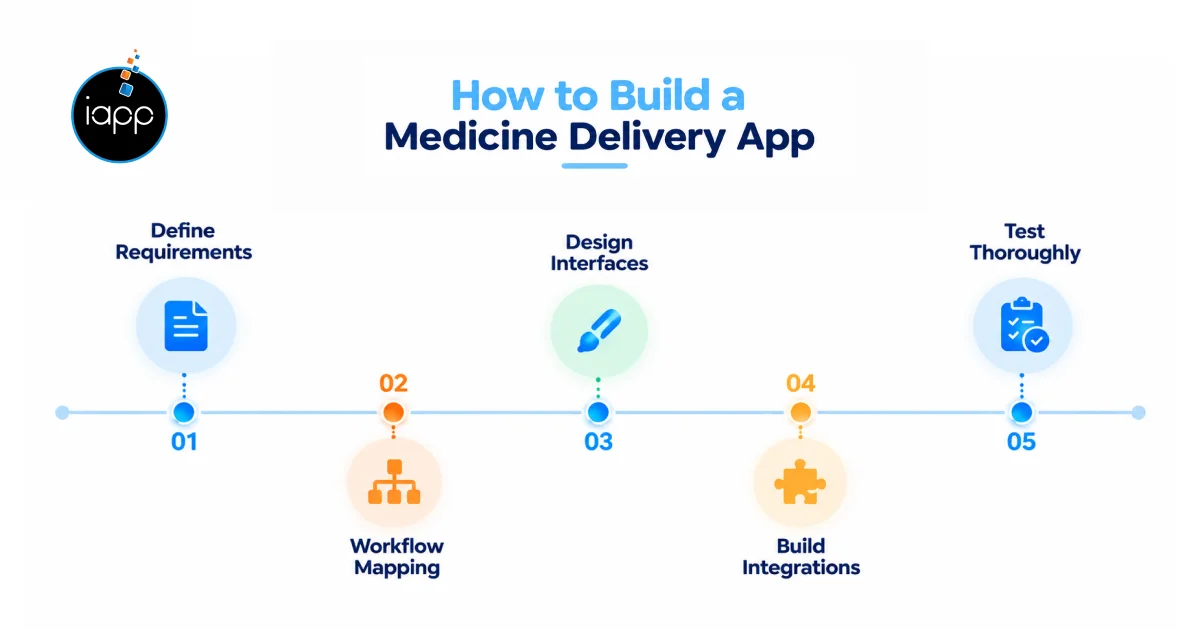
The organized medicine delivery app development process aids to decrease rework to a much greater extent. It also makes technical and operational duties much clearer.
Define Requirements: Choose your company strategy and key components.
Workflow Mapping: Plan for the evaluation, payment, dispensing, and delivery of prescriptions.
Design Interfaces: Make screens for drivers, patients, pharmacies, and administrators.
Build Integrations: Link inventory systems, maps, and payment gateways.
Test Thoroughly: Verify order correctness, security, and tracking updates.
Incorporate suitable prescription validation for prescription delivery app development. Dispensing must not be automatically authorized by prescription uploads.
Expert insight: Before creating displays, map the workflow from prescription to delivery. This reveals inventory discrepancies and approval shortfalls early on. It also makes the roles of delivery teams and pharmacists more clear.
Applications for pharmacies in the United States must adhere to relevant federal and state regulations. The services provided and the structure of the business determine the obligations.
Customers are advised by the FDA to confirm the online pharmacy license. Reliable and safe pharmacies offer pharmacist access and prescriptions when applicable..
Plan for these requirements:
HIPAA: When managing protected health information, take the appropriate precautions.
State licensing: Verify specifications in all states where you plan to operate.
Data security: Make use of audit logs, access limits, and encryption.
Prescription workflows: Support the evaluation of the relevant restricted drug regulations by the pharmacist.
Before launching, speak with certified compliance experts. Legal compliance cannot be established by software development alone.
Features and integrations are the exact medicine delivery app development cost. Planning estimates are shown below:
| Platform scope | Estimated cost | Estimated timeline |
|---|---|---|
| Single-pharmacy MVP | $40,000 to $80,000 | 3 to 5 months |
| Multi-location platform | $80,000 to $150,000 | 5 to 9 months |
| Pharmacy marketplace | $150,000 to $300,000+ | 8 to 12+ months |
The location of the team and the technical scope affect the actual quotes. Complicated inventory systems and insurance integrations might raise expenses.
The initial investment may be controlled with a phased launch. Begin with the basic pharmacy and ordering processes. Once operational needs have been validated, you can add advanced features.
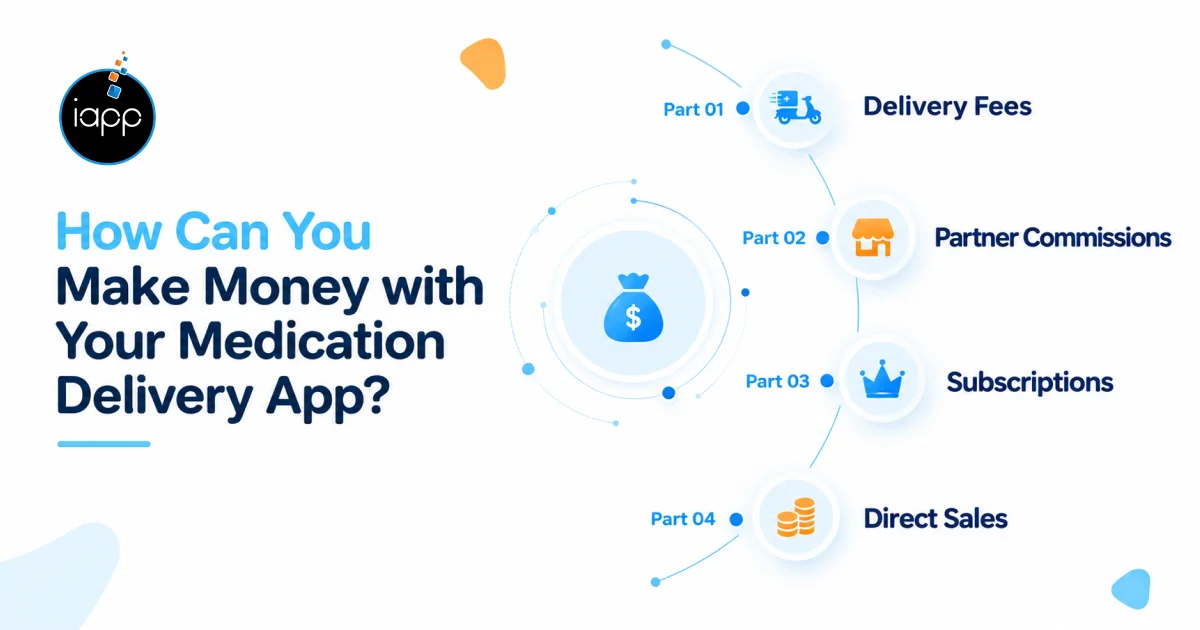
Your company plan and fulfillment expenses determine revenue. Typical choices consist of:
Keep track of average order value, shipping costs, and payment fees. Moreover, assess recurring business and consumer acquisition expenses. Remember, order volume alone is not as important as sustainable margins.
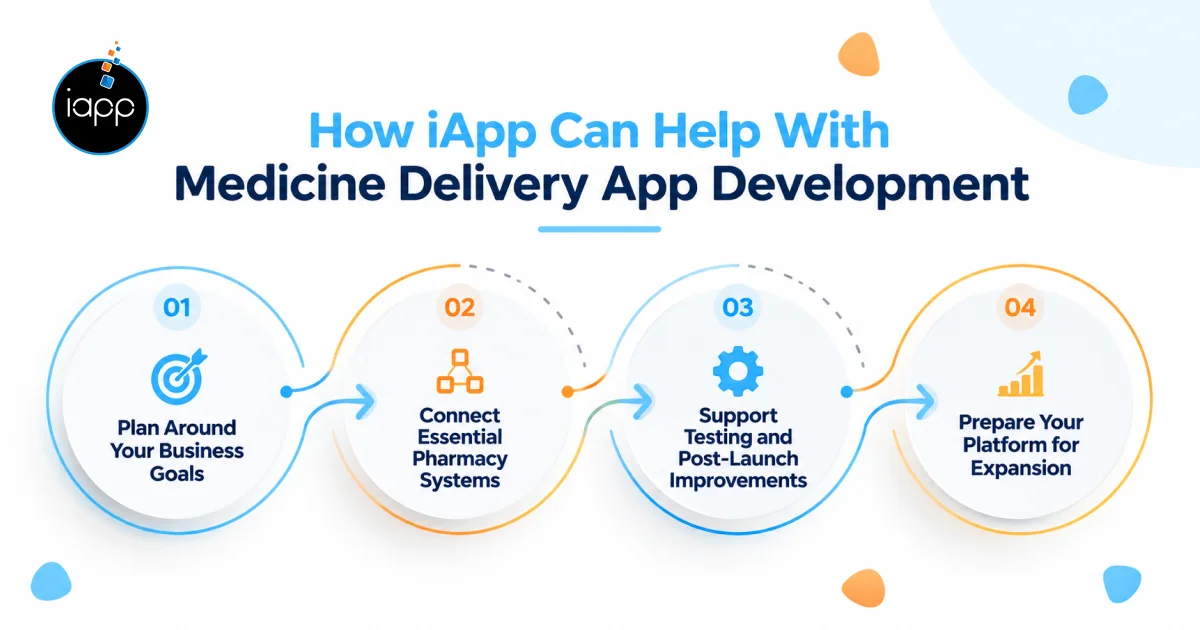
At iApp Technologies, we offer pharmacy delivery app development and custom software. We align technical decisions with your business requirements and budget.
We define your MVP, user roles, and integrations. Our team prioritizes requirements against your launch timeline.
We plan integrations for inventory, payments, maps, and notifications. Feasibility depends on existing software and available APIs.
We plan testing, deployment, monitoring, and ongoing maintenance. Operational data can guide future product improvements.
We can plan multi-location support and additional integrations. Our roadmap reflects your changing operational requirements.
In case you need a medicine delivery app development company USA, assess technical expertise and project support. Businesses comparing a pharmacy app development company USA should also review healthcare workflows as well as integration capabilities.
Medicine delivery app development requires clear planning and secure workflows. A focused MVP can assist in validating demand before expansion.
iApp Technologies helps businesses plan and develop mobile applications. Contact our team to discuss your requirements and budget.
A basic MVP on-demand medicine delivery app development may take three to five months. However, complex integrations and testing can extend the timeline.
Yes, you can partner with licensed pharmacies. Your business must meet applicable legal and operational requirements.
Custom apps offer greater flexibility and control. White-label solutions can reduce initial development time and costs.
Yes, integration is possible through compatible APIs. Feasibility depends on the existing software and access permissions.
The app can send refill reminders and track eligible orders. Prescription validity and required approvals remain essential.
Yes, it can support branch inventory and order routing. Centralized reporting can help manage multiple locations.
Common choices include Flutter, React Native, Node.js, Django, PostgreSQL, and cloud hosting.
Review healthcare software expertise, security practices, integrations, pricing, and support. Confirm the team’s understanding of applicable compliance requirements.
 Jagwinder Singh
Wait! Before you go…
Talk to our experts and turn your ideas into powerful digital solutions.


 Trusted by 1000+ businesses

Fill out the form and our team will get back to you shortly.